NSSC Chair Choi Wonho: "Building Public Consensus Must Come First in Extending Nuclear Plant Operating Cycles to 20 Years" [Digging Energy]
[Specialist Report]
Current 10-year permit term could be extended to 20-year increments
A major decision, not simply a change to technical standards
Climate ministry's views crucial as lead agency on nuclear policy
Must also assess social acce

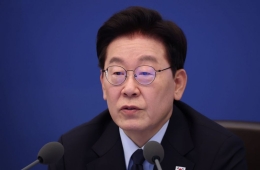
Nuclear Safety and Security Commission Chairman Choi Wonho speaks with The Asia Business Daily during an interview at the commission's office in Jongno-gu, Seoul, on the 7th. Photo by Kang Jinhyung.
View original imageNuclear Safety and Security Commission Chair Choi Wonho said that the current 10-year period for continued operation of nuclear power plants could be extended to 20 years, provided there is public support for the change. He said the commission could review the proposal jointly if put forward by the Ministry of Climate, Energy and Environment, the ministry responsible for nuclear power policy. The nuclear industry is calling for longer continued-operation periods, citing cases in the United States, Japan and other countries, where the safety of nuclear power plants has been demonstrated.
Chair Choi said he opposed excluding periods when a nuclear power plant is shut down from the period covered by its continued-operation license.
He described the government's goal of commercializing innovative small modular reactors (i-SMRs) by 2035 as "highly ambitious." The Nuclear Safety and Security Commission began its main review of the i-SMR standard design approval in August, but the review schedule remains subject to change because not all materials demonstrating safety have been submitted. Chair Choi stressed that expanding the workforce is essential to ensure smooth reviews of next-generation non-light-water SMRs.
He said continuous monitoring is necessary even though no abnormalities have been detected for the third consecutive year since Japan began discharging treated water from Fukushima. The Asia Business Daily met Chair Choi at the commission's office in Jongno-gu, Seoul, on October 7 to hear his views on recent issues related to nuclear safety. The following is an edited transcript of the interview.
"Kori and Hanbit Accident Management Plans Should Be Reviewed Together"
- Reviews for the continued operation of Kori Units 3 and 4 and Hanbit Units 1 and 2 are coming up. What issues do you expect?
▲I do not expect any particular issues concerning continued operation. In the past review of Kori Unit 2's continued operation, one issue was the order in which approval of the Accident Management Plan and a continued-operation license should be granted. The legal review at the time found that there was no required order because the two were separate documents. Nevertheless, there was agreement that approval of the Accident Management Plan should come first or, at the very least, that the two processes should proceed simultaneously. That is why we are reviewing the Accident Management Plans first this time as well.
Another issue was whether the latest technical standards were applied in the radiological environmental impact assessments. We confirmed that the reports were prepared in accordance with the domestic standards set out in the Nuclear Safety and Security Commission's notice and included assessments of individual radiation exposure doses resulting from severe accidents.
The most important consideration when reviewing continued operation of a nuclear power plant beyond its design life is whether sufficient safety margins will be maintained in its equipment during the continued-operation period, including under the assumption that an accident could occur. There will be extensive discussion of these issues during the commission's deliberations.
- Some argue that the Accident Management Plans should be reviewed separately for each plant, since Kori Units 3 and 4 and Hanbit Units 1 and 2 have different characteristics, even though they are the same reactor type.
▲I believe the benefits of reviewing all four plants together are greater. The main machinery and equipment at the four plants are identical, so there is no reason to assess them differently. The difference lies in the natural environments around the Kori and Hanbit plants, based on their locations. Comparing and assessing the plants together is preferable in order to check whether these differences have been appropriately reflected in their accident management strategies.
Reviewing each plant separately could actually cause us to overlook differences. For example, each plant has the same types of mobile equipment for use in emergencies, but routes for moving the equipment may vary depending on the site and its surrounding environment. Reviewing plants with the same design together allows us to compare these differences.
- What is your view on the argument that periods when a nuclear power plant is shut down after its design life expires should be excluded from the period covered by its continued-operation license?
▲The fundamental reason some plants that applied for continued operation have not received the full 10-year period is that they applied too late. In the case of Kori Unit 2, the application was submitted when about one year remained before the end of its design life. (Korea Hydro & Nuclear Power had previously delayed its application for continued operation amid the Moon Jae-in administration's policy of moving away from nuclear power.) Safety reviews usually take around three years, so a shutdown was unavoidable between the end of the plant's design life and approval for continued operation.
In addition, the safety assessment materials submitted by operators are prepared based on a 10-year period starting from the end of the plant's design life. If a plant were shut down for two years and then allowed to operate for 10 years from the date of approval, its safety would not have been assessed for those two years. We cannot authorize operation for a period in which safety has not been confirmed.
A reactor does not stop aging just because it is shut down. Once nuclear fuel has been loaded, radiation-induced aging degradation of components continues even if the reactor is not operating. Therefore, the safety assessment does not simply cover "the next 10 years"; it covers a period from a specific date to another specific date. That is why a period of shutdown in between cannot be excluded from the licensed period.
To prevent this problem, a 2022 amendment to the enforcement decree allowed applications for continued operation to be submitted as early as 10 years before the end of a plant's design life. If the regulator and the operator secure sufficient time for the review and maintenance, plants should be able to receive the full 10-year continued-operation period.
- Some argue that the current 10-year continued-operation period should be renewed every 20 years, as in the United States.
▲Based on legal and technical reviews, I believe it is not impossible. One option would be to grant continued-operation licenses in 20-year increments while retaining the 10-year periodic safety review (PSR) cycle recommended by the International Atomic Energy Agency (IAEA).
However, continued operation is not simply a matter of changing technical standards. It is a highly important nuclear power policy decision, so public consultation and consensus-building are necessary. The views of the Ministry of Climate, Energy and Environment, which is responsible for nuclear power policy, are also important. We need to comprehensively consider social acceptance, consistency with the regulatory system, and how the proposal relates to nuclear power policy overall. The Nuclear Safety Act would also need to be amended, so the matter must be discussed and decided in the National Assembly. The commission cannot make this change on its own; it must discuss the matter in cooperation with relevant ministries and agencies.
If the Ministry of Climate, Energy and Environment formally requests discussions, the commission is willing to review the proposal. I do not think it would be appropriate for the regulator, the Nuclear Safety and Security Commission, to take the initiative in raising the possibility of extending the continued-operation period. (In this regard, Minister of Climate, Energy and Environment Kim Sung-hwan told the National Assembly in August that the government would "consider ways to extend the period for which continued operation is permitted.")
- Yeongdeok in North Gyeongsang Province and Gijang in Busan have been selected as sites for a new large nuclear power plant and an SMR, respectively. How is the commission preparing?
▲The most recent site selected for a new nuclear power plant was that of Hanul, whose implementation plan was approved in 1979. The implementation plan for the new plant site in Yeongdeok is expected to be approved in 2030. That would mean a new nuclear power plant site was selected for the first time in 50 years. In preparation, we are conducting policy research to review whether technical standards need to be revised and to assess the current regulatory framework as a whole. We will closely analyze the current nuclear safety regulatory system to ensure there are no gaps in the review process for construction at the newly selected site.

Nuclear Safety and Security Commission Chair Choi Wonho speaks with The Asia Business Daily during an interview at the commission in Jongno-gu, Seoul, on the 7th. Photo by Kang Jinhyung.
View original image- The government aims to commercialize i-SMRs around 2035.
▲I believe commercialization by 2035 is a highly ambitious goal. An application for standard design approval was submitted early this year, and the main review began in August. For the i-SMR, we can draw on experience with standard design approvals for existing light-water SMRs, SMART and SMART100. However, the i-SMR also has unique design characteristics, which we will examine closely.
The i-SMR consists of four reactor modules. It also uses an integral design, and unlike existing large nuclear power plants or SMART, its control rod drive mechanisms are located inside the reactor. The i-SMR's main claimed advantage is cooling through natural circulation. We need to verify that its ability to cool the reactor without an external power supply actually meets safety standards.
However, the operator has yet to submit a considerable amount of documentation. Some of the experiments needed to demonstrate safety have not been completed, so additional materials will have to be submitted later. The operator expects to obtain standard design approval in 2028, but that timeline could change depending on the submission of materials and any required revisions. The review for a construction permit takes another two to three years after standard design approval. That would leave around four to five years between obtaining the construction permit and 2035. The schedule is tight, but construction time could be reduced compared with existing large nuclear power plants because the modules are manufactured at a factory and then installed.
Preliminary Review System to Begin in November; Around 10 Reactor Designs Preparing Applications
- How will the safety of non-light-water SMRs be verified?
▲The new SMRs, most of which are non-light-water designs, have a range of applications and design characteristics, making it difficult to license them under the current regulatory framework, which is centered on large light-water reactors for power generation. We therefore need an SMR-specific regulatory framework, including an assessment system in which developers propose performance criteria and demonstrate that they have met them, as well as detailed technical standards for each reactor type.
Beginning this year, the Nuclear Safety and Security Commission is conducting research and development to establish regulatory technologies for non-light-water SMRs. It also plans to introduce a preliminary review system in November. Around 10 reactor designs are currently preparing to undergo preliminary reviews. The system is useful for both operators and regulators. Regulators cannot know the specific details of a new reactor's design until the developer makes it public. As a result, it is difficult to anticipate regulatory issues or identify in advance where safety concerns might arise.
Through preliminary reviews, operators can reduce uncertainty about licensing, while regulators can learn about new technologies and prepare the necessary regulatory framework. Next-generation SMRs could be used not only to generate electricity but also for district heating, industrial heat supply and hydrogen production. We plan to coordinate the regulatory framework with relevant ministries to accommodate these various uses. We are discussing regulatory approaches with the Ministry of Oceans and Fisheries for SMRs installed on ships or barges.
- Are there enough personnel to regulate SMRs?
▲One of the most urgent problems is a shortage of regulatory personnel. Only seven people at the Nuclear Safety and Security Commission are responsible for SMR regulation. Even this is a temporary team rather than a permanent unit, and its operation must be approved every six months.
Our first-stage goal is to convert the team into a permanent unit next year. To handle the licensing demand for the various SMRs that will be introduced, we need an organization and workforce at the bureau level. There are also limits to how much we can rely on existing personnel, as they must continue to oversee safety regulation of existing large nuclear power plants.
Applications for construction permits for various SMRs are expected to gather pace in the early 2030s. We need to establish regulatory standards tailored to the characteristics of each reactor type by then. This is a substantial undertaking. The United States operates a dedicated organization of several hundred people for SMR regulation. We urgently need a permanent unit and sufficient specialized personnel dedicated to SMR regulation. More staff are needed not only at the Nuclear Safety and Security Commission but also at the Korea Institute of Nuclear Safety (KINS).
- Residents are concerned about the construction of a dry storage facility for spent fuel from Hanbit's light-water reactors.
▲The first dry storage facility for spent fuel from a light-water reactor will be built at the Hanbit site. The standards applied to dry storage facilities for light-water reactors and those applied to the existing dry storage facility for heavy-water reactors at the Wolsong site are the same. However, light-water and heavy-water reactors differ in the characteristics of their spent fuel and in the form and design of their dry storage facilities. We will take these characteristics fully into account in the actual review and examine in detail whether the safety functions are adequately ensured.
At Hanbit, a light-water reactor site, spent fuel will be loaded into metal storage casks and stored inside a building. At Wolsong, a heavy-water reactor site, spent fuel will be loaded into storage cylinders and kept inside concrete modules. Dry storage does not involve placing spent fuel directly into storage immediately after it is removed from the reactor. Instead, the fuel is cooled for more than 10 years in a wet storage facility until its decay heat has fallen, and is then safely stored in separate containers. The commission plans to conduct a thorough review, drawing on international experience and its review of the heavy-water reactor dry storage facility, to ensure compliance with laws and technical standards.
Fukushima Treated-Water Discharge: No Abnormalities for 3 Years, but Monitoring Must Continue
- No abnormalities have been detected in domestic seawater monitoring in the three years since the discharge of treated water from Fukushima began. Is continued monitoring still necessary?
▲We have monitored radiation levels in our waters every year since 1994, before the discharge of treated water from Fukushima began. The monitoring started after the disclosure that the former Soviet Union had dumped radioactive waste at sea, which led us to conclude that radiation monitoring was also needed in our waters.
Since then, the number of nuclear power plants in our country has grown, and China is also building nuclear power plants in areas close to our west coast. As long as nuclear facilities are operating in our country and neighboring countries, I believe we need to continue monitoring marine radiation and informing the public.
Hot Picks Today
 "There's a Drink Like This?"... Chinese Beverage With "Korean" in Its Name Rakes in 85 Million Won in Monthly Sales
- "I Invested KRW 10 Million, Only KRW 2 Million Is Left" ... 77% Plunge Sends Retail Investors Who Piled Into Samsung Electronics and SK hynix Leveraged ETFs Crying Out
- "No Need to Hire a Model"... The 25-Year-Old Woman Who Entered Social Media with a Face That Cost Just 1,500 Won [AI Content: The Bright and Dark Sides] 1
- "Samsung Electronics at 70,000 won, SK hynix at 200,000 won"... Why the gloomy outlook despite 'record-breaking earnings'?
- "The leggings are all see-through. It's so embarrassing to look at," complaints prompt Lululemon to fire development staff.
As far as the Fukushima issue is concerned, if Japan treats and discharges the water as planned, I expect things to remain as they have so far, with no problems. I also believe our continued monitoring helps ensure that Japan follows its safe discharge plan.
© The Asia Business Daily. All rights reserved. Unauthorized AI training and use prohibited.