[Gyeonggi Province Audit] Choo Miae: "Gyeonggi Province Is in a Fiscal Crisis"... Rebuts Claims Point by Point
Gyeonggi Province Governor Choo Mi-ae pushed back point by point against claims that the province's finances were not bad enough to warrant declaring a state of emergency, warning that the situation was becoming more serious.
During the National Assembly Public Administration and Security Committee's audit of Gyeonggi Province on the 13th, Assemblyman Chae Hyun-il of the Democratic Party of Korea asked, "Is Gyeonggi Province's financial situation really serious enough to warrant declaring a financial emergency?" Choo replied, "Gyeonggi Province's financial situation is very difficult."
She first outlined the spending structure. "Matching funds for national projects, which stood at 1.3 trillion won in 2018, rose to 2.5 trillion won in 2026. Acquisition tax revenue peaked at 11 trillion won in 2022 before falling to 8.1 trillion won in 2025, a decline of about 3 trillion won," Choo said. She added, "Most welfare spending also goes toward matching funds for national projects, and it has risen from 7 trillion won eight years ago to nearly 10 trillion won."
Responding to the Ministry of the Interior and Safety's position that Gyeonggi Province was not facing a fiscal crisis based on its debt-to-budget ratio, she said, "Gyeonggi Province's budget exceeds 40 trillion won, so the denominator is large. As a result, even when debt increases, an emergency does not show up in the figures." She countered, "Many actual indicators point to an emergency."
"Over the past two years, debt has increased by more than 30%, three times the national average, and the debt-to-asset ratio exceeds 15%, the highest in the country," she said. She added, "(During the eighth popularly elected administration,) Gyeonggi Province issued local government bonds five times in a row." She continued, "The daily interest burden is 390 million won, and next year the province will have to pay 480 million won in interest each day." Choo added, "The Ministry of the Interior and Safety has recently come to understand that Gyeonggi Province's finances are in serious condition."
Choo also explained why she made the province's financial situation public to residents on August 5, 2026.
"Gyeonggi Province has an ordinance on fiscal soundness that requires it to establish fiscal soundness indicators and manage debt soundness. It also requires the province to draw up an implementation plan and a sound-finance plan, establish an early warning system, and form a committee," she said. "If the eighth popularly elected administration issued local government bonds five times, it should naturally have taken these measures under the ordinance, but it did not." She added, "I declared a crisis to inform residents of the situation. Since then, we have formed a committee and provided training for senior officials."

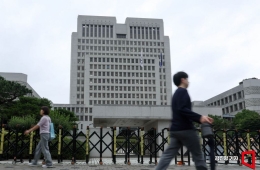
Gyeonggi Province Governor Choo Mi-ae takes an oath during the National Assembly Public Administration and Security Committee's audit of state administration of Gyeonggi Province on the 13th. Provided by Gyeonggi Province.
View original imageShe also cited rising demand for welfare services as a factor contributing to the crisis.
"Three out of every 10 babies born nationwide are born in Gyeonggi Province, and the elderly population is growing substantially as the number of nursing homes and geriatric hospitals rises sharply. Every year, 16,000 people move to Gyeonggi Province," Choo said. "All of this creates demand for funding that must be covered entirely by the provincial government."
Hot Picks Today
 Despite "Insufficient Balance" Notices, They Board Anyway... Reports of Foreign Fare Evasion Mounting
- "Photos of Kim Jong Un Released by North Korea Are a Deception"... Debate Over Death Rumors Continues
- [Exclusive] "We Came for a KRW 140,000 Trip": Following Chinese Tourists in Korea Uncovers a 'Suspicious' Tour
- "I'm paying to stay, and you want me to do the laundry and dishes too?" ... Airbnb bans excessive cleaning demands
- "Baek Jongwon Had Been Quiet, Then Hit It Big"... Waits in the 100s in U.S. Despite KRW 46,000 Pork Belly
Choo also provided figures on the province's debt and repayment schedule. "Gyeonggi Province's debt stood at 2.1 trillion won during the seventh popularly elected administration. It increased by 5.4 trillion won under Governor Kim Dong-yeon, bringing the total to 7.5 trillion won," she said. "Repayment of principal will begin in earnest in 2028."
© The Asia Business Daily. All rights reserved. Unauthorized AI training and use prohibited.