[2026 Parliamentary Audit] SMR Development Speeds Up, but What About Safety Review Personnel? NSSC: "Organization Needs to Expand"
NSSC's temporary unit has 7 staff...to become a formal division next year with 5 additional staff
KINS: "180 additional staff needed by 2035"...Environmental radiation monitoring data error also under scrutiny
The government is accelerating the development and commercialization of small modular reactors (SMRs), but concerns have been raised that it is failing to keep pace in securing the organizations and specialized personnel needed to oversee safety regulation.
As the review of the standard design approval for an innovative SMR began this year, the Nuclear Safety and Security Commission (NSSC) was found to be operating its SMR unit as a temporary organization with just 7 staff members. The concern is that the regulatory framework and specialized personnel needed to verify the safety of new reactors must be in place in advance.

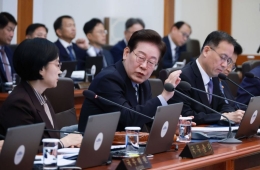
At the October 13 parliamentary audit of the NSSC and nuclear-related institutions by the National Assembly's Science, ICT, Broadcasting and Communications Committee, Kim Namguk of the Democratic Party of Korea said that the safety regulatory organization and specialized personnel must be secured in line with the SMR development schedule.
Kim noted that the review of the standard design approval for an innovative SMR had begun this year and that preliminary reviews of 3 reactor types, including non-light-water reactors, are expected next year. He asked whether the organization and specialized personnel were adequately prepared to handle the work.
Choi Wonho, chair of the NSSC, said, "At present, it is a temporary organization roughly equivalent to one division, with 7 people in charge." He added, "I believe we need at least the staffing of one bureau. The unit will become a formal division next year and gain 5 additional staff members, but that will still be insufficient."
The NSSC has been consulting with relevant government ministries since last year on expanding its SMR safety regulatory organization, but it is having difficulty securing personnel.
However, the NSSC's 7 staff members belong to the organization responsible for SMR regulatory policy and licensing. This figure does not include the reviewers at the Korea Institute of Nuclear Safety (KINS), who conduct technical reviews of the safety of actual reactor designs.
KINS has also called for an increase in specialized personnel. It said that about 100 additional staff members would be needed in the non-light-water SMR field over the next 10 years. KINS explained that about 180 additional staff members would be needed to handle the anticipated expansion of nuclear safety review work across the board by 2035.
SMRs are not simply scaled-down versions of existing large nuclear power plants. Depending on the reactor type, cooling methods, safety systems and fuel differ, making it difficult in some cases to apply the review standards used for existing plants as they are. Reviewing the safety of new designs requires the relevant review standards and expertise to be established.
However, the staffing figures presented at the parliamentary audit that day reflect the regulatory agencies' estimates of their needs. The actual number of personnel required may vary depending on the types and number of reactors to be reviewed, as well as the availability of existing specialists.
Kim pointed out that newly hired specialists cannot immediately be assigned to review work, as developing review standards, providing training and gaining experience also take time. He stressed in particular that safety reviews must not be neglected to meet the schedule for SMR commercialization.
KINS said it would work with the NSSC to secure the specialized personnel needed.
Error in Environmental Radiation Monitoring Data...Warning Level Incorrectly Submitted as Emergency Level
The accuracy of environmental radiation monitoring data was also questioned at the parliamentary audit.
Han Junho of the Democratic Party of Korea pointed out that data submitted to the National Assembly by the NSSC on environmental radiation monitoring in Pocheon, Jeongeup and Gunsan had incorrectly labeled the "warning level" as the "emergency level."
Emphasizing that the thresholds for the two levels differ by a factor of 1,000, Han called for verification of whether this was merely a data-entry error or whether there had also been problems with the actual monitoring information.
Chair Choi explained that the error was a staff member's typo made while preparing materials for submission to the National Assembly.
Hot Picks Today
 "Expensive, Smelly and Scary"... What's Happened to the "Honeymooners' Paradise" Tourists Have Abandoned?
- "I Want to Eat Like Koreans..." Foreigners Who Once Opened Ramen Packs Now Keep Gochujang in Their Pantries
- Women Who Say "A Husband's Annual Salary of 100 Million Won Is a Given"... Matchmaking CEO: "They Talk About It Like It's Nothing"
- "Freezer temperatures cranked up to 50 degrees Celsius"... 'Bizarre attack' devastates hundreds of supermarkets in France.
- "They Said Today Was the Cheapest..." "Let's Get Wedding Jewelry!" Why Did the Luxury Brand Crowds Flocked To Cut Prices by 1.08 Million Won?
Han requested materials showing what information had been displayed at the time on the website and smartphone application made available to the public, along with measurements from nearby monitoring stations and the results of any additional measurements. Chair Choi replied that he would check and submit the relevant materials.
© The Asia Business Daily. All rights reserved. Unauthorized AI training and use prohibited.