[2026 Parliamentary Audit] Gap in Key Reusable Launch Vehicle Technology Development... KARI Runs Night Tests to Cut Electricity Costs
Kim Woo Young: "Project Halted Over Overlapping Defense R&D"...KASA: "Related Funding Not Approved"
Han Junho: "Urgent Need to Upgrade 30-Year-Old Propulsion Test Building"...Choi Hyungdu Raises Concerns About Launch Vehicle Competitiveness
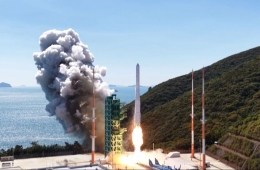
Some research and development (R&D) into key technologies needed to develop reusable launch vehicles failed to secure funding because of concerns that it duplicated projects in the defense sector.
It also emerged that some tests at the Korea Aerospace Research Institute (KARI)'s aircraft engine test facility are being conducted at night or on weekends because of electricity costs. The difficulties facing the development of key technologies and the operation of research facilities continue even as efforts are made to achieve technological self-reliance in the space and aerospace sector, lawmakers said.

At the Korea Aerospace Administration's (KASA) parliamentary audit by the National Assembly's Science, ICT, Broadcasting and Communications Committee on October 13, Kim Woo Young of the Democratic Party of Korea questioned why the Innovative Reusable Launch Vehicle R&D project had been suspended over concerns that it duplicated a defense-sector project.
Kim said the project, which had been allocated KRW 5 billion in 2025, was halted on the grounds that it overlapped with a defense-sector project to develop a reusable methane engine. He pointed out that development had also been delayed for technologies that did not directly overlap, including artificial intelligence (AI)-based engine control, long-life lightweight valves and thrust vector control.
KASA said it had sought to develop only the areas that did not overlap, but the related budget was not approved. It added that these technologies would be needed in the future to develop key technologies for reusable launch vehicles and to carry out system development.
The government has set a goal of completing the hardware for a next-generation reusable launch vehicle by 2032. However, securing funding to develop some of the component technologies remains a challenge.
Choi Hyung-du of the People Power Party raised concerns about the performance of domestic launch vehicle turbopumps and the supply chains for key components and raw materials. He said a concrete strategy was needed to narrow the technology gap with overseas launch vehicles and reduce launch costs.
Tae seog Oh, head of KASA, said a committee had been formed to manage target costs during the development of the next-generation launch vehicle, and that the design process was taking economic viability into account.
30-Year-Old Test Facility...Electricity Costs Force Night and Weekend Operations
The operation of KARI's aging test facilities also came under scrutiny at the parliamentary audit.
Han Jun-ho of the Democratic Party of Korea said that although KARI's propulsion test building, constructed in 1996, is a key research facility for achieving technological self-reliance in aircraft engines, it has not been properly upgraded.
Han raised concerns that the facility requires a large amount of electricity, but some tests are being conducted at night or on weekends instead of during weekday daytime hours because of electricity costs. He said some tests have even continued past 3 a.m.
Oh acknowledged that research institutes were trying to reduce electricity costs because they lacked sufficient funds for operating expenses. Funding for facility upgrades had also been inadequate, and the institute was reportedly seeking a budget to introduce its own power generation equipment.
Han said repeated nighttime testing at an aging facility could put research staff at risk and called for a comprehensive inspection of the facilities and funding for improvements. Oh replied that he would discuss the issues with the relevant agencies.
Hot Picks Today
 "Expensive, Smelly and Scary"... What's Happened to the "Honeymooners' Paradise" Tourists Have Abandoned?
- Women Who Say "A Husband's Annual Salary of 100 Million Won Is a Given"... Matchmaking CEO: "They Talk About It Like It's Nothing"
- "I Want to Eat Like Koreans..." Foreigners Who Once Opened Ramen Packs Now Keep Gochujang in Their Pantries
- Financial Services Commission's Move to Sejong Shifts F4's Center of Gravity... Will the Ministry of Economy and Finance Gain More Sway Over Economic Policy?
- "They Said Today Was the Cheapest..." "Let's Get Wedding Jewelry!" Why Did the Luxury Brand Crowds Flocked To Cut Prices by 1.08 Million Won?
Meanwhile, Kim Woo Young also called for the development of technology to avoid collisions with space debris and for the expanded use of stratospheric drones. KASA said it would develop autonomous collision avoidance technology for satellites and pursue plans to use a stratospheric drone, which recently completed a continuous seven-day flight, for wildfire monitoring and communications relay, among other purposes.
© The Asia Business Daily. All rights reserved. Unauthorized AI training and use prohibited.