Lee: "Managing Relations With Russia Is Important" to Develop Arctic Route
Lee: "There Are No Eternal Enemies or Allies"
Cho Hyun: "Russia Is Cooperative on Arctic Route Operations"
Sanctions on Russia and Ties with the U.S. Remain Key Variables
On the 13th, President Lee Jaemyung stressed the need to maintain stable relations with Russia to develop the Arctic shipping route, saying, "There are no eternal enemies or eternal allies." His remarks reflected the view that South Korea should continue diplomatic cooperation with Russia in the national interest while taking into account sanctions against Russia over the war in Ukraine and relations with Western countries, including the United States and Europe. The government said Russia had taken a cooperative approach during the trial voyage along the Arctic route, though concerns were also raised that changes in the international situation could constrain operations in the future.

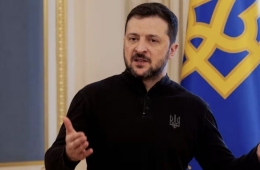
President Lee Jaemyung speaks at a Cabinet meeting held at the Blue House on October 13, 2026. Yonhap News Agency
View original imageAfter receiving a report on the results of the Arctic route trial voyage and future plans at a Cabinet meeting he chaired at Cheong Wa Dae that day, President Lee said, "Managing relations with Russia is also important." He added, "International relations change constantly, and there are various controversies and difficulties as we pursue our national interests, but what remains in the end is the Republic of Korea and our people." In particular, he said, "Just as countries join hands and talk even during a war, don't they engage in diplomacy during a war? Don't they engage in diplomacy even with enemy states? That is the principle of diplomacy. There are no eternal enemies or eternal allies."
The remarks came as the government was reporting that Russian cooperation is essential to commercializing the Arctic route. The route can reduce travel distance and time compared with the existing route to Europe through the Suez Canal, but sanctions against Russia and geopolitical tensions are major factors because ships must pass along the Russian coast.
President Lee said, "From the outset, there was debate over whether this would violate sanctions against Russia," and asked whether there had been any obstacles to cooperation with Russia during the trial voyage. Nam Jaehyeon, Vice Minister of Oceans and Fisheries, explained that Russia's Arctic icebreaker operator is subject to sanctions against Russia. However, he said that in recent summers, vessels have been able to pass through the Arctic route without separate icebreaker support, so the service was not used on this voyage. In other words, the issue was avoided by not using services provided by a company subject to sanctions.
President Lee then asked, "Wouldn't it be difficult regardless of the sanctions if Russia were uncooperative?" Vice Minister Nam replied that international law guarantees freedom of navigation, but that much of the route taken on this voyage passes through Russia's exclusive economic zone (EEZ), adding, "It would be difficult to operate without the cooperation and consent of the Russian authorities."
Foreign Minister Cho Hyun reported that "Russia is maintaining a cooperative attitude." She explained that parts of the Arctic route pass through Russia's internal waters and that, contrary to initial concerns, Russia has responded cooperatively. However, she added that European countries could tighten sanctions against Russia further if the war in Ukraine escalates, and that relations with the United States must also be taken into account. "There is no problem for now, but we also have our relationship with the United States," Cho said, emphasizing the need for diplomatic management. President Lee urged a cautious diplomatic response, saying, "We need to handle this well. It is difficult to discuss the details easily."

President Lee Jaemyung speaks at a Cabinet meeting held at Cheong Wa Dae on Oct. 13, 2026. Yonhap News.
View original imagePresident Lee also stressed that developing the Arctic route is a strategic task directly tied to the national economy, not merely a business matter for the shipping industry. "The distance to Europe via the Arctic route is reduced to two-thirds, and costs also fall significantly," he said, explaining that climate change is gradually extending the period during which the route can actually be used. "More seriously, as the situation in the Middle East deteriorates, using the Suez Canal is becoming increasingly difficult," he said. "Going forward, ships bound for Europe will have to sail around the Cape of Good Hope." He added, "This seems to be a key task of great importance to our national interests," and reiterated, "The Foreign Ministry's role is very important, isn't it? We need to conduct diplomacy well."
Hot Picks Today
!["Let's Hit It Big in Korea"... Foreigners Flock to 'This Place' [Weekend Money]](https://cwcontent.asiae.co.kr/asiaresize/93/2026101613053663640_1792123535.jpg) "Let's Hit It Big in Korea"... Foreigners Flock to 'This Place' [Weekend Money]
"Let's Hit It Big in Korea"... Foreigners Flock to 'This Place' [Weekend Money]
- “What Now for Samsung and SK hynix?” ... Could News from China Rattle the KOSPI? Shareholders Anxious
- "I Had Just Lain Down to Sleep..." Woman in Her 30s Sets Fire to Songpa Villa Parking Lot, Destroying 3 Cars
- Worker Dies in Machinery Accident While Repairing Equipment at Hyundai Steel's Dangjin Plant
- 'Little BoA,' They Said... Apology Over Unpaid Wages Fails to Quell Fury: "Do They Have Money to Debut Their Daughter?"
Earlier that day, the government reported at the Cabinet meeting that the PanStar Acro, a South Korean container ship, had successfully completed a trial voyage to and from Europe via the Arctic route. The ship departed from Busan Port on August 22 and returned to Busan on October 11 after calling at ports in Europe. For the one-way trip to Europe, the voyage distance was reduced by about 35% and the travel time by about 10 days compared with the existing route through the Suez Canal.
© The Asia Business Daily. All rights reserved. Unauthorized AI training and use prohibited.


!["Please, Just Take Them Off" - They Made It All the Way to Bed... Then Fecal Bacteria Struck [Deep Scroll]](https://cwcontent.asiae.co.kr/asiaresize/307/2026101610053063338_1792112730.png)