Korea Insurance Research Institute Holds Seminar on "Natural Disaster Risk Management and Climate Insurance in an Era of Climate Crisis"
In an Era of Climate Crisis, the Insurance Industry Plays a Vital Role in Strengthening the Social Safety Net
Shift to Prevention-Focused Risk Management
Improve Risk Management Systems and Develop Climate Insurance Products in Tandem
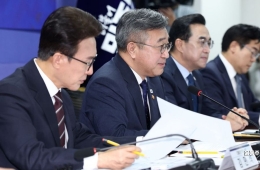
The Korea Insurance Research Institute said it held a seminar on October 13 titled "Natural Disaster Risk Management and Climate Insurance in an Era of Climate Crisis" to discuss the insurance industry's role and challenges in responding to the climate crisis.
The seminar was organized to discuss key issues facing the insurance industry as the scale of damage caused by natural disasters linked to the climate crisis continues to grow. Experts from academia, government and industry shared the latest research findings and policy implications related to risk management measures for addressing the climate crisis, climate insurance cases at home and abroad, and the role of the insurance industry.
In his opening remarks, President Kim Heonsu said, "The central purpose of this seminar is to explore the future challenges facing Korea's insurance industry in effectively responding to climate risks." He also noted that "as the scale of damage from natural disasters grows, there are concerns that the social and economic burdens of disaster recovery will increase."
President Kim went on to emphasize the insurance industry's role in "strengthening the social safety net and complementing the government's disaster recovery and support functions." He said the Korea Insurance Research Institute would serve as a "guide" by conducting in-depth research and presenting compelling policy recommendations to the government and industry.
At the seminar, Dr. Nam Gyeonghun of the Korea Fire Protection Association presented on "Natural Disaster Damage Trends and Risk Management Measures," while Han Jinhyeon, a research fellow at the Korea Insurance Research Institute, presented on "Climate Insurance Cases at Home and Abroad and the Role of the Insurance Industry."
In the first presentation, Dr. Nam pointed out that climate change is diversifying the types of natural disasters and increasing the scale of damage, raising concerns that the public finance burden of disaster recovery will grow. He also explained that the level of transfer of natural disaster risks through insurance remains insufficient, meaning that "protection gaps" - economic losses not covered by insurance - could become a burden on the government, households and businesses.
He stressed that easing this burden requires a shift away from a response focused on recovery after disasters toward a risk management system focused on prevention in advance, which offers greater cost-effectiveness. Dr. Nam said the Korea Fire Protection Association plans to strengthen its role as key infrastructure linking natural disaster risk information and the effectiveness of preventive measures with insurance systems, drawing on the risk assessment capabilities it has built up.
In the second presentation, Han said that as the climate crisis deepens, damage from natural disasters and extreme weather in Korea could increase, along with protection gaps.
Drawing on climate insurance cases from overseas, Han outlined the insurance industry's role in narrowing protection gaps in Korea. In particular, Han emphasized expanding the social safety net for groups vulnerable to climate change, improving businesses' access to insurance through climate risk management services, and using parametric insurance.
Han also proposed that, to expand the climate insurance market, the government should initially assume some of the risk through pilot projects and similar initiatives, then gradually transfer the risk to the private insurance market. The government should also support insurers' risk assessments and product development through surveys and data sharing.
Hot Picks Today
 "Expensive, Smelly and Scary"... What's Happened to the "Honeymooners' Paradise" Tourists Have Abandoned?
- Women Who Say "A Husband's Annual Salary of 100 Million Won Is a Given"... Matchmaking CEO: "They Talk About It Like It's Nothing"
- "I Want to Eat Like Koreans..." Foreigners Who Once Opened Ramen Packs Now Keep Gochujang in Their Pantries
- "I'd Buy a Home Rather Than Spend 16 Million Won on Guests' Meals"... People in Their 20s and 30s Ditch Wedding Halls and Funeral Viewing Rooms
- "They Said Today Was the Cheapest..." "Let's Get Wedding Jewelry!" Why Did the Luxury Brand Crowds Flocked To Cut Prices by 1.08 Million Won?
After the presentations, a panel discussion moderated by Lee Bongju, an emeritus professor at Kyung Hee University, featured Dr. Gyeong Minsu of Korean Re, Kim Yuran, a deputy director at the Ministry of Climate, Energy and Environment, Professor Nam Sujeong of Sungkyunkwan University, and Oh Eunsil, a senior manager at DB Insurance. They discussed measures for the insurance industry to respond to the climate crisis and related policy challenges.
© The Asia Business Daily. All rights reserved. Unauthorized AI training and use prohibited.