Kang Kyungwha: "No Concrete Progress Yet on North Korea-U.S. Summit... Limits to Communication with Senior White House Officials"
"Trump Has Expressed Willingness to Engage in Dialogue, but There Are No Concrete Signs"
"Progress in Consultations Between South Korean and U.S. Intelligence Agencies"
"No Personal Distrust of Jeong Dongyoung or Lee Jongseo
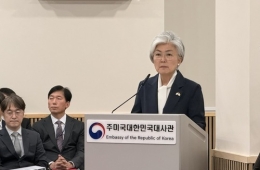
Kang Kyungwha, South Korean Ambassador to the U.S., said on October 12 (local time) that she understood there had been “no concrete progress yet” regarding the possibility of a North Korea-U.S. summit. On the recent controversy over restrictions on intelligence sharing between South Korea and the U.S., she acknowledged that progress had been made in consultations between the two countries’ intelligence agencies, but that communication with senior White House officials remained limited.

At a parliamentary audit held that day at the Embassy of the Republic of Korea in Washington, D.C., Ambassador Kang was asked, “How likely do you think a North Korea-U.S. summit is?” She replied, “There is always a possibility, but it is difficult to put a number on it,” adding that there had been no concrete progress.
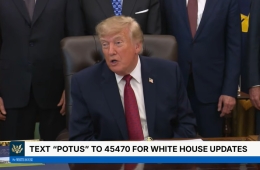
Ambassador Kang said, “U.S. President Donald Trump has sent messages several times expressing his willingness to engage in dialogue, and we regularly check with the U.S. Department of State and the National Security Council (NSC) to understand the context behind those messages.” She added, “There are no concrete signs, though.”
She continued, “This topic—whether a North Korea-U.S. summit will take place—is one of the subjects discussed in our daily consultations on intelligence sharing with U.S. authorities.”
Ambassador Kang also said that dialogue between North Korea and the U.S. should provide an opportunity to resume inter-Korean talks. “North Korea’s position is that it will no longer regard us as a dialogue partner, so it is most important for dialogue between North Korea and the U.S. to take place,” she said, stressing that close communication between South Korea and the U.S. during that process would be important to paving the way for inter-Korean dialogue.
On the recent controversy over restrictions on intelligence sharing between South Korea and the U.S., she said progress had been made in consultations between the two countries’ intelligence agencies.
“The National Intelligence Service continues to address matters related to intelligence cooperation,” Ambassador Kang said. “I understand that communication between the two intelligence agencies has taken place and that progress has been made.”
Earlier, U.S. intelligence authorities reportedly viewed Unification Minister Jeong Dong-young’s remarks about a nuclear facility in Kusong, North Korea, as a disclosure of intelligence on North Korea provided by the U.S., and restricted intelligence sharing with South Korea as a result.
However, Ambassador Kang drew a distinction, saying the U.S. had never expressed distrust of Minister Jeong or National Intelligence Service Director Lee Jong-seok personally.
In response to a question from independent lawmaker Han Dong-hoon asking whether the U.S. had ever expressed distrust of Minister Jeong and Director Lee to the South Korean side, Ambassador Kang said, “Not as far as I have heard.” She added, “There have been various consultations between the two countries on issues in intelligence cooperation, but there has been no criticism directed at individuals.”
Asked whether Minister Jeong had requested that she clear up a misunderstanding with the U.S., she acknowledged, “I received a phone call.” Regarding the U.S. side’s view, she explained, “The issue was with the remarks about the nuclear facility in Kusong, North Korea, not with Minister Jeong personally.”
Asked whether the U.S. had raised concerns about intelligence cooperation during a meeting last month, on September 18, between U.S. Secretary of State Marco Rubio and South Korean Foreign Minister Cho Hyun, she replied, “Rather than raising concerns, the U.S. side provided an explanation.”
Ambassador Kang also acknowledged that communication with senior White House officials was insufficient.
“I admit that there are limits to communication with the White House,” she said. “I meet frequently with the White House NSC and key White House officials, but consultations at the senior level have not taken place as often as I would like. At this point, even I find that frustrating.”
She cited intelligence cooperation and strategic investment in the U.S. as the most difficult issues in South Korea-U.S. relations. “Intelligence cooperation is the issue discussed most often,” Ambassador Kang said. “The strategic investment issue in the U.S. was the most difficult part until the announcement of the first project, including Alaska (the liquefied natural gas investment project).”
She also commented on the “Coupang incident,” which has emerged as a diplomatic and trade issue between South Korea and the U.S. “As ambassador, I believe we need to provide a factual explanation of our legal system so that our people can see that, as a sovereign government, we are responding to this matter faithfully in accordance with that system,” she said.
Hot Picks Today
!["After Hotels Swapped Beds for Operating Tables..." Big Spenders Who Poured KRW 1.7 Trillion Reshaped Gangnam's Hotel Landscape [Real Estate A to Z]](https://cwcontent.asiae.co.kr/asiaresize/93/2026101309205958351_1791850859.jpg) "After Hotels Swapped Beds for Operating Tables..." Big Spenders Who Poured KRW 1.7 Trillion Reshaped Gangnam's Hotel Landscape [Real Estate A to Z]
"After Hotels Swapped Beds for Operating Tables..." Big Spenders Who Poured KRW 1.7 Trillion Reshaped Gangnam's Hotel Landscape [Real Estate A to Z]
- Why SK hynix Maintains Its 4 Million Won Target Price: "Earnings Beat FX Headwinds" [Click eStock]
- "Foreigners Who Used to Tear Open Ramen Packets Now Keep Gochujang in the Pantry"... To Eat Like Koreans
- "Called out while eating barbecue, 30,000 went wild"... Unknown singer who held the stage for two hours saw his life turn around
- "They Said Today Was the Cheapest..." "Let's Get Wedding Jewelry!" Why Did the Luxury Brand Crowds Flocked To Cut Prices by 1.08 Million Won?
She added, “In our consultations with the U.S., we have communicated about much more in-depth issues and various ways to resolve them.”
© The Asia Business Daily. All rights reserved. Unauthorized AI training and use prohibited.