[2026 Parliamentary Audit] Shin Hyun-song: "Oil Price Cap Should Not Be Maintained for an Extended Period"
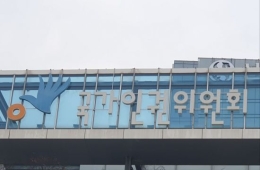
National Assembly Finance and Economy Committee Audit of the Bank of Korea
Bank of Korea Governor Shin Hyun-song said on October 12 that the government’s oil price cap “eases the initial inflation shock in the short term and blocks its transmission to costs or core inflation, but price controls should not be maintained for an extended period.”
Speaking at a parliamentary audit by the National Assembly’s Finance and Economy Committee at the Bank of Korea that day, Shin said, “Keeping the price cap in place for too long can have various side effects,” adding, “A temporary measure is the most desirable approach.”
Lee Jong-wook of the People Power Party described the government’s inflation policies—including the oil price cap, cuts to fuel taxes and tariffs, and discount coupons for agricultural and livestock products—as “price controls” and raised the possibility that prices were being distorted. In response, Shin said, “According to the Bank of Korea’s estimates, the oil price cap [mentioned by Representative Lee] lowered the rate of inflation by 0.6 percentage points. Since it is funded by the government, it has continued at a sustainable level, and it has the advantage of preventing second-round effects in advance.”
Hot Picks Today
 Chey Tae-won's One Remark Sends Stocks Soaring to 'Limit-Up'... This Stock Jumps Despite SK hynix's 3% Drop
- "Gen Z Is No Joke": Spent '5 Times' More Than Their Moms' Generation, Splurging an Average 200 Million Won on Jewelry Alone.
- "Now We're in Our 30s and 40s, and My Husband's the Only One Still Going Strong?" ... Women Tire First While Shopping: What's Happening in Japan?
- "Apparently, you can easily make 3.3 million won a month in Korea"... The "easy-money gig" making waves among international students
- "My Whole Body Trembles After Just 30 Seconds, but She Planked for 5 Hours?"... The 61-Year-Old Grandma's Secret to Holding On
When Lee asked whether the government would publish statistics on administered prices, an inflation indicator covering items whose prices are influenced directly or indirectly by the government, Shin replied, “I will check again.” Asked to take responsibility for proactively overseeing and controlling inflation overall, Shin said, “I will do so.”

© The Asia Business Daily. All rights reserved. Unauthorized AI training and use prohibited.