[2026 Parliamentary Audit] Acting Police Chief: "Expanding Rotational Assignments Is Quite Difficult"
Acting National Police Agency Commissioner General Kim Jongcheol said it would be difficult to extend the rotational personnel system to frontline staff. The measure has been discussed as a way to prevent local collusion, sometimes referred to as “hyangchal,” but concerns have been raised that imposing uniform transfers all the way down to frontline officers would undermine their expertise and increase burdens related to housing and children’s education.

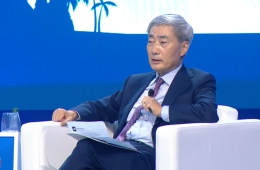
Acting National Police Agency Commissioner General Kim Jongcheol answers lawmakers' questions during a parliamentary audit of the National Police Agency by the National Assembly's Public Administration and Security Committee at the agency's headquarters in Seodaemun-gu, Seoul, on the 12th. Photo by Kim Hyunmin
View original imageAt a parliamentary audit of the National Police Agency by the National Assembly’s Public Administration and Security Committee on October 12, Kim responded to a question from Joo Ho-young of the People Power Party, who asked whether a more nuanced system should be found to ease opposition to expanding rotational assignments. “It is true that having frontline staff participate in rotational assignments would entail a considerable burden,” he said. “Unless housing or transportation cost support is provided, it would be very difficult in practice.”
Joo noted that, unlike senior officers at the rank of superintendent general or above, who are provided with housing when transferred, lower-ranking officers would first face the problem of finding a place to live. “They say the transfers would be within provincial-level jurisdictions. Commuting would be possible if someone moved from Gyeongsan or Gyeongju in Gyeongbuk to Miryang, but not if they were sent to Namhae,” he said.
He added, “Those affected would have no choice but to lobby for assignments closer to home each time personnel appointments are made. Problems would start right there for those working outside the capital, so this is ultimately not a solution.”
Kim said, “I will communicate closely with frontline staff.”
The National Police Workplace Council, the police equivalent of a labor union, opposes expanding the rotational personnel system in a uniform manner. It says exchanges between metropolitan and provincial police agencies should be expanded primarily for officers at the rank of superintendent or above who have real influence over investigations, personnel, inspections and command, rather than for general staff. The National Police Agency is gathering frontline feedback through online surveys, its internal bulletin board and a field advisory panel.
Hot Picks Today
 "I Ate It Often Because It Tasted Good"... This Eating Habit Linked to 40% Higher Odds of Asymptomatic Cerebrovascular Damage
- "Booked a Cheap Flight, Only to Get Blindsided"... Travelers' Complaints "Explode" Over Extra Fees
- Woman in Her 70s Assaults Sister in Her 80s: “She Had an Affair with My Husband”
- “Dad Just Gave It to Us as a Gift”... Scratched a Lottery Ticket at a Family Gathering and Hit a 1 Billion Won Jackpot
- "We've gone this far to save on lunch"... Where office workers are flocking instead of restaurants
Meanwhile, in an internal survey conducted by the National Police Agency in August, 85.4% of 9,611 police officers opposed expanding rotational assignments, citing ▲long-distance commutes ▲the burden of raising children and ▲a decline in work expertise.
© The Asia Business Daily. All rights reserved. Unauthorized AI training and use prohibited.