[2026 Parliamentary Audit] Ministry of Oceans and Fisheries Lowers 2030 Seafood Self-Sufficiency Target to 72.9%... "Concerns Over Entrenched Import Dependence"
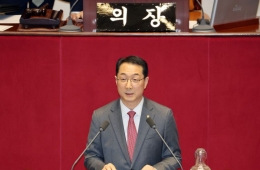
Lawmaker Moon Geumju criticizes the ministry at committee audit
Seafood import value surged 30.6% over the past 10 years
"Lowering the target will weaken incentives to expand production"
Concerns have been raised that the Ministry of Oceans and Fisheries' decision to lower its 2030 target for seafood self-sufficiency to 72.9%, citing worsening production conditions due to climate change, could entrench the country's reliance on imports.
Moon Geumju, a Democratic Party of Korea lawmaker on the National Assembly's Agriculture, Food, Rural Affairs, Oceans and Fisheries Committee, criticized the sharp reduction in the 2030 seafood self-sufficiency target during the ministry's parliamentary audit on October 12 and called for a "policy shift to maintain the seafood production base and strengthen food security."

According to Moon, the ministry gradually lowered its seafood self-sufficiency target from 85.3% in 2020 to 79.0% in 2025 and 72.9% in 2030. Moon said, "The ministry recently set its 2030 seafood self-sufficiency target at 72.9%, citing climate change and uncertainty in fisheries production. That is a reduction of 6.1 percentage points from the 2025 target of 79.0%." She added, "In fact, the domestic seafood self-sufficiency rate has continued to rise since 2019, when it stood at 68.5%, reaching 76.7% in 2024 and already surpassing the ministry's 2030 target of 72.9%."
Domestic seafood production totaled about 3.93 million metric tons in 2025, equivalent to 98.3% of the 2030 target of 4 million metric tons. Moon also pointed to rising seafood import prices and deepening structural reliance on imports. According to data submitted by the ministry, seafood imports excluding salt remained between 1.4 million and 1.7 million metric tons over the past 10 years, but their value surged 31.8%, or $1.49 billion, from $4.68 billion in 2016 to $6.17 billion in 2025. The average import price per metric ton also rose from $3,237 to $4,229, and reached $4,396 in January-August this year.
Moon said, "In this situation, the ministry's lower self-sufficiency target assumes that import volumes will expand from the average of 1.53 million metric tons over the past 10 years to around 2.18 million metric tons. This could deepen the high-cost import structure and cause domestic supply-and-demand and price instability in the event of overseas supply chain disruptions." She added, "Lowering the target will weaken incentives to expand production and create a vicious cycle that entrenches reliance on imports."
Hot Picks Today
 "I Came to Korea and Easily Made 3.3 Million Won a Month"... The "Easy Gig" Everyone's Talking About Among International Students Turns Out to Be...
- More Than 900 Schools Shut One After Another... Japan in Turmoil Over 'Infectious Disease' Outbreak
- [2026 Parliamentary Audit] Acting Police Chief: "Won't Rule Out Reinvestigation Into Han Dong-hoon's Daughter"
- "Hand in Your Resignation and Get a Year's Salary"... This Country Pushes Early Retirement for Civil Servants
- "Oh Eunyoung's Consultation Fee: Millions of Won? Not Expensive"... Yonsei Professor's Sharp Rebuke over "300,000-Won Lecture Fee"
Moon called on the ministry to develop improvement measures, including reviewing its self-sufficiency and production targets, focusing management on key seafood products, and establishing a production system adapted to climate change. She said, "As global supply chain crises intensify, including the Russia-Ukraine war and conflicts in the Middle East, seafood is not merely food; it is a key pillar of national food security. The ministry should focus on its core role of maintaining and expanding domestic production capacity instead of rushing to meet target figures."
© The Asia Business Daily. All rights reserved. Unauthorized AI training and use prohibited.