[2026 National Audit] KCUE President Lee Kijeong Pledges to Prevent Another Early Admissions Outage... "Also Operating Dedicated Task Force for Regular Admissions"
At an October 12 work report during the National Assembly Education Committee’s audit
“414 cases affected by early admissions application outage eligible for relief; 354 applications ultimately completed”
Calls for increased higher education funding and support for universities’ AI transition
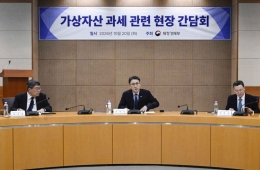
Lee Kijeong, president of the Korean Council for University Education (KCUE), said on October 12, regarding the “early admissions system outage” that occurred during the application period for the 2027 academic year, “We will work to strengthen the stability of the application system and its management framework to prevent this from happening again.”
At a work report during the National Assembly Education Committee’s audit of KCUE and other organizations that day, Lee said, “As an institution responsible for university admissions, we take this matter very seriously.”
“We are currently conducting a special investigation with the Ministry of Education and the Korea Foundation for the Promotion of Private Schools, and we are also operating a dedicated task force to prepare for regular admissions,” he said. “Based on the investigation’s findings, we will comprehensively review and improve advance system checks, incident response manuals, guidelines for disclosing competition ratios, and the applicant number system.”
At around 5:50 p.m. on September 11, an error occurred in the system of Uway Apply, an application processing service provider, preventing some applicants from completing their applications and payments. KCUE extended the application deadline by one hour, from 6 p.m. to 7 p.m., but confusion ensued, with some applicants failing to see the notice of the extension.
“As soon as the outage occurred, we reported the situation to the Ministry of Education and extended the application deadline to protect applicants’ opportunity to apply,” Lee said. “We subsequently developed a remedy based on objective electronic records, and 354 of the 414 cases identified as eligible for relief ultimately completed their applications.” He added, “We will work to strengthen the stability of the application system and its management framework to prevent this from happening again.”
That day, Lee also called for government support to expand funding for higher education and help universities transition to artificial intelligence (AI).
“Public expenditure on education per higher education student in Korea is 72% of the average for the Organisation for Economic Co-operation and Development (OECD),” Lee said. “More ambitious and stable investment is needed to enhance universities’ international competitiveness and develop future talent.”
On universities’ transition to AI, he said, “AI is not merely a change in educational tools; it is a major challenge for universities that will transform education, research, and administration across the board.” He stressed that “national support is needed to build AI infrastructure and promote sharing and cooperation among universities.”
He also proposed introducing a system that would provide a full tax deduction for donations of up to 100,000 won to universities, to encourage individuals to make small donations.
Hot Picks Today
 "If I Lose This Election, a Nuclear Bomb Will Fall?"... Netanyahu Posts Chilling Image Ahead of General Election
- "Everyone else is retiring"... People who say they'll work until 74: What's going on? [Pension Asset Polarization] 1
- Two People in Their 60s Steal 660 kg of Kabocha Squash from Someone Else's Field... Plead Not Guilty, Saying, "We Thought It Was Discarded"
- He Left It in the Car and Forgot... "I Nearly Collapsed with Joy": Man Wins $1.48 Million Lottery
- "Stockpile 9 Liters of Water and Three Days' Worth of Food"... UK Tense Over Nationwide Emergency Preparedness Advice
“KCUE will take greater responsibility for creating a trusted university admissions system, strengthening universities’ competitiveness, and preparing for the future of higher education in Korea,” Lee said.
© The Asia Business Daily. All rights reserved. Unauthorized AI training and use prohibited.