[2026 Parliamentary Audit] Shin Hyunsong: "Failed to warn in advance about single-stock leveraged ETF risks... I apologize to the public"
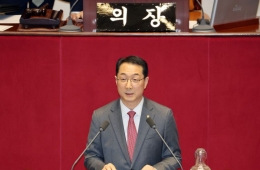
Bank of Korea Governor Shin Hyun-song said on the 12th, in connection with the controversy over single-stock leveraged exchange-traded funds (ETFs), “I agree that we did not adequately warn the public about the risks,” adding, “I apologize to the public.”
Shin made the remarks that morning during a parliamentary audit of the Bank of Korea by the National Assembly’s Finance and Economy Planning Committee, responding to Democratic Party of Korea lawmaker Jeong Seong-ho, who said the Bank of Korea alone was avoiding responsibility for the recent controversy.

Bank of Korea Governor Shin Hyun-song answers lawmakers' questions during a parliamentary audit at the Bank of Korea in Jung-gu, Seoul, on the 12th. Photo by Yonhap News Agency pool reporters.
View original imageJeong said, “Leveraged ETFs amplified stock price volatility, had various effects on financial stability, and caused serious losses for retail investors,” and asked, “Do you believe the Bank of Korea played an appropriate role throughout the process, from the introduction and trading of these products to their regulation?”
Shin replied, “At the Monetary Policy Board’s press conference in late May and on several other occasions, I made general comments about investing in stocks with borrowed money. However, at the time, we had not fully grasped the volatility of the domestic stock market, particularly in the memory semiconductor sector. I agree that we did not adequately warn the public about the risks.”
He also said the Financial Stability Report published on June 24 did not adequately cover the issue. The KOSPI peaked at 9,115 on June 22 before plunging to 8,200 on the 23rd. However, the report published afterward said of single-stock leveraged ETFs: “They are expected to help prevent domestic investment funds from flowing overseas and contribute to increased inflows of foreign capital. Their current impact on the market is limited.”
Shin acknowledged, “It is true that most of the report is generally written between late May and early June,” but added, “Given the situation at the time, the report was not appropriate.” In response to Jeong’s criticism that the September Monetary Policy Report, published after the situation had subsided, offered commentary from a third-party perspective, Shin said, “I would like to apologize to the public.”
Hot Picks Today
 "Apparently, you can easily make 3.3 million won a month in Korea"... The "easy-money gig" making waves among international students
- More Than 900 Schools Shut One After Another... Japan in Turmoil Over 'Infectious Disease' Outbreak
- North Korean Landmine Incident... Angry Male Support for Ruling Party Falls 10.5 Points [Asia Business Daily-Realmeter Poll]
- "Hand in Your Resignation and Get a Year's Salary"... This Country Pushes Early Retirement for Civil Servants
- "Oh Eunyoung's Consultation Fee: Millions of Won? Not Expensive"... Yonsei Professor's Sharp Rebuke over "300,000-Won Lecture Fee"
Jeong said, “There was no advance warning about this issue at the F4 meeting either. The Bank of Korea should neither simply follow the government nor be completely independent and neutral. It should offer advice that maintains an appropriate degree of tension with the government—advice that may make the government somewhat uncomfortable but reassures the public.” Shin emphasized, “I fully agree. I will do that.”
© The Asia Business Daily. All rights reserved. Unauthorized AI training and use prohibited.