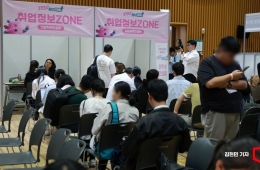
"In the AI Era, Lifelong Education Grows More Important, but Budget Is Just 1.35%"
As the importance of lifelong learning grows in the age of artificial intelligence (AI), the budget for lifelong and vocational education accounts for just 1.35% of the total education budget. That is one-sixty-first of the budget for kindergarten, elementary and secondary education (82.32%). A recommendation has emerged that lifelong learning should be viewed not as an extension of welfare, but as a basic right of the people.

On October 12, the Korea Research Institute for Vocational Education and Training (KRIVET) announced these findings in a report titled "National Human Resource Development Strategies in the Era of Triple Transition." Triple transition refers to the complex changes caused by the interconnected transitions in population, AI and climate.
Researchers analyzed the sectoral breakdown of the Ministry of Education's 2024 main budget of 89 trillion 566.4 billion won. Kindergarten, elementary and secondary education accounted for 73 trillion 729 billion won, or 82.32% of the total, followed by higher education at 16.16% (14 trillion 477.2 billion won) and lifelong and vocational education at 1.35% (1 trillion 216.2 billion won).
"From a life-cycle perspective, 82% of the total budget is spent during the first 20 years of life, while the budget for lifelong education serving people from their 30s to their 80s amounts to just 1.35%," the researchers said. They added, "The existing budget structure, which is centered on compulsory public education, needs to be reorganized. The basic framework of the budget should be expanded to cover learning throughout life, reflecting the realities of declining birth rates and accelerated population aging." They said flexible policy implementation is needed to take into account factors such as rapidly changing global AI technology, uncertain market conditions, demographic change and the climate crisis.
The researchers also identified the most urgent policies for each of the three transitions. In an expert Delphi survey of professors, researchers, corporate human resources managers and teachers, "maximizing the use of women and older workers" ranked first in importance for the demographic transition. For the AI transition, "developing core AI technologies and building an industrial ecosystem" was ranked the most important policy. For the climate transition, respondents identified "accelerating the shift to future-friendly energy systems" and "developing climate technology specialists."
"The type of talent experts believe is needed in the era of triple transition can be summed up as 'interdisciplinary talent that connects technology, people and the environment,'" the researchers said. "To develop such talent, the focus of education should shift in stages: in the short term, toward digital literacy education for all; in the medium term, toward developing practical talent for industry; and in the long term, toward cultivating creative, interdisciplinary talent able to take on new roles."
Hot Picks Today
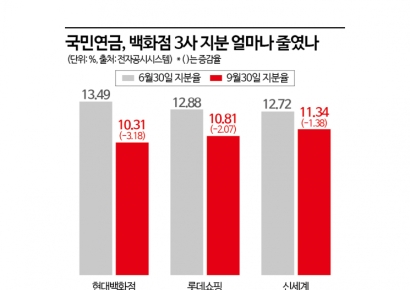 'Big Investor' NPS Has Already Cut Its Losses... Sold Department Store Stocks in Q3 Despite Strong Earnings Outlook
- "There's a Drink Like This?"... Chinese Beverage With "Korean" in Its Name Rakes in 85 Million Won in Monthly Sales
- "Female Teachers Must Wear Skirts in Class"... Outrage Erupts Over Principal's Demand: What's Happening in North Korea?
- "I Put in 10 Million Won, but Only 2 Million Won Is Left" ... 77% Plunge Leaves Retail Investors in Samsung Electronics and SK hynix Leveraged ETFs Crying Out
- "The leggings are all see-through. It's so embarrassing to look at," complaints prompt Lululemon to fire development staff.
Hwang Seongsu, vice president of the Korea Research Institute for Vocational Education and Training, said, "The transitions in population, AI technology and the environment are interconnected structural changes, and the current human resource development system, which is heavily weighted toward school education in the early years of life, has limitations in responding to them." He added, "To respond to the triple transition, governance needs to be rebuilt by establishing a strong committee directly under the president and a dedicated headquarters to provide operational support."
© The Asia Business Daily. All rights reserved. Unauthorized AI training and use prohibited.