Gangnam District's 9th Administration Restructuring Puts Reconstruction First, Adds 1 Bureau, 1 Division and 5 Teams
Aiming to take effect next January; ordinance bill to be submitted to the district council this month
Gangnam District, Seoul (Mayor Kim Hyunki) has drawn up an organizational restructuring plan for its ninth popularly elected administration, focusing its administrative resources on five areas: reconstruction, culture and tourism, transportation, artificial intelligence (AI), and public facilities. The district will submit the relevant ordinance bill to the 338th extraordinary session of the Gangnam District Council, to be held this month, and aims to implement the changes in January next year, subject to the council's approval.

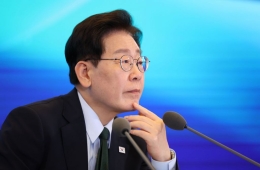
Gangnam District Mayor Kim Hyun-gi unveiled "A Great Transformation of Gangnam" as the district's vision at his inauguration ceremony on July 1, marking the start of his ninth elected term. The district has drawn up an organizational restructuring plan to support this vision and will submit it to the district council this month. Provided by Gangnam District.
View original imageAccording to the district on October 12, under the plan, the organization will grow by one bureau, one division, and five teams. It will consist of eight bureaus, one office, one director's office, 42 divisions, and 186 teams, as well as one center with five divisions and 22 teams. The district said, “This restructuring focuses on supporting the ninth popularly elected administration's vision for Gangnam, ‘A New Transformation for Gangnam,’ and its plans for the district's development over the next 100 years. We have expanded the organization only as much as necessary in essential areas and consolidated departments with overlapping functions.”
The most notable change is the elevated status of the reconstruction organization. The Housing and Urban Development Bureau and its Reconstruction Division will be placed at the top of the district's organizational chart. The district will also reorganize its housing-related departments to strengthen communication with reconstruction associations and residents and to take charge of complex development around transit stations.
A new Future Economy Bureau will bring together functions related to AI and robotics, the local economy, jobs, and information technology. The existing Future Culture Bureau will be reorganized as the Culture and Education Bureau, bringing together functions related to culture and the arts, Hallyu tourism, and tourism marketing. The district will also reorganize its scattered transportation, parking, automobile, and road functions to support railway projects such as the Wirye-Gwacheon Line and Wirye-Sinsa Line, as well as the expansion of public parking lots.
A Public Facilities Division dedicated to public buildings will also be established. Public building work, previously divided between the Architecture Division and the departments that use the facilities, will be consolidated in one place: the Public Facilities Division will handle construction, while the user departments will operate the facilities. The restructuring will create seven new divisions, including the Public Facilities Division, the Corporate Local Tax Division, the Landscape and Design Division, the Leisure and Lifestyle Division, the Lifelong Education Division, the Integrated Care Division, and the AI and Robotics Division.
The urban planning review body will become independent. The Urban Planning Standing Planning Team, currently under the Innovation Strategy Division, will be separated to form the Urban Planning Standing Planning Group directly under the head of the Housing and Urban Development Bureau. The group will conduct preliminary reviews of proposals submitted to the Urban Planning Committee. The district said that concerns had been raised that the independence of the reviews was insufficient because the work had been handled by a single team.
Hot Picks Today
![Claims That "Daiso Is Being Shut Down to Save AliExpress and Temu" Spread Widely... A Fact-Check [Why&Next]](https://cwcontent.asiae.co.kr/asiaresize/93/2023121315590987574_1702450749.jpg) Claims That "Daiso Is Being Shut Down to Save AliExpress and Temu" Spread Widely... A Fact-Check [Why&Next]
Claims That "Daiso Is Being Shut Down to Save AliExpress and Temu" Spread Widely... A Fact-Check [Why&Next]
- "Three-Star Rooms at 980,000 Won a Night, Five-Star at 2 Million"... Busan Fireworks Festival Seats Cost 100,000 Won, but Hotel Views Bring Another Price-Gouging Row
- "All He Did Was Reheat and Eat Fried Rice Made the Day Before"... Man in His 20s Nearly Needed a Liver Transplant
- "I Thought It Was a Fish": 40-Second Miracle... Fisherman Saves Drowning Puppy With CPR
- "Looks Like They're Having an Affair": What If You Opened a KakaoTalk Chat, Filmed It, and Shared the Video With Coworkers?
Mayor Kim Hyunki said, “This organizational restructuring will lay the groundwork for responding a step ahead to future administrative needs and swiftly addressing key issues. I will take final responsibility, while building an organization where staff can work with conviction.” He added, “We will turn key tasks, including reconstruction, transportation, and AI, into tangible results so residents can feel the changes in Gangnam.”
© The Asia Business Daily. All rights reserved. Unauthorized AI training and use prohibited.