From U.S. Investment to Security Talks? U.S. Raises Intelligence Trust Issue, Complicating Cheong Wa Dae's Calculations
First U.S. Investment Project Approved, but
Security Talks on Nuclear-Powered Subs and Nuclear Issues Remain Slow
Controversy Grows Over NIS Exclusion and Intelligence-Sharing Restrictions
Ruling Party: "U.S. Demands May Just Keep Pil
South Korea and the United States have taken the first step toward implementing strategic investments in the United States, but negotiations on security issues that South Korea had hoped to address have made little progress. Instead, controversy has erupted over U.S. restrictions on sharing North Korea-related intelligence and the exclusion of the National Intelligence Service (NIS), complicating the Lee Jaemyung administration’s strategy for negotiations with Washington. The Blue House is facing growing concerns as South Korea meets U.S. economic demands without securing commensurate gains in security, while taking on new sources of friction.

President Lee Jaemyung, who is visiting the United States to attend the UN General Assembly, holds a summit with U.S. President Donald Trump at a hotel in New York on Sept. 22 (local time). Sept. 23, 2026. Yonhap News.
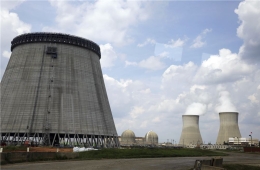
View original imageOn October 1, South Korea and the United States selected a $22.3 billion gas-fired combined-cycle power plant project in Texas as the first project under their strategic investment initiative in the United States. The $200 billion investment commitment in the United States has thus entered the stage of concrete project implementation. Having opened the way for investment based on commercial viability, the South Korean government had expected negotiations to accelerate on security issues that had been delayed, including nuclear-powered submarines and uranium enrichment and reprocessing. In particular, observers anticipated that follow-up discussions would begin in earnest on agreements reached between the leaders of the two countries, including the construction of nuclear-powered submarines and expanded authority for uranium enrichment and spent nuclear fuel reprocessing.
However, the U.S. response fell short of expectations. With no tangible progress on security, discord between the two countries’ intelligence agencies has repeatedly come to light. It emerged only recently that the NIS had been excluded at the U.S. side’s request from a South Korea-U.S.-Japan working group meeting on countering North Korean cyber threats held in Washington in June. Some U.S. restrictions on sharing North Korea-related intelligence also remain in place. Chairman of the Joint Chiefs of Staff Jin Young-seung acknowledged on October 8, during a parliamentary audit, that some restrictions on intelligence sharing were continuing.
The U.S. administration’s public response has also raised eyebrows. In response to recent questions about intelligence cooperation between South Korea and the United States, the administration said, “We expect South Korea to uphold the standards of our alliance, which has endured for decades,” specifically referring to intelligence and counterintelligence. Although it offered no details, the remarks invoked standards of trust between allies as discord between the two countries’ intelligence agencies came to light.
A senior ruling-party official said on October 12, “We have begun fulfilling our investment commitments to the United States, but the answers we are getting from Washington remain unclear,” adding, “With no progress in security negotiations and intelligence cooperation issues now surfacing, responding to U.S. demands one issue at a time could leave us with growing burdens while failing to secure what we need to gain.”
Of particular concern are allegations that distrust in the intelligence sphere was also raised during trade negotiations. Reports have emerged that U.S. Commerce Secretary Howard Lutnick conveyed the Trump Administration’s distrust of the NIS while discussing investments in the United States with South Korean Minister of Trade, Industry and Energy Kim Jeonggwan. The government denied the reports, but if they are accurate, they could suggest that the United States is linking trade with intelligence and security issues to strengthen its negotiating leverage.
These issues have been compounded by delays in issuing a U.S. visa to Chung Cheong-rae, a Democratic Party of Korea lawmaker. After his visa issuance was delayed ahead of an on-site parliamentary audit in the United States by the National Assembly’s Foreign Affairs and Unification Committee, Chung changed his destination to Europe. The People Power Party has continued its offensive, calling the series of incidents signs of a breakdown in trust between South Korea and the United States and demanding the dismissal of Unification Minister Chung Dong-young and NIS Director Lee Jong-seok.
Observers say the fundamental challenge facing the Blue House lies not in individual controversies, but in the lack of an integrated framework for managing negotiations with the United States. South Korea sought to resolve trade friction through investment commitments and expand discussions to security negotiations, but the United States appears to have shifted its approach and is treating investment implementation and security issues as separate negotiating tracks. South Korea’s obligations are becoming concrete, while security gains it hopes to secure from the United States remain on the negotiating table.

Calls are growing for South Korea to revamp its negotiating strategy with the United States to cover trade as well as diplomatic and security issues. Responding to each additional U.S. demand separately, critics say, makes it difficult to gain the upper hand in negotiations. Given the possibility that intelligence cooperation could become a new variable in security talks, some argue that a senior Blue House official should step in to negotiate a comprehensive deal, rather than leaving the response to individual ministries.
Hot Picks Today
 "Samsung Electronics at 70,000 won, SK hynix at 200,000 won"... Why the gloomy outlook despite 'record-breaking earnings'?
- "I Was Just Going Barefoot at Home"... "Absolutely Not": Why Doctors Warn Against It
- "There's a Drink Like This?"... Chinese Beverage With "Korean" in Its Name Rakes in 85 Million Won in Monthly Sales
- "To Make His Girlfriend Think It Was His": Why He Demolished Someone Else's 2-Billion-Won Apartment
- "No Need to Hire a Model"... The 25-Year-Old Woman Who Entered Social Media with a Face That Cost Just 1,500 Won [AI Content: The Bright and Dark Sides] 1
A diplomatic source said that U.S. pressure is likely to intensify in the run-up to the U.S. midterm elections, adding, “Even so, negotiations must now strike a balance. The question is not only how much of the U.S. demands to accept, but also how to use the investments South Korea has already pledged as leverage to ease friction over bilateral issues and secure concrete gains in security.”
© The Asia Business Daily. All rights reserved. Unauthorized AI training and use prohibited.