Busan-to-Seoul Trip Takes 5 Hours on Final Day of Holiday; East Coast Return Routes Congested
Gangneung to Seoul: 4 hours 50 minutes; Yangyang to Namyangju: 3 hours 50 minutes
Nationwide, 4.81 million vehicles expected to travel; major roads in Seoul also congested
On the afternoon of Sunday, Oct. 11, the final day of the three-day Hangul Day holiday, traffic heading back to Seoul was congested on several highways. However, congestion was not as severe as during the recent Chuseok holiday.
According to the Korea Expressway Corporation, as of 4 p.m. that day, the estimated travel times from major cities nationwide to the Seoul Tollgate were five hours from Busan, four hours and 40 minutes from Ulsan, four hours and 20 minutes from Mokpo, four hours and 10 minutes from Gwangju, four hours from Daegu, and two hours and 30 minutes from Daejeon.

The estimated travel times from Seoul to each city were four hours and 40 minutes to Busan, four hours and 20 minutes to Ulsan, three hours and 40 minutes to Mokpo, three hours and 40 minutes to Daegu, three hours and 20 minutes to Gwangju, and one hour and 40 minutes to Daejeon.
Compared with 9 a.m., the estimated travel times heading toward Seoul had increased by only about 10 minutes for each city. The Korea Expressway Corporation had expected congestion to peak around 4 p.m. that day, but travel times did not rise sharply. On the morning of Oct. 9, the first day of the holiday, the estimated travel time from Seoul to Busan had reached seven hours and 40 minutes.
However, traffic remains congested on routes from the east coast toward Seoul. As of 4 p.m. that day, the trip from Gangneung to the Seoul Tollgate was expected to take four hours and 50 minutes, two hours and 10 minutes longer than the estimated two hours and 40 minutes from Seoul to Gangneung.
The trip from Yangyang to Namyangju was also expected to take three hours and 50 minutes. By contrast, the trip from Namyangju to Yangyang was expected to take one hour and 50 minutes, about half the time required to travel toward Seoul.
Major congested sections on routes toward Seoul included 14 km between Oksan and Cheongju Rest Area on the Gyeongbu Expressway, 15 km between the area near Seorak and the area near Hwado on the Seoul-Yangyang Expressway, and 18 km between Dangjin and the area near Poseung Junction on the West Coast Expressway.
The Korea Expressway Corporation forecast that 4.81 million vehicles would travel nationwide that day. An estimated 360,000 vehicles would travel from the Seoul metropolitan area to other regions, while 480,000 would travel from other regions to the metropolitan area. Traffic heading out of the metropolitan area was generally flowing smoothly, but congestion heading toward Seoul was expected to continue until late afternoon.
Traffic was also slow on some major roads in Seoul. According to the Seoul Metropolitan Government's traffic information system, northbound traffic on Gangbyeonbuk-ro was congested overall from the northern end of Hangang Bridge through Wonhyo, Mapo, Seogang, Yanghwa, and Seongsan bridges. Southbound traffic was also moving slowly around Gayang Bridge and between Wonhyo Bridge and Hangang Bridge.
Hot Picks Today
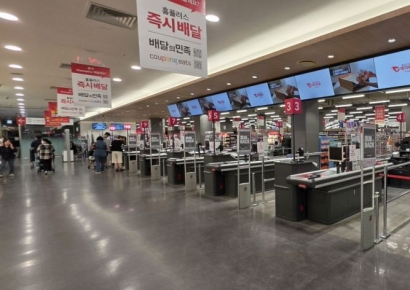 "Korean Beef for Dinner Tonight" - Drawn in by Half-Price Deals, but... "What Else Is There to Buy?" at 'Empty' Homeplus
- [Exclusive] "My paycheck fell short, and I couldn't get a card loan either" More people in their 40s and 50s turn to 'cash advances'; "debt-investing woes" put long-term delinquency among those in their 20s and 30s on red alert
- “I Thought It Was Just Inflammation”: 70 Men Have Died of Breast Cancer in This Country in 5 Years
- "Exchange Rates Plunge, Now's the Opportunity" ... After Everyone Rushes In, 'This' Hits a 4-Year, 10-Month High
- "Come Live With Me on My Farm": Man Sells Everything and Travels 1,930 km, Trusting a Beautiful Woman
On Olympic-daero, northbound traffic was congested from the southern end of Yeongdong Bridge through Seongsu, Dongho, and Hannam bridges. Southbound traffic was relatively smooth.
© The Asia Business Daily. All rights reserved. Unauthorized AI training and use prohibited.