Ahead of 30th Anniversary of Suspended Executions... Human Rights Commission: "Debate on Abolishing the Death Penalty Must Advance"
"Society can remain safe without executions"... Calls to consider wrongful-conviction risks and international human rights standards
The National Human Rights Commission of Korea emphasized that institutional discussions on abolishing the death penalty should be advanced as the 30th anniversary of the suspension of executions approaches.

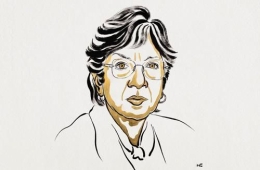
On October 10, marking the 24th World Day Against the Death Penalty, Ahn Chang-ho, chairperson of the National Human Rights Commission of Korea, issued a statement saying, "South Korea has not carried out an execution since December 30, 1997, meaning that next year will mark 30 years since executions were suspended. The experience of the past 30 years is a valuable asset that proves not only that executions have been suspended, but also that society's safety and the criminal justice system can be maintained without actually carrying out the ultimate punishment." He added, "Now is the time to build on this experience and take the discussion about whether the death penalty should remain in law to the next level."
Chairperson Ahn said that discussions on the death penalty should give due consideration to the suffering of victims of violent crimes and their families, as well as the public's desire to live in a society safe from crime. At the same time, he stressed that protecting the rights of victims and their families and strengthening social safety nets must be considered separately from the question of whether the state should maintain a system that takes human life as punishment. "Once an execution is carried out, it cannot be reversed through any subsequent legal or judicial procedure," he said, citing the risk of wrongful convictions as "an issue that can never be treated as secondary when debating whether to retain or abolish the death penalty."
Chairperson Ahn said, "The government and the National Assembly should review legislative and institutional approaches to abolishing the death penalty, drawing on the experiences accumulated by our society, international human rights standards, and perspectives on protecting crime victims and ensuring public safety." He also proposed that discussions on joining the United Nations' "Protocol to Abolish the Death Penalty" be pursued in parallel.
Adopted at the 44th session of the United Nations General Assembly in December 1989, the Protocol to Abolish the Death Penalty calls for the suspension of executions and the establishment of procedures for abolition. International human rights bodies, including the United Nations Human Rights Council and the United Nations Human Rights Committee, have repeatedly recommended that South Korea join the protocol.
Hot Picks Today
![[Exclusive] "We warned you four times"... 'This' Found in an LH Happy Housing Bathroom](https://cwcontent.asiae.co.kr/asiaresize/93/2023073107570824314_1690757828.png) [Exclusive] "We warned you four times"... 'This' Found in an LH Happy Housing Bathroom
[Exclusive] "We warned you four times"... 'This' Found in an LH Happy Housing Bathroom
- "I Hate Dog Meat and Skate, Love Pizza" ... "Let's Meet" Frenzy Over Beautiful 41-Year-Old Nurse, But There's a Twist
- "Busan Is in Big Trouble"... 'This Insect,' Capable of Producing 350 Nymphs From One Female, Confirmed to Have Established Itself
- "I Got Out of Prison Today"... Man in His 50s Who Assaulted 74-Year-Old Taxi Driver Sent Back to Prison
- "It's Just Like During COVID"... A Chilling Incident in Russia [Current Affairs Show]
Meanwhile, according to Amnesty International, as of the end of last year, 145 countries—three-quarters of all countries worldwide—had abolished the death penalty in law or in practice. South Korea is also classified by the international community as a "de facto abolitionist country," maintaining the death penalty in law but not carrying out executions for an extended period.
© The Asia Business Daily. All rights reserved. Unauthorized AI training and use prohibited.