Again Taking Aim at Ruling Camp Hardliners? ... Lee: "When Demands for Top Posts Go Unmet, They Attack from Within in the Name of Radical Reform"
Cites Cho Hee-yeon's column "When Hatred of the Enemy Turns Toward Comrades" to deliver sharp criticism
Targets attempts to influence appointments and national policy, beyond "pure radicalism"
Escalates warning over "private interests" amid prosecution reform feud
On October 9, President Lee Jae Myung criticized hardline reformists within the ruling camp, saying, "The bigger problem is that people who lack the ability demand senior positions and try to dictate appointments and even national policy, then, when they fail, invoke the noble cause of radical reform to attack those within their own camp." His remarks suggest that some people who failed to achieve their aims after trying to influence appointments and the running of state affairs are fueling internal conflict in the name of reform, rather than simply disagreeing over its pace or direction. They are seen as a clearer indication that Lee believes private interests lie behind the clashes he has had with some in the broader ruling camp over recent prosecution reform efforts and senior appointments.

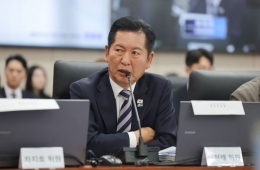
President Lee Jae Myung delivers closing remarks at a public briefing on the Korean Green Transformation (K-GX) strategy held at a conference venue in Seoul on Oct. 7, 2026. Yonhap News Agency
View original imageOn X (formerly Twitter) that day, Lee shared part of a column titled "When Hatred of the Enemy Turns Toward Comrades," published the previous day by Cho Hee-yeon, former superintendent of the Seoul Metropolitan Office of Education. He began, "Pure radicalism may also be a problem," before making the remarks.
In the column, Cho looked back at conflicts within the democracy movement and progressive camp, arguing that a paradox arises when the purity of reform hardens into an absolute conviction: comrades are turned into enemies. He warned against a phenomenon in which internal criticism in the name of reform eventually becomes an end in itself, with comrades inside the camp being attacked.
Cho also pointed out that, as those who engaged in sacrificial struggles gain power, the interests of individuals and groups can come into play, and the cause of reform can be turned into a tool for advancing their own political ambitions.
Lee quoted the passage about the clash between the purity of reform and the interests of power. However, while Cho focused on the absolutization of convictions about reform and hostile attitudes within the camp, Lee went further, identifying political ambitions and attempts to exert influence over appointments and policy as causes of conflict.
One notable part of Lee's remarks was his reference to people "demanding senior positions" and trying to make "appointments and even national policy" go their way. He was not merely criticizing people with different reform agendas; he was suggesting that some demand public office and authority, then attack those within their own camp in the name of reform when they do not get their way. His remarks can also be interpreted as a message that the legitimacy of reform should be distinguished from the political motives of those advocating it.
The remarks appear to be connected to conflict within the broader ruling camp over the appointment of Kim Ji-yong as nominee for inaugural chief of the Serious Crimes Investigation Agency. On October 1, Lee approved the request for a confirmation hearing on Kim's nomination, and it was submitted to the National Assembly the following day. However, some in the ruling camp have objected, raising concerns about Kim's past record and his suitability for reform.
On October 4, Lee warned those who repeatedly engage in baseless agitation, calling them "irresponsible extremists (Mugeukpa)." He suggested that selfishness driven by a desire to monopolize the achievements of reform could manifest itself in extreme claims.
On October 5, he narrowed the focus of his criticism to appointments and investigative and prosecutorial work. "Prosecution reform is for the people, not to create a political legacy for certain individuals," Lee said. "No one should use prosecution reform as a pretext to let personal interests dictate appointments or specific investigations and prosecutions."
Earlier, Lee's message was a general warning against privatizing the achievements of reform or interfering in appointments. This time, however, he also cited a specific motive: dissatisfaction over demands for senior positions going unmet leading to attacks from within. Lee did not say who had demanded a "senior position" or which appointments or policies they had tried to influence. It is therefore difficult to conclude that he was directly referring to a particular politician or group.
Hot Picks Today
 JYP Bought a 75.5 Billion Won Site, Only to Face an 18-Story Building Right in Front? ... SH's "Surprise Rezoning" Makes JYP Pull Out
- "What Becomes of the Geniuses Who Devoted Their Lives?"... 722 Papers Released in Just 3 Hours Spark 'Shock and Awe' [Reading Science]
- "Honey, This Is the New Car for Our Kids"... The New Tucson Grows Bigger and Gets an 8-Speed Transmission [After Driving It]
- "'Assassin(s)' Actors: Is This Why They Won't Apologize?" Joo Jinwoo Reveals Incentive Deal
- "I Want to Look Like Glowing Koreans" ... The Trend Is Taking the World by Storm, but Experts Warn Against It
The message shows that conflicts over the direction of reform within the ruling camp are expanding into questions of authority, accountability, and appointment powers. Lee has stressed that the cause of reform cannot justify the use of private influence over appointments or the running of state affairs. However, there remains room for hardliners to argue that criticism of reform's effectiveness and the suitability of appointees could also be dismissed as stemming from personal interests.
© The Asia Business Daily. All rights reserved. Unauthorized AI training and use prohibited.