'Record-Breaking' 16 Trillion Won Cartel, Yet Maximum Prison Term Is 3 Years... 'Raising Statutory Penalties' Back on Agenda
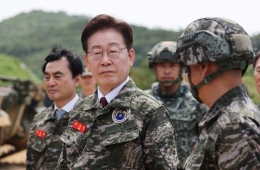
President Lee also ordered higher statutory penalties
But sugar cartel defendants received suspended prison sentences in the first trial
Antitrust investigative staff significantly expanded
Focus turns to debate over institutional reforms
With the detection of a petrochemical cartel worth more than 16 trillion won, the largest case of its kind on record, calls are once again growing to increase the statutory penalties for cartel offenses. Although President Lee Jae-myung ordered institutional changes in February, including revisions to the maximum statutory penalties, the maximum prison sentence for cartel conduct under the current Fair Trade Act remains three years.

According to legal circles on October 9, the Fair Trade Investigation Division of the Seoul Central District Prosecutors' Office indicted six petrochemical companies—LG Chem, Aekyung Chemical, OCI, Lotte Fine Chemical, PKC and UNID—and 37 current and former executives and employees on charges of violating the Fair Trade Act on October 1. Prosecutors put the scale of the cartel at 16.3961 trillion won, making it the largest cartel case they have investigated.
The current Fair Trade Act stipulates that businesses engaging in an unfair collaborative act, such as jointly setting prices or production volumes, may be punished by up to three years in prison or a fine of up to 200 million won. Courts may also impose both imprisonment and a fine.
Announcing the results of its investigation into the petrochemical cartel, the prosecution cited low statutory penalties and difficulties in recovering criminal proceeds as institutional limitations. The prosecution said that because it is difficult to calculate precisely the gains from cartel conduct, rules should be introduced to treat a certain percentage of sales, for example, as criminal proceeds, and statutory penalties should be increased.
In February, President Lee also ordered institutional changes, including revisions to the maximum statutory penalties and measures to recover illicit gains, after large-scale price-fixing cases were uncovered in the flour, sugar and electricity sectors.
In April, in the first trial of a sugar price-fixing case involving 3.2715 trillion won, former executives of CJ CheilJedang and Samyang each received a sentence of two years and six months in prison, suspended for three years, and a fine of 100 million won. They all avoided serving time in prison. Immediately after the ruling, prosecutors appealed, saying, "In light of the scale of the offense, its severity and precedents in similar cases, the sentences are excessively lenient." The case is now being heard on appeal.
A lawyer specializing in fair trade law said, "If statutory penalties are increased, individuals involved in cartel conduct will face a greater risk of receiving prison sentences, which will inevitably increase the pressure on them. Executives in particular want to avoid prison above all else, so increasing statutory penalties could help deter cartel conduct."

Na Heeseok, chief prosecutor of the Fair Trade Investigation Division at the Seoul Central District Prosecutors' Office, announces the results of an investigation into collusion in the petrochemical products industry at a briefing room at the Seoul High Prosecutors' Office in Seocho-gu on the 1st. Yonhap News
View original imageWith the abolition of the Prosecutors' Office, the Serious Crimes Investigation Agency took over major cartel investigations previously handled by the Fair Trade Investigation Division of the Seoul Central District Prosecutors' Office. The scale of the investigative organization has expanded significantly. The Antitrust Investigation Bureau established at the Seoul Serious Crimes Investigation Agency was designed to include four divisions, Antitrust Investigation Divisions 1 through 4, with a staffing complement of 122. That is more than seven times the roughly 17 prosecutors and investigators in the prosecution's Fair Trade Investigation Division. When the Serious Crimes Investigation Agency was launched on October 2, 78 investigators at Grade 5 or below were reportedly assigned to its four antitrust investigation divisions.
Hot Picks Today
 "South Koreans Are All Buying It to Take Home"... This "Drug" Costs 350,000 Won in Korea but Just 80,000 Won in Japan
- "Buy While It's Cheap"... Retail Investors Snap Up KRW 30 Billion in Bank Gold Bars as Prices Fall, Flocking In at a Frenzy
- [Exclusive] K-Alcohol Is Booming, but Yakju Exports Are 'Sluggish'... Just 1/58 of Other Alcoholic Beverages
- "After Calculating Our Bonuses, It's at Least 3 Billion Won; Feels Like We've Escaped the Working Class"... Samsung Electronics DS Couple's Post
- "Bride Lee Dogyeong, Groom Lee Dogyeong"... Couple Share the Same Name and Date of Birth: "This Must Be Fate"
As the investigative authority has changed and the number of personnel has increased substantially, calls are growing for institutional reforms to be pursued alongside efforts to strengthen investigative capabilities in major cartel cases and improve the effectiveness of penalties.
© The Asia Business Daily. All rights reserved. Unauthorized AI training and use prohibited.