Big Pharma Gets Choosier... Fewer Big Deals, Higher Upfront Payments
Total deal value in Q3: $47.9 billion
Down 43.7% from the previous quarter
Median upfront payment per deal up 24%
Financing burdens and intensifying competition cited as factors
Global big pharma companies have reduced the total value of deals to license new drug technologies while increasing the upfront payments made immediately after signing. In other words, although they have cut overall technology investment, they are putting more money on the table for technologies they believe have a high probability of success. Analysts say that the burden of raising funds amid high interest rates and pressure to lower drug prices, combined with intensifying competition among pharmaceutical companies, is making them more selective about which technologies to license.

According to DealForma, a biotech data provider, the total value of research and development (R&D) partnerships in the global healthcare and life sciences sectors reached $47.9 billion in the third quarter of this year, down 43.7% from $85.1 billion in the previous quarter. The number of deals fell 10.6%, from 151 to 135.
By contrast, upfront payments made at the time of signing remained relatively resilient. Upfront payments and equity investments totaled $3.4 billion in the third quarter of this year, a decline of only about 19% from $4.2 billion in the previous quarter. While total deal value, including milestones, fell by more than 40%, upfront payments made at the actual deal-signing stage remained relatively stable. In particular, the median upfront payment per deal rose 24%, from $25 million to $31 million.
A similar trend is emerging in South Korea's pharmaceutical and biotech industries. By mid-August this year, the total value of technology-export deals announced by Korean companies had fallen 40.2% year over year to KRW 6.7467 trillion, excluding the deal worth about $4.7 billion between AriBio and China's Fosun Pharma. However, the combined upfront payments secured over the same period, also excluding AriBio and Fosun Pharma, rose 20% to KRW 221.5 billion.

Industry insiders see this trend as the result of big pharma companies applying more stringent standards when evaluating technologies. With high interest rates raising the cost of financing and pressure to lower drug prices, particularly in the United States, companies are increasingly concentrating their investment on assets with clinical data or proof of concept (PoC), they say.
Intensifying competition among pharmaceutical companies and the patent expirations of blockbuster drugs are also fueling the trend. Competition has recently concentrated in a few promising areas, such as obesity treatments (GLP-1) and antibody-drug conjugates (ADCs), prompting companies to offer larger upfront payments to secure validated assets. At the same time, pharmaceutical companies facing expected revenue gaps as patents on their flagship products expire are finding it difficult to invest large sums indiscriminately in early-stage assets with a low probability of success.
Hot Picks Today
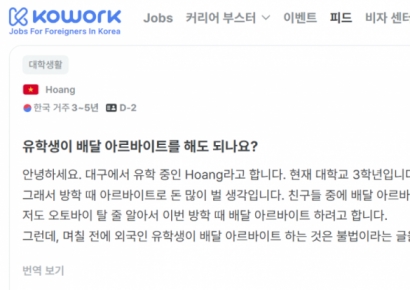 "I Came to Korea and Easily Made 3.3 Million Won a Month"... The "Easy Gig" Everyone's Talking About Among International Students Turns Out to Be...
- More Than 900 Schools Shut One After Another... Japan in Turmoil Over 'Infectious Disease' Outbreak
- North Korean Landmine Incident... Angry Male Support for Ruling Party Falls 10.5 Points [Asia Business Daily-Realmeter Poll]
- "Hand in Your Resignation and Get a Year's Salary"... This Country Pushes Early Retirement for Civil Servants
- "Oh Eunyoung's Consultation Fee: Millions of Won? Not Expensive"... Yonsei Professor's Sharp Rebuke over "300,000-Won Lecture Fee"
An industry source said, "This is the result of learning from past experience: even after investing a large sum to license a technology, it can still fail in Phase 3 clinical trials." The source added, "We expect this trend to continue for the next two to three years."
© The Asia Business Daily. All rights reserved. Unauthorized AI training and use prohibited.