[2026 Parliamentary Audit] Park Honggeun: "Local Allocation Tax Will Not Decrease at All... 101 Trillion Won the Year After Next"
Dismisses controversy over a decline in local allocation tax
Also addresses concerns over funding concentration in some regions
Minister of Planning and Budget Park Honggeun pushed back against concerns raised by some that changing the formula for local allocation tax to fund the Future Response Fund would weaken local finances.

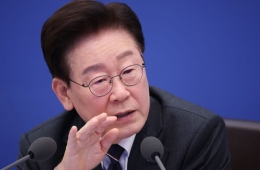
Minister of Planning and Budget Park Honggeun answers lawmakers' questions during a parliamentary audit of the ministry at the National Assembly on Oct. 8, 2026. Photo by Yoon Dongju
View original imageAt a parliamentary audit of the National Assembly’s Finance and Economy Planning Committee on Oct. 8, independent lawmaker Lee Chun-seok asked, "Isn’t the Ministry of Planning and Budget trying to control local governments by using for the Future Response Fund the share that should go to local areas?" Park replied, "Rather than looking only at next year, please look at the total amount of money going to local areas over the coming years, particularly through 2030, when our government’s term ends. A comprehensive comparison of the scale of support for local areas before and after this parameter reform shows that it will not decrease at all."
He added, "The resources generated through the parameter reform will be set aside in the Future Response Fund and used to support local areas, rather than being spent elsewhere. The key purpose of establishing this fund is to put in place a mechanism to ease sharp fluctuations in local finances and ensure stability."
Regarding specific projections for local allocation tax, he signaled the possibility of a substantial increase. "If the amount of local allocation tax is around 78 trillion won this year and next year, it will surge to as much as 101 trillion won the year after next, an increase of about 20 trillion to 30 trillion won," Park said. "That is why I am asking you to look at the overall amount flowing to local areas, rather than treating this as a one-off budget allocation."
Hot Picks Today
 "350,000 Won in Korea, 80,000 Won in Japan" South Koreans Chasing "Ppyeomalra" Flock to Japan... 5,000 Illegal Imports Caught
- "Sharing Credit Card Statements Could Spell Trouble for Couples"... Conflict Erupts Over 2.2 Million Won in Weekly Beauty Spending - What Happened?
- [Exclusive] Daiso Draws Shoppers for "3,000-Won Cosmetics"... and Also Boosts Sales at Nearby Olive Young
- "Only in Seoul," Foreigners Rave... Then Seoul Beats Tokyo to Claim 'World's Best Big City' Title
- Woman Buys All 196 Apartment Parking Spaces, Installs Locks... Then Faces Lawsuit
He also firmly addressed concerns that funding from the fund could be concentrated in certain regions. "Most youth support and future growth engine projects are distributed evenly across the country, and the same is true of education and talent development," Park said. "The fund was certainly not designed to concentrate support on the basis of specific regions."
© The Asia Business Daily. All rights reserved. Unauthorized AI training and use prohibited.