[2026 Parliamentary Audit] Future Response Fund Under Scrutiny: "Pay Off Debt First" vs. "Invest in Youth and Regions"
Ministry of Planning and Budget Parliamentary Audit
Park Honggeun: "We need to open up room for economic growth and create a virtuous cycle in public finances"
The Future Response Fund came under scrutiny during the Ministry of Planning and Budget’s parliamentary audit. Lawmakers argued that the surplus tax revenue should be used to repay government bonds rather than added to the fund, while others said more investment should go to young people and local regions.
At the National Assembly’s Finance and Economy Planning Committee audit on Oct. 8, the use of surplus tax revenue was a key issue. Kim Young-hwan of the Democratic Party of Korea cited housing insecurity among young people and argued that “the Ministry of Planning and Budget should make active social investments in housing supply.”

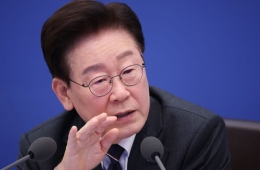
Minister of Planning and Budget Park Honggeun answers lawmakers' questions during a parliamentary audit of the Ministry of Planning and Budget at the National Assembly on Oct. 8, 2026. Photo by Yoon Dongju
View original imageYoon Young-seok of the People Power Party proposed making bold investments in local regions. He said, “If we designate about 10 youth hub cities across the country outside the Seoul metropolitan area and provide them with exceptional funding to address the concentration of population in the capital region and the problem of youth employment, spending 100 trillion won would be worthwhile.”
People Power Party lawmakers also called for prioritizing repayment of government bonds. Lim I-ja criticized the approach as “debt-financed, reverse-margin fiscal management: borrowing at high interest rates of 4% or more on government bonds while seeking returns at lower rates.”
People Power Party lawmaker Park Soo-young said, “The idea of creating the Future Response Fund deserves praise,” but criticized its structure, saying, “Of the 162 trillion won allocated to the fund, 104 trillion won is to be set aside, while the government is issuing 106 trillion won in debt. That means borrowing money to save it.”
People Power Party lawmaker Kim Sang-hoon cited the rising share of deficit-financing debt and argued, “Now that so much additional tax revenue has been collected, we should be actively repaying debt.” People Power Party lawmaker Ahn Sang-hoon also criticized the plan, saying, “If this is a temporary surplus in tax revenue, the priority should be to pay down debt owed to future generations first.”
Hot Picks Today
 "Sharing Credit Card Statements Could Spell Trouble for Couples"... Conflict Erupts Over 2.2 Million Won in Weekly Beauty Spending - What Happened?
- [Exclusive] Daiso Draws Shoppers for "3,000-Won Cosmetics"... and Also Boosts Sales at Nearby Olive Young
- "Only in Seoul," Foreigners Rave... Then Seoul Beats Tokyo to Claim 'World's Best Big City' Title
- "I'm Struggling Financially," He Confided at His Parents' Graves... A 'KRW 2 Billion Stroke of Luck' Came Soon After
- Woman Buys All 196 Apartment Parking Spaces, Installs Locks... Then Faces Lawsuit
In response to lawmakers’ criticism, Minister of Planning and Budget Park Honggeun said, “Assemblyman Ahn Sang-hoon mentioned Norway as an example of using funds for future generations, but we don’t have oil.” He added, “What we should ultimately pass on is a structure that enables sustainable growth in Korea and opens up new avenues for growth so that public finances can create a virtuous cycle. I believe that is what we should truly pass on to future generations.” Park emphasized, “This is the golden time for investment. The point is not that we should avoid taking on debt, but how we invest.”
© The Asia Business Daily. All rights reserved. Unauthorized AI training and use prohibited.