Education Superintendents' Association: "Elementary and Secondary Education" Must Be Specified in Future Response Fund
The Association of Korean Superintendents of Education called on the government to specify elementary and secondary education as an eligible use of the Future Response Fund under its proposed reform of the Local Education Finance Grant, and to establish a minimum allocation standard in law. The association cited concerns that, under the government’s proposal, it would be difficult even to cover increases in personnel costs for education staff.
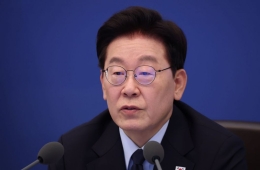
According to the association on October 8, Jeong Geunsik, president of the Association of Korean Superintendents of Education and Seoul superintendent of education, and Kwon Sunki, chair of the Special Committee on Local Education Finance and superintendent of education for South Gyeongsang Province, met with Cho Seungrae, chair of the National Assembly’s Finance and Economy Committee, and Moon Jin-seok, chair of the Budget and Accounts Subcommittee, one after the other at the National Assembly the previous day to convey this position.

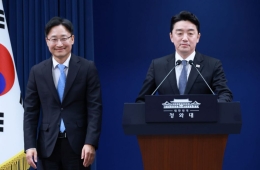
Jung Geunsik, chair of the Korean Council of Superintendents of Education and Seoul superintendent, and Kwon Sungi, chair of the Special Committee on Local Education Finance and Gyeongsangnam-do superintendent, met with Cho Seungrae, chair of the National Assembly’s Finance and Economy Planning Committee, on the 7th to convey their views on the proposed grant reform.
View original imageThe association said it would be difficult to secure stable education funding under the government’s proposed grant calculation method. The government says next year’s grant will increase by 7.2 trillion won (10.1%) from this year’s original budget, but the increase would amount to just 2.4 trillion won (3.2%) when the supplementary budget is included. By contrast, it estimates that annual increases in education office personnel costs due to factors such as civil servants’ pay raises will total approximately 2.5 trillion won.
In particular, the association took issue with the fact that elementary and secondary education is not listed as a separate item in the Education and Talent Account of the Future Response Fund.
The account is funded by the difference between grants allocated under the new formula and those allocated based on 20.79% of existing domestic tax revenue. However, the bill specifies only early childhood education, higher education, lifelong education, and talent development for advanced industries, among other areas.
The association said, “Elementary and secondary education projects were not included among the 13 projects totaling 4.9 trillion won budgeted by the Ministry of Education, out of the 10.1 trillion won in the 2027 Education and Talent Account.”
Accordingly, the association called for preschool, elementary, and secondary education to be specified as eligible uses of the Education and Talent Account and for a minimum allocation standard to be established. It also requested a legal basis for applying special provisions on carryovers and execution to education office projects, and for the association to participate in preparing and reviewing fund spending plans.
Hot Picks Today
 "I Invested KRW 10 Million, Only KRW 2 Million Is Left" ... 77% Plunge Sends Retail Investors Who Piled Into Samsung Electronics and SK hynix Leveraged ETFs Crying Out
- "Another 100,000 Won in Departure Tax? Japan Is Getting Expensive Too"... Four-Person Families Face Tough Travel Choices
- "There's a Drink Like This?"... Chinese Beverage With "Korean" in Its Name Rakes in 85 Million Won in Monthly Sales
- "Samsung Electronics at 70,000 won, SK hynix at 200,000 won"... Why the gloomy outlook despite 'record-breaking earnings'?
- "No Need to Hire a Model"... The 25-Year-Old Woman Who Entered Social Media with a Face That Cost Just 1,500 Won [AI Content: The Bright and Dark Sides] 1
Association President Jeong Geunsik said, “The Grant Act and the Fund Act should not be designated as bills accompanying the revenue budget and allowed to bypass review by the standing committee,” adding, “Please specify in law that funding generated from the grants must flow back to preschool, elementary, and secondary education.”
© The Asia Business Daily. All rights reserved. Unauthorized AI training and use prohibited.