"Earnings Are Booming, So Why Are Stock Prices Like This?"... Unexpected Fear Grips KOSPI [Weekend Money]
Listed companies are expected to post strong third-quarter results this year, surpassing the earnings surprise recorded in the second quarter. However, the broader stock market is taking a pronounced wait-and-see approach as concerns grow over a “peak-out” in earnings growth and the possibility that results will fall short of expectations due to exchange-rate movements.
!["Earnings Are Booming, So Why Are Stock Prices Like This?"... Unexpected Fear Grips KOSPI [Weekend Money]](http://www.asiae.co.kr/news/img_view.htm?img=2026100815132355253_1791440004.png)
According to IBK Securities, operating profit for companies in the KOSPI 200 is projected to grow 243% year on year and 6% quarter on quarter in the third quarter, based on an analysis of 151 companies with consensus estimates from securities firms. Byun Jun-ho, a researcher at IBK Securities, said, “These figures have all been declining from their peaks in the first half of the year. The quarter-on-quarter growth rate is estimated to have peaked in the first quarter, and the year-on-year growth rate in the second quarter. The third quarter will be the first quarter in which both the year-on-year and quarter-on-quarter figures peak out.” He added, “A peak-out in earnings growth could fuel concerns about a peak-out in investor sentiment.”
With earnings projected to increase 6% quarter on quarter, the likelihood is considered low. However, the possibility cannot be ruled out that results could end up similar to or slightly below those in the second quarter if many companies fall short of expectations or report earnings shocks. Byun noted, “If third-quarter results from large-cap companies fall significantly below market consensus, concerns about a peak-out in overall earnings could also intensify. Market concerns could grow further if earnings themselves peak out, not just their growth rate.”
A sharp decline in the exchange rate, which means a stronger won, is seen as a key factor increasing earnings volatility. In fact, despite upward revisions to South Korea’s export and growth forecasts, the KOSPI earnings revision ratio has recently been declining, contributing to the stock market’s fall.
The impact of exchange-rate movements also appears to be reflected in earnings outlooks by sector. Sectors with high earnings revision ratios include insurance, transportation, cosmetics, consumer durables and apparel, steel, energy, hardware, and banks. By contrast, securities, retail, food and beverages, software, media and entertainment, chemicals, and automobiles are classified among the lower-ranked sectors. Among sectors with the largest one-month changes in 12-month forward earnings per share (EPS), transportation, chemicals, insurance, steel, media and entertainment, health care, hardware, and telecommunications rank near the top, while shipbuilding, automobiles, energy, utilities, securities, and semiconductors rank near the bottom. “Looking at the common results across the two earnings outlook indicators, insurance, transportation, hardware, and steel are among the top-ranked sectors, while automobiles and securities are among the lowest-ranked,” Byun said. “Overall, despite a favorable export environment, earnings sentiment among export-oriented companies appears to have weakened noticeably compared with the first half of the year.”
Hot Picks Today
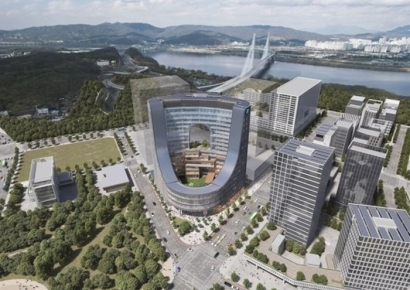 JYP Bought a 75.5 Billion Won Site, Only to Face an 18-Story Building Right in Front? ... SH's "Surprise Rezoning" Makes JYP Pull Out
- "What Becomes of the Geniuses Who Devoted Their Lives?"... 722 Papers Released in Just 3 Hours Spark 'Shock and Awe' [Reading Science]
- "Honey, This Is the New Car for Our Kids"... The New Tucson Grows Bigger and Gets an 8-Speed Transmission [After Driving It]
- "'Assassin(s)' Actors: Is This Why They Won't Apologize?" Joo Jinwoo Reveals Incentive Deal
- "I Want to Look Like Glowing Koreans" ... The Trend Is Taking the World by Storm, but Experts Warn Against It
Some expect the wait-and-see mood to persist even after companies report their earnings. Byun noted, “Policy and political uncertainties are converging, including the possibility of another U.S. Federal Reserve rate hike at the Federal Open Market Committee (FOMC) meeting on October 28 and the U.S. midterm elections on November 3, so the wait-and-see mood could continue even after earnings are announced.”
© The Asia Business Daily. All rights reserved. Unauthorized AI training and use prohibited.