Time-Selective Civil Servants Union: "Calls for System Improvements Must Lead to Action"
Calls to Guarantee the Option of a 40-Hour Workweek and Improve Overtime Deduction Rules
The National Time-Selective Civil Servants Union, affiliated with the Federation of Korean Public Service Trade Unions (chaired by Jeong Seonghye; the Time-Selective Civil Servants Union), said Thursday that it welcomed calls to improve the time-selective civil servant recruitment system raised during a parliamentary audit by the National Assembly’s Public Administration and Security Committee. The union urged the government to go beyond merely reviewing the matter and put forward specific improvement measures.

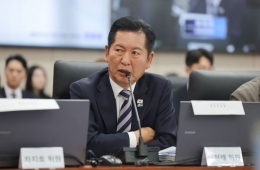
Democratic Party lawmaker Park Jeonghyeon asking a question. Provided by Siseonje Union.
View original imageDuring parliamentary audits on Tuesday and Wednesday, Democratic Party of Korea lawmaker Park Jeonghyeon raised the cap on working hours, while Rebuilding Korea Party lawmaker Jung Chunsaeng pointed to the deduction of overtime pay, respectively. The Ministry of the Interior and Safety, which oversees local civil servants, and the Ministry of Personnel Management, which oversees national civil servants, said they would review the relevant systems.
At the Ministry of the Interior and Safety’s audit on Tuesday, Park called for revising the system to allow local time-selective civil servants to increase their weekly working hours to up to 40, if they wish. Park noted that many employees working 35 hours a week repeatedly work overtime, creating a gap between their actual hours and the hours stipulated by the system. Minister of the Interior and Safety Yoon Hojung replied, "I will instruct officials to review it."
At the Ministry of Personnel Management’s audit on Wednesday, Park called for the same improvement for national civil servants. According to materials submitted by the ministry, as cited by the union, 62.3% of national time-selective civil servants currently work 35 hours a week, while 79.5% want to work 40 hours a week. The materials also showed that 99% are experienced employees with at least five years of service. Park urged the Ministry of the Interior and Safety and the Ministry of Personnel Management to work together on improving the system. Minister of Personnel Management Choi Dongseok replied, "I will consult with the Ministry of the Interior and Safety, review the matter, and report back."
On the same day, Jung raised the issue of a one-hour deduction being applied uniformly to the overtime hours of time-selective civil servants. In some cases, employees who actually work overtime between 9 a.m. and 6 p.m., the regular working hours for full-time civil servants, have one hour deducted and therefore receive no overtime pay. Jung said this "institutionalizes unpaid labor."
Jung noted that the Supreme Court had found that there was no reasonable basis for applying the same deduction rule to overtime worked during regular working hours. Jung urged the Ministry of Personnel Management to proactively improve the system rather than wait for the outcome of the retrial after remand. Choi said he would communicate directly with those affected and review possible improvements.

Rep. Jung Chunsaeng of the Rebuilding Korea Party questioning during a parliamentary audit. Photo provided by Siseonje Labor Union.
View original imageJeong Seonghye, chair of the Time-Selective Civil Servants Union, said, "Lawmaker Park Jeonghyeon pointed out that employees are effectively working 40 hours a week but are limited to 35 hours under the system, while lawmaker Jung Chunsaeng highlighted the problem of employees not receiving overtime pay even for hours they actually worked. Since both ministries have said they will review the matter, that review must now lead to action."
Hot Picks Today
!["What Becomes of the Geniuses Who Devoted Their Lives?"... 722 Papers Released in Just 3 Hours Spark 'Shock and Awe' [Reading Science]](https://cwcontent.asiae.co.kr/asiaresize/93/2026100816554855490_1791446147.jpg) "What Becomes of the Geniuses Who Devoted Their Lives?"... 722 Papers Released in Just 3 Hours Spark 'Shock and Awe' [Reading Science]
"What Becomes of the Geniuses Who Devoted Their Lives?"... 722 Papers Released in Just 3 Hours Spark 'Shock and Awe' [Reading Science]
- Condoms Out of Stock... "Please Stop Having Kids": Country to Deliver Contraceptive Pills Door to Door
- "It Shut Down Just From Showing My Face"... 1,500 iPhone 18 Pros Exchanged; "Cause Is Confidential"
- JYP Bought a 75.5 Billion Won Site, Only to Face an 18-Story Building Right in Front? ... SH's "Surprise Rezoning" Makes JYP Pull Out
- "I Want to Look Like Glowing Koreans" ... The Trend Is Taking the World by Storm, but Experts Warn Against It
The union plans to monitor the two ministries’ follow-up measures through the comprehensive parliamentary audit and continue calling for the right to choose a 40-hour workweek and improvements to the overtime pay system.
© The Asia Business Daily. All rights reserved. Unauthorized AI training and use prohibited.