Park Honggeun: "Will Develop Concrete Plans for Structural Reforms to Labor, Education and Pensions"
Minister of Planning and Budget's Opening Remarks at the Parliamentary Audit

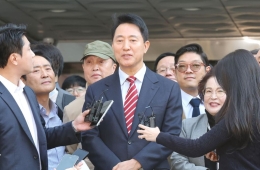
Minister of Planning and Budget Park Honggeun said on Thursday, “To improve the fundamentals of the Republic of Korea, we will take a broad look at areas requiring reform, including labor, education and pensions, and work with relevant ministries to develop concrete plans for implementation.”
In his opening remarks at the National Assembly’s audit of the Ministry of Planning and Budget by the Finance and Economy Planning Committee earlier that morning, Park said, “We will set out the direction for the Republic of Korea and prepare one step ahead.”
Regarding the formulation of mid- to long-term national development strategies, a key responsibility of the ministry, Park stressed, “We will envision the Republic of Korea in 2045 as a country that boosts the growth potential of its economy, ensures that all citizens share equally in the benefits of that growth, and goes further to become a leading nation that shapes change in the international community.”
On expansionary fiscal policy, he said, “We will provide all-out support for three mega-projects and artificial intelligence (AI), while focusing on developing seven core national strategic technologies, including nuclear fusion, small modular reactors (SMRs), quantum technology and aerospace.”
He added, “We will also make young people, the leaders of the future, a key investment priority, providing comprehensive support across all aspects of their lives, from education, jobs, assets and housing to marriage, childbirth, child-rearing, daily life and culture.”
“We will establish a virtuous cycle in which expansionary fiscal policy drives growth and the resulting gains lead to increased tax revenue, while also pursuing bold reforms to the expenditure structure to enhance fiscal sustainability,” he said.
Park said the government would establish a Future Response Fund, a key tool for improving fiscal sustainability, and actively use the additional fiscal capacity generated by the semiconductor boom to invest in young people, growth engines, local regions, and education and talent, rather than exhausting it on one-year spending.
Hot Picks Today
 "The Transfer Failed, but 'Ding-Dong,' Money Came In"... KRW 32.5 Billion Financial Incident at Toss Bank
- 'Acquitted on appeal,' Oh Sehoon: "I'll work even harder to repay you"... Special Counsel: "Disappointing ruling; we will appeal to the Supreme Court" (Updated)
- "Made 12 Billion Won Cleaning Up Other People's Dog Poop With Just a Rake"... 'Poop Scoop Millionaire' Is All the Rage in the U.S.
- "My Blood Vessels Got Cleaner Just by Drinking It"... Surprise: The "Tea" Even Doctors Make Sure to Drink
- 'Hangover Legend' Returns After 11 Years... Lee Sunmin Hyung's 'Captain Q' Sells Out
Regarding next year’s budget, he said, “During the budget formulation process, we reviewed all fiscal programs from the ground up and boldly restructured underperforming and inefficient programs.” He added, “Going forward, based on rigorous performance evaluations, we will cut unnecessary spending without exception and fundamentally improve mandatory spending to reflect changing economic and social conditions, starting with reform of the local education finance grant system.”
© The Asia Business Daily. All rights reserved. Unauthorized AI training and use prohibited.