"Japan's Too Expensive to Visit," They Said... Now Koreans Are Flocking to 'This Destination' After a Slowdown
LCCs Launch New Routes as South Korea-China Air Traffic Rights Expand
China Travel Bookings Surge 118%
As travel to Japan has lost some of its appeal amid a sharp rise in local prices, China is emerging as a new alternative destination. China's visa-free entry policy and the expansion of air traffic rights between South Korea and China have opened up more routes, while low-cost carriers (LCCs) are also entering Chinese routes one after another, helping to boost travel demand. Demand, once concentrated in Shanghai and Zhangjiajie, is spreading to smaller cities such as Guizhou and Shiyan, positioning China as a new growth driver in South Korea's outbound travel market.

The group FIFTY FIFTY taking part in a Wanghong experience. Screenshot from Instagram.
View original imageVisa-Free Travel Fuels a 118% Surge in Fourth-Quarter Bookings
According to the travel industry on October 7, bookings for China travel packages in the fourth quarter of this year are rising rapidly. Kyowon Tour's Travel Easy reported an 118% increase in bookings for China packages departing in the fourth quarter of this year compared with the same period last year. China's share of all overseas travel bookings also rose by 11.9 percentage points, from 11.4% last year to 23.3% this year. In just one year, China's share of travel bookings more than doubled. Mode Tour also said that China accounted for 31.6% of bookings for departures in October and November, the highest share among all overseas destinations when measured by individual country or region.
The recovery in demand is underpinned by visa-free measures that have been in place since last year. In November 2024, China introduced temporary visa-free entry for South Korean nationals, and South Korea also allowed temporary visa-free entry for Chinese group tourists.
Access to China has also improved significantly with more flights. According to the Ministry of Land, Infrastructure and Transport's aviation information portal, approximately 13,614,000 passengers traveled on China routes from January to August this year, up 23% from approximately 11,061,000 in the same period last year.
Traffic Rights Expanded for the First Time in Seven Years... LCC Entry Expected to Lower Fares
The expansion of air service is another key factor driving demand for travel to China. At aviation talks in May, South Korea and China agreed to increase passenger traffic rights from 608 to 664 flights per week. This was the first expansion of traffic rights since 2019.
On September 16, the Ministry of Land, Infrastructure and Transport additionally allocated traffic rights for 25 routes, primarily to China, to 10 South Korean airlines. As a result, the number of weekly flights is set to rise from 38 to 52 on the Incheon-Beijing route, from 56 to 63 on the Incheon-Shanghai route, and from 21 to 28? each on the Incheon-Guangzhou and Incheon-Dalian routes.

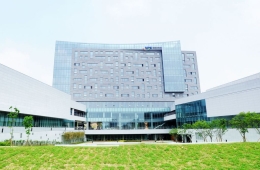
The tourist hall of the Shanghai World Financial Center in Pudong New Area, Shanghai, China. Shanghai Municipal Administration of Culture and Tourism
View original imageLCCs are also making a full-scale entry into the market. Jeju Air and Eastar Jet will newly enter the Incheon-Beijing route, Jin Air the Incheon-Guangzhou route, and Trinity Airways the Incheon-Dalian route. With LCCs joining key China routes that have so far been dominated by full-service carriers, changes are expected in airfares and the range of choices available to travelers.
New services are also launching in the second half of the year. Jeju Air opened its Busan-Guilin route, operating four times a week, on September 23, while Jin Air launched service on the Incheon-Yichang route. Eastar Jet will launch the Incheon-Xiamen route, operating four times a week, on October 28?, followed by a Busan-Hangzhou route in December. Parata Air will launch the Incheon-Shenzhen route, operating four times a week, on November 9, and is also scheduled to operate the Yangyang-Shanghai route twice a week in December.
Beyond Zhangjiajie: Exclusive Packages to Smaller Cities Draw More Travelers in Their 30s and 40s
As more flights become available, travel companies are changing the way they put together their packages. Demand for travel to China, once concentrated in Zhangjiajie, Taihang Mountain, Baekdu Mountain and Shanghai, is spreading to new destinations as new routes launch.
HanaTour has introduced an exclusive package to Guizhou Province, which now has a direct flight route. Guizhou is home to tourist attractions rated 5A, the highest grade officially recognized by the Chinese government, but limited accessibility meant that packages often combined the province with nearby destinations. With direct flights now available, a five-day package focused solely on Guizhou is possible.
Mode Tour has also launched a five-day Shiyan and Wudang Mountain package to coincide with China Southern Airlines' launch of direct flights to Shiyan. The package will operate for one month, from October 19 to November 18.

Rungchingsya Peonggwandao, located northwest of Goseongchon in Yeonching-gu. Beijing Tourism Network.
View original imageIndustry insiders are focusing on how expanded air routes can generate new demand. They say that travelers in their 30s and 40s, whose trips have so far been concentrated in Shanghai, may also visit other Chinese cities as more options become available.
Another Advantage: Outstanding Value at Around 1.05 Million Won
Competitive pricing is also seen as a factor driving demand for travel to China. According to Consumer Insight, South Korean travelers spent an average of 1,054,000 won on overseas trips to China this year. That was more than 200,000 won less than the average of 1,274,000 won for Southeast Asia, and also below the figures for Japan, at 1,068,000 won, and Vietnam, at 1,117,000 won?.
China has a vast landmass, diverse cultural heritage and varied natural landscapes, giving travel companies ample scope to develop regional packages centered on specific themes or longer stays. The expansion of air routes is also creating a foundation for extending demand beyond established tourist destinations to new regions.
After a weak third quarter, the travel industry expects demand for overseas trips, including to China, to recover in the fourth quarter. In particular, the key question is whether bookings will continue into November and December, as more people add annual leave to the October holiday period to take trips.
Hot Picks Today
![[Exclusive] Daiso Draws Shoppers for "3,000-Won Cosmetics"... and Also Boosts Sales at Nearby Olive Young](https://cwcontent.asiae.co.kr/asiaresize/93/2026100810042954657_1791421469.jpg) [Exclusive] Daiso Draws Shoppers for "3,000-Won Cosmetics"... and Also Boosts Sales at Nearby Olive Young
[Exclusive] Daiso Draws Shoppers for "3,000-Won Cosmetics"... and Also Boosts Sales at Nearby Olive Young
- Earnings Set to Soar Further Next Year... Samsung Electronics Posts Record Operating Profit of "KRW 100 Trillion," Fueling Hopes for Record Shareholder Returns
- "I'm Struggling Financially," He Confided at His Parents' Graves... A 'KRW 2 Billion Stroke of Luck' Came Soon After
- "Japan's Too Expensive to Visit," They Said... Now Koreans Are Flocking to 'This Destination' After a Slowdown
- Woman Buys All 196 Apartment Parking Spaces, Installs Locks... Then Faces Lawsuit

Shanghai Port Cruise City, China. Shanghai Municipal Administration of Culture and Tourism.
View original imageAn industry insider said, "The virtuous cycle in which increased air service generates demand has begun to take hold in the Chinese market. With expanded routes, visa-free travel benefits and competitive costs coming together, China is highly likely to establish itself as a major growth driver in South Korea's outbound travel market."
© The Asia Business Daily. All rights reserved. Unauthorized AI training and use prohibited.