[New York Stocks] Treasury yields rise, stoking caution... stocks close lower across the board
10-year and 30-year Treasury yields hit their highest levels since 2002
Oil prices end lower
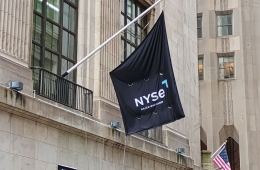
U.S. stocks in New York closed lower across the board on Wednesday, Oct. 7 (local time). Long-term U.S. Treasury yields surged to their highest level since 2002, putting significant downward pressure on technology stocks. However, after demand proved solid at an auction of 10-year Treasury notes, yields retreated from their highs and stocks pared their losses.
The Dow Jones Industrial Average fell 341.41 points, or 0.66%, from the previous trading session to close at 51,179.87. The S&P 500, which is weighted toward large-cap stocks, lost 17.16 points, or 0.22%, to 7,801.77, while the Nasdaq Composite, which is weighted toward technology stocks, rose 61.19 points, or 0.22%, to finish at 27,538.69.
![[New York Stocks] Treasury yields rise, stoking caution... stocks close lower across the board](http://www.asiae.co.kr/news/img_view.htm?img=2026100805014054048_1791403300.jpg)
Investor sentiment was dampened by rising long-term U.S. Treasury yields. The 10-year U.S. Treasury yield, a global benchmark for bond yields, climbed as high as 5.365% during the session, its highest level since April 2002. The 30-year Treasury yield also jumped to 5.732%, reaching its highest level since May 2002.
However, yields gave back some of their gains after the U.S. Treasury auctioned $39 billion in 10-year notes. The 10-year yield fell to a level little changed from the previous session, and stocks also recouped some of their losses.
Bill Merz, head of capital markets research at U.S. Bank Asset Management, told CNBC that both the bid-to-cover ratio and participation by indirect bidders were quite strong. He said buying demand had emerged at yields higher than those investors had grown accustomed to over the past 15 to 20 years, while noting that other factors affecting yields also needed to be considered.
Minutes from the Federal Reserve's September Federal Open Market Committee (FOMC) meeting reaffirmed the possibility of further tightening this year. According to the minutes, most participants judged that another rate hike by the end of the year would likely be appropriate. They emphasized, however, that future decisions would depend on incoming data, the economic outlook and risks. The minutes did not specify when a rate hike might occur.
By sector, financial stocks came under downward pressure as bond yields rose. Shares of Goldman Sachs, Bank of America, Wells Fargo, Citi and JPMorgan Chase weakened amid concerns that lending activity could contract. Goldman Sachs fell 1.11%, Bank of America dropped 1.05%, Wells Fargo lost 1.53%, and JPMorgan Chase declined 0.51%.
Technology stocks also fell on concerns about rising borrowing costs. CrowdStrike, Palo Alto Networks and Meta posted particularly steep declines.
Mike Dickson, head of research at Horizon Investments, said that as interest rates rise, companies have less room to absorb results that fall short of market expectations. He noted, however, that earnings growth could still lift stocks and that inflation expectations remained stable.
Hot Picks Today
 "Wasn't It Supposed to Be Gone? Alarming Surge in Cases Leads US to Declare Disaster Emergency"
- "If You Stay the Night, Pay More"... Japanese Hot Spring Hotspot to Impose 'Accommodation Tax' as 20 Million Visit Each Year
- With a Trembling Voice, "One Bowl of Jajangmyeon, Please"... 9-Year-Old Saves Mother From Assault
- Park Jinyoung: "I've Never Worked for President Lee or the Democratic Party... A Valuable Opportunity for Our Sons, Daughters and Nieces and Nephews" [2026 National Assembly Audit]
- "South Korea's Rep, Born in 1991, Is 35"... 'Married or Divorced? Still OK': Miss Universe Removes Age Limit
Oil prices closed lower. West Texas Intermediate (WTI) crude for November delivery fell $1.16, or 1.3%, from the previous session to settle at $88.28 a barrel on the New York Mercantile Exchange. Brent crude for December delivery fell 38 cents, or 0.38%, to settle at $100.20 a barrel on the ICE Futures Exchange.
© The Asia Business Daily. All rights reserved. Unauthorized AI training and use prohibited.