Policy Aimed at "Curbing Speculative Demand" Only Fueled Rental Market Instability [One Year of Land Transaction Permit System Across Seoul]
Rental listings plunge despite decline in gap investment
Jeonse price gains accelerate to 4.1 times the previous rate
Only cash-rich buyers can purchase, using gifts, stocks and other funds
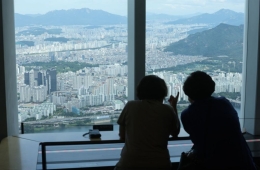
Under the Oct. 15 measures last year, the government expanded the designation of land transaction permit zones to prevent home purchases for non-residential purposes. Seoul's permit zones, which had previously been limited to the three Gangnam districts and Yongsan-gu, were extended to all of Seoul's autonomous districts. Twelve areas in Gyeonggi Province were also included, including Gwangmyeong, Seongnam, Suwon, Anyang, Suji-gu in Yongin, Uiwang and Hanam. This was the largest-ever designation of land transaction permit zones aimed at curbing speculation in residential properties rather than ordinary land.
![Policy Aimed at "Curbing Speculative Demand" Only Fueled Rental Market Instability [One Year of Land Transaction Permit System Across Seoul]](http://www.asiae.co.kr/news/img_view.htm?img=2026100916242055864_1791530660.jpg)
On October 20, it will be one year since all of Seoul was designated a land transaction permit zone. As the government intended, gap investments, in which buyers purchase homes with tenants in place, are on the decline. However, the requirement that buyers live in their homes for two years has instead become a trigger for turmoil in the rental market. Buyers cannot offer their homes for rent, reducing the supply of rental properties, while the increase in jeonse prices has exceeded the levels seen when market instability peaked in the wake of the introduction of the two rental market laws, the lease renewal right and the cap on monthly rent and jeonse increases.
Completing a property transaction has also become difficult. As the share of funding from gifts, financial income such as stock investments, and private borrowing has risen instead of gap investments, buyers with limited access to cash have found it harder to get a chance to purchase. In particular, the requirement to submit a funding plan, which previously applied only to transactions involving homes worth KRW 600 million or more, has been extended to all transactions. Buyers must also submit additional supporting documents, including financial transaction records. Homeowners must prepare a slew of documents, including a plan explaining how they will dispose of their existing home, a statement explaining why they are acquiring an additional home, and confirmation that their lease agreement has ended. The head of a real estate agency in Gwanak-gu said, "The review of funding plans is so strict that buyers sometimes have to account for the source of their funds over the past 10 years. We even recommend that they consult a tax accountant first."
Choi Byung-cheon, a senior adviser at the Center for Trade, Industry and Policy Strategy at Sejong Law Firm and former deputy director of the ruling party's think tank, the Minjoo Research Institute, recently wrote on social media: "What matters is whether this is desirable for ordinary people." He added, "The longer the land transaction permit system is extended, the more rental prices will rise and the greater the housing cost burden on ordinary people will become."
A Double-Edged Sword: 'Owner-Occupancy Rules'... Jeonse Prices Soar 4.1-Fold
The policy goal behind the government's decision to expand land transaction permit zones in October last year was to stabilize home prices. According to a policy briefing at the time, the Ministry of Economy and Finance (now the Ministry of Finance and Economy and the Ministry of Planning and Budget), the Ministry of Land, Infrastructure and Transport, the Financial Services Commission and the National Tax Service shared the view that it was difficult to rule out further price increases as speculative demand fueled by rising expectations for home prices became evident. They drew up measures to stabilize the housing market, banning gap investments and imposing owner-occupancy requirements to eliminate speculative demand.
![Policy Aimed at "Curbing Speculative Demand" Only Fueled Rental Market Instability [One Year of Land Transaction Permit System Across Seoul]](http://www.asiae.co.kr/news/img_view.htm?img=2026100916243455865_1791530674.png)
One year later, the measure has helped curb speculative demand but has become a "double-edged sword" that has stirred up the rental market. Funding plans for home purchases that the Ministry of Land, Infrastructure and Transport provided to the office of Kim Jong-yang, a People Power Party lawmaker on the National Assembly's Land, Infrastructure and Transport Committee, show that the share of gap investments in Seoul apartment purchases, in which buyers assume the seller's rental deposit, was halved before and after the permit system was introduced. It fell from 15.76% in the year before the system was applied across the city (October 2024 to September 2025) to 7.80% after the designation (October 2025 to August 2026).
The share also fell sharply in Gangnam-gu, a key target of government policy and a focus of gap investments, dropping from 10.2% to 5.72% over the same period. Rental deposits accounted for 21.3% of home purchase funds in Gangnam-gu in 2022, but the share plunged to 6.43% in January-August this year, less than a third of the earlier level. This reflects the impact of the rule requiring buyers to live in their homes for two years after purchasing a property in a land transaction permit zone.
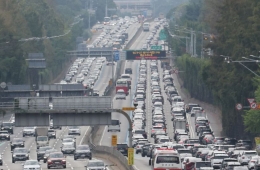
However, as buyers are required to move into the homes they purchase, properties available for jeonse or monthly rent have all but disappeared. According to Asil, a real estate data company, there were 37,896 jeonse and monthly rental listings in Seoul as of October 8, down 12.5%, or 5,385 listings, from 43,281 a year earlier.
With rental supply shrinking, prices, including rental deposits, are rising. According to the Korea Real Estate Board's weekly jeonse price index, the index for Seoul apartments rose 9.92% in the year after the permit zones were designated, from October 2025 to September 2026. That was 4.1 times the 2.41% increase in the year before the designation.
The increase in the combined jeonse and monthly rent price index, which includes the monthly rental market, also accelerated from 2.82% in the year before the designation to 8.45% afterward. Both figures were well above the 4.82% increase recorded over the 10-month period from October 2020 to August 2021, when jeonse prices rose most sharply after the two rental market laws took effect in July 2020.
Ham Young-jin, head of Woori Bank's Real Estate Research Lab, said, "The decline in surplus housing has reduced the number of properties available for jeonse, while a supply shortage stemming from a lack of permits and construction starts has compounded the problem, creating instability in the rental market."
Only Jeonse Loans Move in Reverse... Household Debt Hits Record High
Household loan figures also show that the policy fell short of expectations. Last year, the government said it would "significantly strengthen financial regulations to prevent abundant liquidity from flowing excessively into the real estate market." However, the measures hit only tenants' jeonse loans, while the total amount of household debt continued to rise.
According to the Bank of Korea's "Financial Market Trends in August 2026," outstanding household loans from banks stood at KRW 1,198.3 trillion as of the end of August, including a record KRW 952.5 trillion in mortgage loans. Mortgage lending increased by KRW 17.3 trillion from January to August this year. Although that was more than KRW 10 trillion less than the KRW 27.7 trillion increase over the same period last year, the upward trend continued. In other words, demand for mortgages to buy homes has not waned.
By contrast, jeonse loans have fallen by KRW 700 billion to KRW 800 billion a month for three consecutive months since June. Over the same period last year, they rose by KRW 300 billion to KRW 400 billion each month. The shortage of jeonse properties has brought transactions to a halt, reducing the volume of loans as well.
With gap investments blocked, only people with sufficient cash have been able to buy homes in Seoul. According to the office of lawmaker Kim Jong-yang, the share of gifts and inheritances in real estate purchase funds nearly doubled, from 3.82% before the expansion of the permit zones to 6.13% afterward. Proceeds from the sale of stocks and bonds also increased from 3.31% to 7.17%, while the share of other borrowing, including private loans, rose from 3.79% to 6.27%.
Hot Picks Today
 "Busan Is in Big Trouble"... One Cockroach Can Produce 350 Nymphs; Establishment Confirmed, Causing Alarm
- [Exclusive] "We Warned You Four Times"... Another Defect Found in Bathroom at LH Happy Housing Site
- Whisky Aged in Space... Could It Transcend the "Taste of Earth"? [Delicious Stories]
- "I Thought It Was Just for Grandmothers"... The Unexpected Appeal Winning Over China's Young People [China.zip]
- "I Hate Dog Meat and Skate, Love Pizza" ... "Let's Meet" Frenzy Over Beautiful 41-Year-Old Nurse, But There's a Twist
Experts say the land transaction permit system has failed to achieve its original goal of stabilizing home prices and has only heightened instability in the rental market. Choi Byung-cheon, a senior adviser at Sejong Law Firm, wrote on social media, "The past year has made it abundantly clear that the permit system has no effect on stabilizing prices."
© The Asia Business Daily. All rights reserved. Unauthorized AI training and use prohibited.