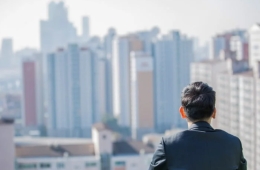
"If You Stay the Night, Pay More"... Japanese Hot Spring Hotspot to Impose 'Accommodation Tax' as 20 Million Visit Each Year
Tourists outnumber residents 2,000 to 1... Rising administrative costs
350 yen per person per night... Tax revenue to increase by 20%
Hakone-machi in Kanagawa Prefecture, known as a hot spring resort near Tokyo, will impose an accommodation tax of 350 yen (about 3,000 won) per person per night. The tax is intended to cover rising administrative costs as more than 20 million tourists visit the town each year.
According to the Nihon Keizai Shimbun on October 7, the Hakone-machi Town Council passed an ordinance on October 2 to charge guests at hotels, inns, private lodgings and other accommodation facilities 350 yen per person per night. Annual tax revenue is expected to reach about 1.4 billion yen. That would be an increase of more than 20% compared with the town's existing annual tax revenue of 6 billion yen. The tax is scheduled to take effect in April 2028, subject to approval by the Ministry of Internal Affairs and Communications.
Japan's accommodation tax is a tax outside those stipulated under the Local Tax Act, and more than 50 local governments have introduced one. Most are earmarked for purposes such as promoting tourism, but Hakone-machi plans to introduce a general tax with no restrictions on how the revenue is used. It could also fund general administrative services, including waste disposal, firefighting, and road and sewer maintenance.
Hakone-machi is taking this measure because its population is disproportionately small compared with the number of tourists it receives. The town has a population of only about 10,000, meaning the number of tourists is equivalent to 2,000 times the number of residents.

Hakone-machi is a popular day-trip destination near Tokyo, renowned for its hot springs. Instagram screenshot.
View original imageDespite its small population, the town faced substantial administrative costs. In fiscal 2024, waste disposal cost 770 million yen, comparable to the level in local governments with populations of 50,000 to 60,000. Hot spring areas and villa districts are scattered throughout the mountainous region, making firefighting and sewer management costs more than twice those of local governments of a similar size.
Hokkaido's Biei Town previously made a similar attempt. In June 2025, Biei Town passed ordinances for an accommodation tax structured as a general tax and a parking fee, but it failed to obtain approval from the Ministry of Internal Affairs and Communications after excluding residents from the tax and facing opposition from some businesses.
Taking this into account, Hakone-machi has decided to impose the accommodation tax on residents as well. The measure is intended to ensure tax fairness. About 60% of residents work in service industries, including accommodation and food services, and there has reportedly been little opposition so far.
Hot Picks Today
 "Why Is the Amount in My Account So Low?"... Why Pension Savings Subscribers Were Surprised
- "After Sleeping Well with Strangers"... Who Is the 24-Year-Old Woman Who Won 19 Million Won?
- "SK hynix to Hit 4.7 Million Won, Samsung 670,000 Won"... Why Nomura's Bold Forecast justifies it
- "Even Underwear Has to Be Cut Up with Scissors"... China Hit by Rise of "Trash Hunters" in an "If You're Slow, You're Out" Scramble
- "NPS loses 240 trillion won, 1990s-born get zero pension"... What's behind rumors spreading after the KOSPI plunge?
If Hakone-machi obtains approval from the Ministry of Internal Affairs and Communications and implements the system, it will be the first case in Japan of an accommodation tax being used for general administration rather than being restricted to promoting tourism. Other tourist destinations facing rising administrative costs as visitor numbers surge are also expected to pursue additional taxes.
© The Asia Business Daily. All rights reserved. Unauthorized AI training and use prohibited.