Park Seungwon: "Gwangmyeong Is Ideal Site for 50,000-Seat Dome Stadium"; Seeks Culture Minister's Support for Bid
Gwangmyeong Mayor Park Seungwon Meets Culture Minister Choi Hwiyoung, Submits Proposal
Connecting KTX, the new town and Techno Valley... Plans a hub for K-culture industries and tourism
Mayor Park: "We will make it a forward base for future growth industries, creating new content and industries"
Park Seungwon, mayor of Gwangmyeong, Gyeonggi Province, is seeking to host a 50,000-seat dome stadium combining sports and live performances. His plan is to connect the transportation network centered on KTX Gwangmyeong Station with the Gwangmyeong-Siheung 3rd New Town and a Techno Valley, creating a hub that brings together large-scale performances, advanced industries and tourism.

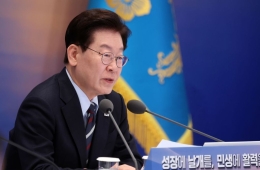
Gwangmyeong Mayor Park Seungwon (right) and National Assembly Member Lim Ohgyeong (left) met with Minister of Culture, Sports and Tourism Choi Hwiyeong on the morning of the 7th, handed him a policy proposal calling for Gwangmyeong to host a sports and performance complex dome stadium, and posed for a commemorative photo. Provided by Gwangmyeong City.
View original imageOn the morning of October 7, Mayor Park and National Assembly member Lim Oh-kyung, who represents Gwangmyeong Gap, met with Culture, Sports and Tourism Minister Choi Hwi-young in the office of the chair of the National Assembly’s Culture, Sports and Tourism Committee and presented a policy proposal calling for Gwangmyeong to host a dome stadium combining sports and live performances.
“Gwangmyeong has excellent transportation links and a diverse range of industrial, cultural and tourism infrastructure, making it an ideal location for a dome stadium,” Mayor Park said. “We will make it a forward base for Korea’s future growth industries, where K-pop, artistic performances, sports and information and communications technology come together to create new content and industries.”
According to Gwangmyeong City, the Ministry of Culture, Sports and Tourism is pursuing the construction of a large dome stadium with a capacity of 50,000 and a mid-sized dome stadium with a capacity of 30,000. The ministry plans to launch a nationwide bidding process in October and select and announce the sites after receiving and evaluating project proposals in December. Gwangmyeong City is preparing to attract the larger stadium, considering sites including land designated for the Gwangmyeong-Siheung 3rd New Town development.
The key competitive advantage Mayor Park cited is transportation access. The city says it could accommodate large-scale performances and sporting events by building on KTX Gwangmyeong Station, which serves visitors from across the country, and plans to expand regional transportation links, including the Shinansan Line, the Wolgot-Pangyo Line and the GTX network. It also cited the convenience of travel for international visitors using the city airport terminal at Gwangmyeong Station.
Mayor Park also outlined plans to connect the dome stadium with nearby industrial complexes. The city aims to work with information and communications technology and media-content companies set to move into Gwangmyeong-Siheung Techno Valley to develop AI stage production, media art and extended reality (XR) content, and build an industrial ecosystem in which these technologies can be tested at the stadium.
The goal is to develop the venue into a hub for research and development and commercialization of related technologies, beyond its role as a place for performances and sporting events.
The city also proposed linking the Gwangmyeong-Siheung 3rd New Town, Gwangmyeong Cultural Complex and the residential, cultural, tourism and shopping facilities in the Gwangmyeong Station area. The plan is to increase demand for longer-stay cultural tourism by encouraging performance-goers to spend time in the surrounding area, enjoying tourism and shopping. The city also emphasized that its proximity to Seoul could help expand cultural spending in the southwestern part of the Seoul metropolitan area.
“Gwangmyeong has ample potential to grow into a national hub for K-culture through a dome stadium,” Assembly member Lim said, calling on the ministry to provide support. Gwangmyeong City said Minister Choi expressed support for the city’s locational advantages and its vision of becoming a future growth hub, and said the proposal would be carefully reviewed during the bidding process.
In July 2025, Gwangmyeong City formed a dedicated team to attract a K-Arena and completed its basic strategy. It is currently conducting a feasibility study and commissioning work to develop a master plan, with advice from experts in culture and content, performance venues and sports. The city is also conducting a survey to gather residents’ opinions and identify concerns that may arise during the project.
Hot Picks Today
 Selling Like Crazy Every Year... 30-Year-Old Hetbahn Takes on a New Challenge: Tastes Better Than "Mom's Home Cooking" [On-Site Report]
- A 12-Year-Old Girl Went to the Hospital After Her Blood Pressure Hit 225 and Was Stunned: "What Is This Coral Reef-Like Thing in Her Aorta?"
- "Hey, Lady, Teach Your Kids to Behave!" ... 300,000 Won in Cash and a Bodily Injury Claim Demanded Over Child's Door Ding
- "If This Airs, I'm Dead"... Why a Restaurant Refused to Let Jeon Hyunmoo's Show Film
- I Thought Only 'Old Guys' Ate It... Young People Are Hooked on This 'Unusual Food' at Risk of Disappearing? [Delicious Stories]
Gwangmyeong City plans to refine the project proposal based on the study and public feedback, and work with Gyeonggi Province to prepare a bid for the national selection process.
© The Asia Business Daily. All rights reserved. Unauthorized AI training and use prohibited.