[2026 Parliamentary Audit] Welfare Minister Jeong Eunkyeong: "Basic Pension Reform Is No Half-Measure... We Upheld the 'More for Those with Less and Less for Those with More' Principle"
Criticized at parliamentary audit for maintaining eligibility over fears of political backlash
Cites easing of benefit reductions for couples, saying, "The gap in benefits will widen over time"
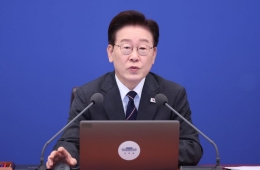
Health and Welfare Minister Jeong Eunkyeong pushed back against criticism that the government's proposed reform of the basic pension was only a half-measure, shaped by political concerns, saying, "We are clearly upholding the principle of providing more to those with less and less to those with more."

Jung Eunkyung, Minister of Health and Welfare, answers lawmakers' questions during a parliamentary audit held by the National Assembly's Health and Welfare Committee on the 7th. Yonhap News.
View original imageMinister Jeong made the remarks on the 7th during a parliamentary audit by the National Assembly Health and Welfare Committee, responding to a question from People Power Party lawmaker Baek Jong-heon, who criticized the government for backing away from reforming eligibility for the basic pension. Baek said the government had pledged to restructure the pension to provide more to lower-income recipients and less to higher-income recipients, but had dropped the measure to narrow eligibility out of concern about political backlash from older voters, leaving the existing system of payments to the bottom 70% by income unchanged. In response, Minister Jeong explained, "Next year, the difference in benefit amounts will be only about 9,000 won, but if benefits for higher-income recipients continue to be frozen, the gap between what lower- and higher-income recipients receive will gradually widen." She added, "There are practical limits to completely transforming the system in just one year."
She then cited the easing of the reduction in benefits for couples as an example of a tangible increase in support for low-income households. "For the bottom 45% by income, we cut the reduction for couples from 20% to 10%," Minister Jeong said. "This is not simply a 30,000-won increase; couples will receive about 120,000 won more in pension benefits." She also noted that the measure alone would require about 1 trillion won in additional budget funding. While some might consider the changes insufficient, she reiterated that the government had upheld the principle of providing more to those with less and less to those with more to the greatest extent possible.
Hot Picks Today
 "Wasn't It Supposed to Be Gone? Alarming Surge in Cases Leads US to Declare Disaster Emergency"
- [Exclusive] "We Thought Bigger Debts Would Hurt More..." Business Owners With Less Than 100 Million Won Loans Have Higher Delinquency Rates Than Those With Over 500 Million Won
- Lee: "Domestic Green Tech Should Be Supported Without Fear of Audits"... Calls for Policy Uncertainty to Be Resolved
- "This Isn't Right, Someone Could Throw Out Their Back"... Triple-Layered Garbage Bags Tightly Bound with Tape
- "Mom, You Didn't Throw Away My Old Clothes, Right?"... 20-Something and 30-Something Women Rediscover 20-Year-Old Fashion Styles
The government had previously considered reforming the basic pension system, which has paid a flat monthly amount of about 350,000 won to older adults in the bottom 70% by income, by shifting the eligibility criteria to focus on median income. However, shortly before the Ministry of Health and Welfare was due to announce its official reform plan, it put the plan on hold and reversed course, deciding to retain the existing system of payments to the bottom 70% by income next year. Instead, it decided to introduce a tiered payment system that would provide an additional 30,000 won per month to older adults in the bottom 30% by income, prompting criticism that its commitment to reform had weakened.
© The Asia Business Daily. All rights reserved. Unauthorized AI training and use prohibited.