Prime Minister Han: "Housing Supply Dashboard to Launch in Q1 Next Year; Real-Time Updates from Permits to Move-Ins"
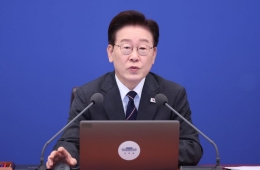
Prime Minister Han Seongsook said on the 7th that, regarding housing supply, “We will launch a digital housing supply dashboard in the first quarter of next year so that everyone can view real-time information on housing supply, including permits and approvals, sales, and move-ins.”
Han made the remarks at a luncheon meeting with reporters covering the prime minister’s office at the Prime Minister’s Sejong Residence in Sejong City, marking her 100th day in office. She said the government would increase transparency and predictability in the housing supply process and systematically manage factors causing delays in supply.

Identifying Bottlenecks and Responsible Ministries...“See at a Glance Where Progress Has Stalled”
The plan is to make the housing supply dashboard explicitly show at which stage—permits and approvals, supply, sales, or move-ins—a housing project has stalled, why it has stalled, and which ministry needs to resolve the issue. The government aims to use the dashboard to identify bottlenecks slowing supply and have the responsible ministries step in directly to address them.
“There are still many fields that have not yet been filled in, but we will add data until it is ready for public release and make the dashboard available in the first quarter of next year,” she said. “The dashboard will make it clear where things are slowing down.”
On redevelopment and reconstruction, she said, “Large-scale redevelopment typically takes 10 to 12 years, and can take as long as 18 years. Our goal is to shorten the permitting and approval period for public housing sites from 68 months to 37 months. We will speed things up by carrying out government permitting and approval procedures simultaneously.”
She added, “We have selected 300 priority districts where supply can be accelerated, and officials from the Ministry of Land, Infrastructure and Transport and the Financial Services Commission are working together on the ground to resolve problems. We are accelerating progress by closely managing issues specific to each district, such as replacing association heads, property valuation, and relocation loans.”

Regarding measures for jeonse and monthly rentals, she said, “The fundamental cause is a shortage of supply. Demand for LH’s new-build purchase rental housing, with rents at 60% to 70% of surrounding market rates, is high, with competition reaching 50 to 1.” She added, “Starting in the second half of next year, we will expand the scale of new-build purchase rental housing and increase support for young people’s rent.” She said, “These measures may not be enough for those facing difficulties right now, but accelerating supply is our top priority.”
Prime Minister Han reaffirmed the government’s commitment to providing 1.19 million public housing units by 2030 without delays, ensuring a stable supply of public rental and publicly sold housing. “Public rental housing needs to be redesigned not simply by reconsidering its branding, but in a way that improves quality of life,” she said, introducing the Wistay Byeollae site she visited the previous day. “It is run by a cooperative and offers a model that brings together community, care, and jobs. The birth rate there has risen to 1.7.”
She emphasized, “Although public rental housing is a policy for low-income households, we need to reconsider whether it is necessary to separate living spaces. We will create a universal public rental housing system that anyone can use and integrate the design of care, education, and welfare policies.”
Consider Linkage Effects in the Second Relocation of Public Institutions and Cluster Them Accordingly
She also stressed that, for the public institutions and regions to be included in the second relocation, which is due to be announced by the end of this year, institutions should be clustered based on local conditions and potential linkage effects rather than distributed evenly among regions.
Hot Picks Today
 "Wasn't It Supposed to Be Gone? Alarming Surge in Cases Leads US to Declare Disaster Emergency"
- [Exclusive] "We Thought Bigger Debts Would Hurt More..." Business Owners With Less Than 100 Million Won Loans Have Higher Delinquency Rates Than Those With Over 500 Million Won
- [2026 Parliamentary Audit] Land Minister Hong Jiseon: "Orders Working-Level Talks With Seoul on Housing Supply; Consults on Urban Complex Project, Yongsan Park"
- "This Isn't Right, Someone Could Throw Out Their Back"... Triple-Layered Garbage Bags Tightly Bound with Tape
- "Mom, You Didn't Throw Away My Old Clothes, Right?"... 20-Something and 30-Something Women Rediscover 20-Year-Old Fashion Styles
On diplomatic and security issues, she said the government’s position on the Strait of Hormuz had not changed. Regarding South Korea-U.S. relations, she said, “There are no signs of any major problems in the overall framework.” On the landmine explosion in the Demilitarized Zone (DMZ), she said, “It has been established that North Korea was clearly at fault and that it carried out the act. We need to continue demanding an apology from North Korea and follow a process to ensure it gives a clear apology.”
© The Asia Business Daily. All rights reserved. Unauthorized AI training and use prohibited.