Claims That "Daiso Is Being Shut Down to Save AliExpress and Temu" Spread Widely... A Fact-Check [Why&Next]
KFTC conducts on-site inspection of Daiso over alleged unfair trade practices
Claims of support for Chinese platforms spread on social media
Ali and Temu user numbers actually decline
Past Coupang case revisited... Concerns raised over "fairness
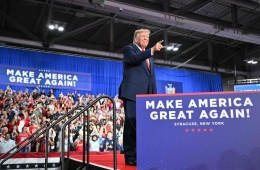
A post recently uploaded to his social media account by Fair Trade Commission (FTC) Chair Joo Byeonggi drew attention. After the FTC investigated Daiso, a discount household goods retailer, last month over allegations of unfair business practices, claims spread online that "Daiso is being pressured to save AliExpress and Temu." Chair Joo stepped in personally to refute them, saying, "This is completely untrue."President Lee Jaemyeong also took a hard line, calling for a "stern and swift response to outrageous false claims that obstruct the government's work."

After controversy over the Lee Jaemyeong government's alleged pro-China leanings erupted during the Coupang personal information leak scandal, Daiso, which has grown rapidly and is often called a "playground for teenagers," has also emerged as a focal point of political conflict.
FTC Explains Daiso Probe Only After a Month. Why Now?

President Lee Jaemyeong took a hard-line stance, sharing a post by Fair Trade Commission Chair Joo Byeonggi on X and saying, "We will respond firmly to the spread of false information." Reporter Kwon Jaehee.
View original imageAccording to the retail industry on October 11, Chair Joo posted on X on October 5 under the title "FTC's Daiso Probe: Taking the Side of Foreign Platforms?" He wrote, "This is completely untrue," and argued that "the claim that the FTC is pressuring Daiso to save AliExpress and Temu is plainly fake news." He explained that the FTC investigated companies suspected of unfair business practices based on anonymous tips and the results of fact-finding inquiries, with the aim of protecting small and medium-sized suppliers.
In fact, the FTC conducted an additional investigation of Daiso on September 8, while Chair Joo's explanation was posted about a month later. He responded belatedly after claims that "Daiso is being shut down to save AliExpress and Temu" spread rapidly, particularly across major social media platforms. The post received more than 10,000 likes in less than a day and was then widely shared on major online communities, including Bobaedream. The controversy spread further as the claims were repackaged into YouTube Shorts and other content.
The day after Chair Joo's direct response, on October 6, President Lee shared the post and said that "there must be a stern and swift response to outrageous false claims that obstruct the government's work." The posts by the FTC chair and the president also brought renewed attention to the allegations of unfair business practices by Daiso.
The FTC's on-site inspection at the headquarters of ASUNG DAISO in Gangnam District, Seoul, on September 8 was a follow-up to an investigation conducted in April and May this year. At the time, Olive Young, Musinsa, and LOTTE Hi-Mart were also among the companies investigated. Olive Young underwent an additional on-site inspection on September 10.
The allegations against Daiso include returning products without just cause, demanding economic benefits from suppliers, and unfairly requiring suppliers to bear the costs of promotional events. Article 10 of the Act on Fair Transactions in Large Retail Business prohibits returns without just cause. Article 11 requires a prior written agreement before a retailer can make a supplier bear promotional costs, and in principle limits the supplier's share to no more than 50%. The publicly disclosed details of the investigation focus on transactions with suppliers, rather than consumer prices.

A post on an online community claims that the Fair Trade Commission's investigation into Daiso is related to the theory that it is favoring AliExpress and Temu. Photo by Kwon Jaehee
View original imageClaims of Support for AliExpress and Temu Also Surfaced During Coupang Scandal... U.S. Congress Raises Issue of 'Regulatory Fairness'
Daiso is not the first domestic retailer to face claims that the government's actions amount to "favoring Chinese platforms." During the Coupang personal information leak scandal, some YouTube channels and online communities also claimed that the government was targeting Coupang to help Chinese platforms. The government's response to Coupang was framed as evidence of a "pro-China" stance or interpreted as pressure on a competitor to benefit Chinese companies.
Such claims were also raised in the U.S. Congress in connection with the Coupang scandal. Republicans on the U.S. House Judiciary Committee claimed that "the South Korean government is targeting an American company to benefit its Chinese competitors." They linked the FTC's investigation and sanctions against Coupang to alleged discrimination against a U.S. company.
More recently, concerns have also been raised in direct comparisons between Coupang and Chinese platforms. In a letter to Secretary of State Marco Rubio, U.S. House Select Committee on the Chinese Communist Party Chair John Moolenaar raised concerns that South Korea was enforcing the law more leniently against AliExpress and Temu than against Coupang when responding to alleged violations involving personal information, consumer protection, cybersecurity, and product safety.
South Korea's Ministry of Foreign Affairs has stated that "regulatory authorities treat all companies operating in the country fairly."
Could Daiso Probe Benefit Its Rivals? AliExpress and Temu User Numbers Actually Declined
![Claims That "Daiso Is Being Shut Down to Save AliExpress and Temu" Spread Widely... A Fact-Check [Why&Next]](http://www.asiae.co.kr/news/img_view.htm?img=2026100717002653754_1791360026.png)
Daiso, which sells household goods priced below 5,000 won, appears to have become the focus of these claims because its customer base overlaps with that of China's AliExpress and Temu, which have grown as ultra-low-cost, value-for-money platforms for direct purchases.
Political conflict has also fueled pro-China conspiracy theories targeting the ruling camp. Conservatives, including the People Power Party, have launched attacks by alleging ties between the government and ruling party and pro-China forces. Public opinion appears similar. According to a poll conducted by Hankyoreh 21 through Korea Research in June, 51% agreed with the statement that the Democratic Party of Korea "pursues pro-China policies." The share was particularly high among men aged 18 to 29, at 66%.
However, the FTC's investigation of Daiso did not lead to an increase in users of AliExpress or Temu. In September, the month of the additional investigation of Daiso, the number of users of the AliExpress and Temu apps declined from the previous month. According to Wiseapp·Retail, their monthly active users (MAU) in September were 9,086,787 for AliExpress and 8,372,790 for Temu, down 4.6% and 4.4%, respectively.
The FTC has also sanctioned Chinese e-commerce platforms. In June 2025, the FTC decided to impose a fine of 357 million won, an administrative fine of 1 million won, and corrective orders on Temu for violations of the Act on Fair Labeling and Advertising and the Act on Consumer Protection in Electronic Commerce. Temu was found to have advertised that multiple people could receive a benefit or make a guaranteed purchase when it was actually offering items such as a Nintendo Switch for 999 won to only one person on a first-come, first-served basis.
Hot Picks Today
 "Busan Is in Big Trouble"... One Cockroach Can Produce 350 Nymphs; Establishment Confirmed, Causing Alarm
- [Exclusive] "We Warned You Four Times"... Another Defect Found in Bathroom at LH Happy Housing Site
- Whisky Aged in Space... Could It Transcend the "Taste of Earth"? [Delicious Stories]
- "I Thought It Was Just for Grandmothers"... The Unexpected Appeal Winning Over China's Young People [China.zip]
- "I Hate Dog Meat and Skate, Love Pizza" ... "Let's Meet" Frenzy Over Beautiful 41-Year-Old Nurse, But There's a Twist
In August 2025, the FTC decided to impose a total fine of 2.093 billion won on Oceansky and MICTW, affiliates of AliExpress, for misleading discount advertisements. The issue was that they presented prices at which products had never actually been sold as regular prices, then advertised the products as being heavily discounted. Corrective orders and administrative fines were also imposed for failing to display the identities of the operators and for not providing seller information.
© The Asia Business Daily. All rights reserved. Unauthorized AI training and use prohibited.