[2026 National Audit] MICE Industry Growing, but Budget Cut by 8%... "Holding Back Regional Tourism"
179,339 Events and 29.24 Million Participants in 2024
Budgets for Corporate Meetings and Conventions Slashed Across the Board
Yoonduk Kim: "High Value-Added Tourism Industry... Budget Should Increase, Not Decrease"
Although the domestic MICE (Meetings, Incentives, Conferences, Exhibitions) industry is growing rapidly, government support funding has actually decreased. In the National Assembly, there have been calls to expand relevant budgets in order to disperse MICE demand, which is currently concentrated in the Seoul metropolitan area, to other regions, and to strengthen the self-sufficiency of new integrated complexes.

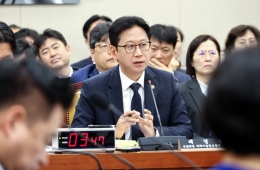
On October 7, during a parliamentary audit by the National Assembly's Culture, Sports, and Tourism Committee, Yoonduk Kim, a member of the Democratic Party of Korea, urged the Ministry of Culture, Sports and Tourism to expand support, stating, "Given the size and growth of the MICE industry, it is difficult to understand why the government is reducing budgets and scaling back projects."
According to an analysis by Assemblyman Kim based on the Korea Tourism Organization's 'MICE Industry Statistics Research,' the number of domestic MICE events in 2024 reached 179,339, up 33.2% from the previous year. Total participants increased by 53.9% to 29,239,602, while the number of foreign participants also grew by 30.7% to 1,998,898.
By category, conventions showed the most prominent growth. The number of conventions held in 2024 was 4,108, a 116.2% increase from the previous year, and the number of participants grew by 76.8% to 2,971,103. Corporate meetings rose by 32.6% to 168,876, incentive tourism increased by 20.5% to 5,619, and exhibitions grew by 6.4% to 736.
Despite the expansion of the industry, government support funding has moved in the opposite direction. The government's 2027 budget proposal allocates KRW 15,970,700,000 for MICE industry development support projects, a decrease of KRW 1,446,000,000 from this year's KRW 17,320,200,000. This is a reduction of about 8.4%.
In detail, the budget for boosting corporate meetings and incentive tourism was reduced from KRW 6,944,000,000 to KRW 5,941,000,000, a decrease of KRW 1,003,000,000. The budget for supporting convention attraction and hosting also fell from KRW 7,920,000,000 to KRW 6,990,000,000, a decrease of KRW 930,000,000.

In 2024, the number of domestic MICE (Meetings, Incentives, Conferences, and Exhibitions) events and participants increased by 33.2% and 53.9% respectively compared to the previous year; however, the 2027 government plan reduces key related budgets such as corporate meeting and incentive tourism promotion and support for attracting and hosting conventions. The office of Representative Kim Yoon-duk also cited cases where events involving 1,000 attendees from Malaysian companies and 4,000 from Indian companies were redirected to China. Source: Korea Tourism Organization·Office of Representative Kim Yunduk
View original imageThe budget for participation in overseas markets and activation of international events was reduced by KRW 300,000,000 from KRW 1,462,000,000 to KRW 1,162,000,000, and the budget for supporting regional MICE industry development also decreased from KRW 5,306,000,000 to KRW 5,256,000,000.
Assemblyman Kim pointed out that there have been actual cases of international events being lost overseas due to insufficient support. This year, events for 1,000 Malaysian corporate group members and 4,000 Indian corporate group members were taken over by China, which offered better hotel price competitiveness.
The issue of regional MICE industry development was also raised. While there is a need to disperse demand concentrated in the capital area to cities such as Cheongju, Gwangju, and Gyeongju, and to improve the ability to attract international conferences and build a solid foundation in regions where new MICE integrated complexes are being developed like Jeonju and North Gyeongsang Province, the support budget is still insufficient.
Assemblyman Kim stated, "MICE is not merely about holding events but is a high value-added tourism industry that brings in revenue," adding, "When a single international conference is held, it stimulates spending in hotels, restaurants, transportation, shopping, travel agencies, exhibition and event planning agencies, performing and cultural content companies, interpretation and equipment providers, printing businesses, and local small traders."
Hot Picks Today
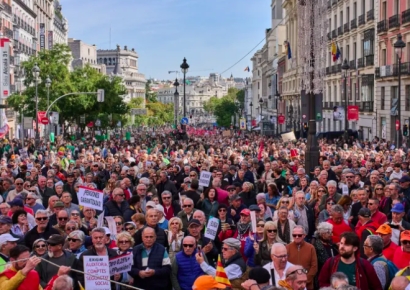 "They're Coming After My Pension Too?" Public Unease Mounts... Spain Sees Mass Protest Over Reform Push
- "Where Do You Go Every Lunch Break?"... 'Time-Poor' Men in Their 40s: Where They Spend Their Money.
- "Targeted Cars Changing Lanes"... More Than 900 Insurance Fraudsters Steal 7.5 Billion Won
- "Naked Again?" Controversial Actress Crosses a Line... Slammed for Sexualizing 'Child Characters'
- "A Really Beautiful Butt"... How Did Nicki Minaj React to Trump's Unexpected Remark?
He went on to emphasize, "MICE tourism is essential for the regional economy and for creating jobs. If the Ministry of Culture, Sports and Tourism truly regards the MICE industry as a pillar of inbound tourism, it should expand, rather than cut, the budget."
© The Asia Business Daily. All rights reserved. Unauthorized AI training and use prohibited.