Controversy Over Comprehensive Farmland Investigation Escalates... Song Miryung: "No Action on Conventional Violations"
At National Assembly Agriculture Committee Audit on October 7
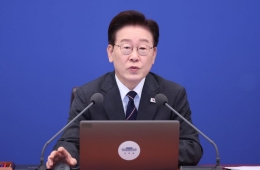
As controversy over the government's comprehensive farmland investigation—intended to eradicate farmland speculation—grew, Song Miryung, Minister of Agriculture, Food and Rural Affairs, emphasized, "We do not plan to take action against the majority of general and conventional violations identified during the investigation."
Attending the National Assembly’s Agriculture, Food, Rural Affairs, Oceans and Fisheries Committee audit on October 7, Minister Song stated, "This investigation is not a burden for farmers. We aim to revise unreasonable regulations in line with current realities so farmers can focus on cultivating their land with peace of mind."

During the audit, opposition lawmakers sharply criticized the comprehensive farmland investigation. Lee Seong-kwon, a member of the People Power Party, questioned, “Are you aware that farmers are feeling fear and anxiety that the land they have cultivated all their lives might be taken away?” Minister Song responded, “The government neither plans nor has any reason to confiscate the land being farmed by farmers. However, if someone illicitly acquires farmland in land transaction permit zones through false means and then leaves it fallow or illegally leases it out, if agricultural corporations engage in the real estate business, or if someone acquires a share of farmland through auctions and then leaves it fallow or illegally leases it out, and these cases are deemed speculative, we can order a disposition. Even in such cases, we will ensure a sufficient process for explanation and justification is provided.”
Lee Gae-ho, a lawmaker with the Democratic Party of Korea, pointed out that the Ministry of Agriculture, Food and Rural Affairs failed to respond appropriately to the spread of misinformation about the government’s farmland investigation. He said, "Government agencies responsible for correcting misinformation should offer ample explanations and persuade farmers. To date, what have you done? The initial response by local civil servants was seriously flawed."
The farmland investigation was initiated following President Lee Jaemyung’s directive in February of this year—instructing a comprehensive review because farmland had become subject to speculation and high prices. Subsequently, in May, the government passed a revision of the Farmland Act at the Cabinet meeting, making it mandatory to order the disposition of farmland found in violation of the law. Beginning May 18, the government launched the first basic survey, which covered farmland acquired since the implementation of the Farmland Act in January 1996, and ran this survey through the end of July. According to the Ministry of Agriculture, Food and Rural Affairs, the first survey found suspected violations such as ownership restrictions, illegal leasing, illegal conversion, and unauthorized fallow in 300,000 hectares, which is 27% of the total 1.36 million hectares surveyed.
Nevertheless, concerns have continued to grow that "the government is taking farmland away from farmers through the investigation." In response, Minister Song held a press briefing on September 10, saying, "There is malicious and distorted information about the farmland investigation, but this is not true at all." A few days later, President Lee also said, "The claim that the government is confiscating land is agitation by speculators." Finally, on September 21, the Democratic Party of Korea and the Ministry of Agriculture, Food and Rural Affairs announced supplementary measures after policy consultations. They stated that, for minor violations not related to speculation—such as verbal leasing contracts and fallow land by elderly farmers—a grace period for self-correction would be provided, to encourage normalization and legalization, and that a special law would be enacted within the year to address these issues.
Despite the government’s plan for supplementary measures, controversy surrounding the comprehensive farmland investigation continues. On August 27, the National Assembly Research Service, in its analysis of audit issues, identified "ways to minimize the side effects of the comprehensive farmland investigation" as one of the 56 critical questions the government must answer. Furthermore, on October 6, the Research Service pointed out that "the rapid implementation of the comprehensive farmland investigation without sufficient preparation and policy deliberation is intensifying anxiety and social confusion at the local level." While the government has stated plans to enact a special law to allow the normalization and legalization of conventional and minor violations detected by the investigation, the report criticized the lack of preemptive measures, suggesting that earlier action could have mitigated both social controversy and costs.
Hot Picks Today
![[Exclusive] "Bought at 7,000 Won, Now at 1,600 Won"...76% Stock Plunge Shatters Big Dreams [KOSDAQ Inflated Listings]②](https://cwcontent.asiae.co.kr/asiaresize/93/2026100613292451634_1791260964.jpg) [Exclusive] "Bought at 7,000 Won, Now at 1,600 Won"...76% Stock Plunge Shatters Big Dreams [KOSDAQ Inflated Listings]②
[Exclusive] "Bought at 7,000 Won, Now at 1,600 Won"...76% Stock Plunge Shatters Big Dreams [KOSDAQ Inflated Listings]②
- "I Decided to Stop Ordering Delivery and Cook at Home, But Was Shocked by Grocery Prices"
- Is 'KOGUMA' Coming Too?... "Japan in Serious Trouble" - Archipelago on High Alert Ahead of Holidays
- "Buy Now and Get 17X Returns?"... Cathie Wood Makes Bold 1,665% Bitcoin Forecast by 2030
- "This Isn't Right, Someone Could Throw Out Their Back"... Triple-Layered Garbage Bags Tightly Bound with Tape
On this day, Minister Song also underscored the need to steadily advance reforms of the National Agricultural Cooperative Federation (Nonghyup). She stated, "If the reform plan is finalized following parliamentary discussions, we will do our utmost in advance preparations to ensure swift implementation. Additional reform plans will be prepared to enhance economic activities and strengthen the competitiveness of cooperatives to maximize benefits for farmers and cooperative members." Regarding the Comprehensive and Progressive Agreement for Trans-Pacific Partnership (CPTPP), for which the government is reviewing membership, Minister Song said, "As concerns remain significant in the agricultural sector, we will reconsider discussing CPTPP accession from scratch, prioritizing the restoration of trust and building consensus within the agricultural community." She added, "In this process, issues regarding the sensitivity of the agricultural sector and the need for sufficient support measures will also be addressed."
© The Asia Business Daily. All rights reserved. Unauthorized AI training and use prohibited.