Oh Se-hoon: “Drop in Presidential Approval Due to Real Estate, Stocks, and Prosecution Reform” (Comprehensive)
Oh Se-hoon: "Falling Presidential Approval Ratings... A Cry from the Citizens"
Declining Approval Driven by Failures in Housing and Stock Markets
Current Administration’s Real Estate ‘Failure’... Vows 310,000 New Housing Units
"Inspection Autonomy Abolishment Has Left the Public Feeling Uneasy"
Oh Se-hoon, Mayor of Seoul, described the decline in President Lee Jaemyung’s approval rating for government performance as “a plea that is close to the cries of the people.” He cited the government’s failure to manage both the housing market and the stock market as key reasons. At the same time, he pledged to achieve the target of supplying 310,000 new housing units to help stabilize the housing market.
On the morning of October 7 at Seoul City Hall, Mayor Oh held a press briefing to mark the 100th day of his ninth-term inauguration. He stated, “When people’s lives are tough and they are economically pressured, it is difficult for the government to receive favorable evaluations.”
That day, Mayor Oh specifically pointed to anxieties in the housing and stock markets as drivers of the current administration’s falling approval ratings. He said, “When housing costs rise, disposable income is reduced, and as spending on housing increases, living expenses decrease,” adding, “A government that has failed to keep rent and housing prices in check cannot expect positive evaluations.”

Failure in Government Real Estate Policy... “Constantly Proposing Regulatory Reform to the Government”
Mayor Oh criticized the government’s housing market management approach as a “failure.” He explained, “In Seoul, due to the inherent structure, urban renewal projects account for most of the housing supply. Over the last five years, we have done our utmost to promote the establishment of associations and expedite project approval.” He continued, “If you look at what support the government has provided so far, an honest evaluation is unavoidable.” He also criticized President Lee’s remarks on social media the previous day emphasizing increased permits and new project starts, saying, “Claiming this is due to the government’s supposed speedy approach is not logical.”
He promised a push for faster housing supply to stabilize the market. Mayor Oh stressed the need for progressive government action to achieve the goal of breaking ground on 310,000 housing units by 2031 through the acceleration of redevelopment projects. He said, “We are continuously asking the government to improve various regulations,” adding, “Temporarily lifting restrictions on association member status and raising limits on redevelopment density are needed to improve the economic feasibility of urban renewal projects, so that associations can proceed without undue burden.” However, he noted that minimizing conflict among residents in existing redevelopment association zones is crucial.
He also shared his position regarding remodeling. Mayor Oh noted, “Because incentives have been given to reconstruction, supply that could have gone to remodeling has been driven toward reconstruction, resulting in a shrinking remodeling sector.” He added, “Since the start of the ninth-term administration, I have instructed the implementation of measures to ensure remodeling can compete equally with reconstruction, and these measures will be announced soon.”
He identified the ongoing “Inspection Autonomy Abolishment” policy of the current administration as another reason for public anxiety. “Well-trained investigators have been excluded from investigations,” he said, “and as a result, the public is experiencing significant unrest.” Mayor Oh argued, “Checks and balances must ensure daily crimes are handled fairly, but hostility toward the prosecution has led to the collapse of one part of the national system.”
Regarding the appellate ruling scheduled for later this month over allegations of a covert payment of public opinion poll expenses, he expressed remorse, saying, “I am sorry,” but added, “The truth will be revealed.” Mayor Oh explained, “A lot of evidence not found in the first trial has been submitted. The time is coming for prosecutors and the special investigation who carried out an excessive probe to be held accountable.”
Repeated Public Transport Disruptions... “Need for Operational Efficiency and Institutional Reform, Public Interest Designation Must Be Discussed”
Addressing recurring disputes between labor unions of the Seoul subway and city buses, which cause yearly inconvenience for citizens, Mayor Oh emphasized the need for operational efficiency and institutional reform. He stated, “Seoul Metro fares are lower than international standards, making them affordable for citizens, but the deficit is extremely large. There is clearly no alternative but to cut costs.”
Mayor Oh pointed out that after integrating lines 1 through 4 with other routes under the previous administration, managerial rationalization has become essential. “When two organizations merge, overlapping personnel and work must be reduced, yet staff numbers have barely decreased,” he said, “Reducing staff and improving efficiency are reasonable demands from citizens.” He continued, “For the unions, this will be burdensome, but compromise needs to be found. Ultimately, the authority lies with the head of Seoul Metro, and pursuing managerial rationalization is the company’s inevitable duty.”
Regarding repeated city bus strikes, he pointed to chronic deficits and rising personnel costs. Mayor Oh said, “It is evident that city buses also operate at a substantial loss,” and “According to popular perception, drivers are already well paid, and yet strikes threatening further wage increases have been announced.” With a Supreme Court ruling potentially resulting in a wage hike of more than 10 percentage points, he predicted, “Strike threats are likely to become even more frequent going forward.”
Mayor Oh also pointed out the lack of legal safeguards to reduce public inconvenience during bus strikes and stressed the need to designate buses as an essential public interest business. He said, “The subway is designated as an essential public interest business, allowing for significant mitigation of inconvenience, but far more areas where buses operate are used by the transport disadvantaged.” He continued, “Even though buses cover corners of the city that the subway doesn’t reach, the government is not even considering designating bus operations as an essential public interest business.” He reiterated, “We need public consensus, and the discussion on essential public business designation can no longer be put off.”

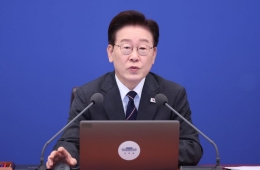
Seoul Mayor Oh Se-hoon is answering questions from the press at a press briefing held on the 100th day of his inauguration at Seoul City Hall on the 7th. Photo by Yonhap News
View original imageThe Core of the Ninth-term Administration: “Quality of Life”—Judging Policy Success by Citizen Perception
Mayor Oh identified “quality of life” as the key slogan of the ninth-term administration. He plans to enhance the quality of life for Seoul citizens by fostering future industries to boost urban competitiveness and by reimagining urban spaces. “Through the Han River Renaissance, we transformed concrete-lined riversides into green and leisure spaces, making the Han River a place for citizens to stay,” Oh said, highlighting ongoing projects like road undergrounding and restructuring the areas around Changgyeonggung Palace and Jongmyo Shrine.
The mayor’s policy philosophy also continues to focus on “accompanying the disadvantaged.” Mayor Oh referenced “Donghaeng Restaurants,” a city-designated private eatery providing free daily meals to residents of shantytowns, emphasizing, “These services safeguard patrons’ dignity and self-respect while also energizing local businesses. Welfare cannot be assessed by the scale of support alone.” He asserted, “Even as the city grows, if citizens in hardship cannot make a new start, then that growth does not belong to everyone. I will work to restore the connections between people so that no one is left alone in loneliness in Seoul.”
Hot Picks Today
 "Wasn't It Supposed to Be Gone? Alarming Surge in Cases Leads US to Declare Disaster Emergency"
- [Exclusive] "We Thought Bigger Debts Would Hurt More..." Business Owners With Less Than 100 Million Won Loans Have Higher Delinquency Rates Than Those With Over 500 Million Won
- "Cash Equal to Your Baby's Weight"... Japanese Bank Offers a Surprising Perk for New Parents
- "This Isn't Right, Someone Could Throw Out Their Back"... Triple-Layered Garbage Bags Tightly Bound with Tape
- "Mom, You Didn't Throw Away My Old Clothes, Right?"... 20-Something and 30-Something Women Rediscover 20-Year-Old Fashion Styles
Mayor Oh stated, “From now on, all policy outcomes will be judged by citizens’ perceptions,” and promised, “I will not let a single day of the remaining four years be wasted, ensuring that citizens can feel change in their daily lives.”
© The Asia Business Daily. All rights reserved. Unauthorized AI training and use prohibited.