[Mental Health Blind Spots: Universities 10] Lee Donghoon: "University Student Mental Health: From Post-Crisis Intervention to Prevention"
"Emotional struggles from elementary, middle and high school persist into young adulthood
The safety net's 'age-based fragmentation' must be bridged"
"Children who struggled emotionally in elementary, middle, or high school do not suddenly recover just because they go to college. Many go on to university carrying the problems they had from that time. That is why mental health policies should start with prevention, not 'post-crisis intervention.'"

Lee Donghun, professor at Sungkyunkwan University and president of the Korean Counseling Psychological Association and the National University Student Counseling Center Association
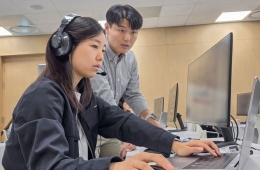
View original imageLee Donghun, professor at Sungkyunkwan University and president of the Korean Counseling Psychological Association and the National University Student Counseling Center Association, made the remarks on October 8, emphasizing the need to shift college student mental health policies toward prevention.
Since 2022, Lee has represented student counseling institutions at more than 240 universities nationwide, advocating for improvements to the support system for college students' mental health and the establishment of an institutional foundation. The National University Student Counseling Center Association (NUSCCA) leads a nationwide survey of university student counseling institutions. Its findings provide what is effectively the only nationwide dataset on suicide, self-harm, and depression among college students, for which national statistics are unavailable. This year, the survey is scheduled to be reviewed and implemented jointly with the Ministry of Education and the Office for Government Policy Coordination.
Lee said his involvement in college student mental health deepened as he studied mental health issues among children and adolescents and observed how students who had faced crises were doing after graduating from high school. "As I counseled students on campus, I saw that mental health problems among college students often stemmed from issues they had carried since elementary, middle, or high school," he said. Lee focused on the reality that student crises continue, while policies addressing them are fragmented by school level and age.
Lee identified "fragmentation" as the biggest gap in the current mental health safety net for college students. "The problems faced by students in elementary, middle, and high school, university students, and young people who become isolated and socially withdrawn after graduating from university are all connected," he said. "It should not be the case that the Ministry of Education focuses only on elementary, middle, and high schools, universities focus only on universities, and other ministries, such as the Ministry of Health and Welfare, focus only on isolated and socially withdrawn young people." He added, "We need to view the entire age range as a continuum, from elementary school through university and into young adulthood after graduation."
Lee said mental health issues among college students should not be left solely to university counseling centers. Rather than treating students' mental health as an individual problem or as an issue affecting only the subset of students who need counseling, the response should recognize it as a matter that university communities and the government must address together. Counseling staff, budgets, and crisis response capabilities vary widely among universities, making it difficult to rely solely on the capacity of individual institutions.
He said the approach to responding to these issues also needs to change. The focus should shift from "post-crisis intervention," which involves identifying and treating students after their problems have become severe, to prevention. "In Korea, the focus is too heavily on post-crisis intervention and the medical model," Lee said. "Medical intervention is necessary for high-risk groups, but preventive intervention should also be possible at elementary, middle, and high schools, universities, and in local communities, before students reach that stage." Schools, universities, and local communities need to consider together the programs and support systems that can take effect before a student's crisis becomes severe.
The most urgent step in achieving this is establishing a legal basis that clearly defines the responsibilities of the government and universities for college students' mental health. "A legal foundation must first be established so that the government and universities take responsibility for college students' mental health, investigate and assess the situation, and address it as an issue for universities," Lee said.
Legislative efforts are also underway in the National Assembly. In April, Kim Moon-soo, a lawmaker with the Democratic Party of Korea, sponsored a bill to amend the Higher Education Act. The bill states that university heads may establish and implement policies to promote students' mental health, and that the government and local governments may support those efforts. In July, independent lawmaker Choi Hyuk-jin added more specific provisions. These would require universities to establish and implement annual mental health support plans and provide for the placement of professionals, links to specialized and medical institutions, academic support such as class accommodations for students who need treatment, and a basis for administrative and financial support from the Ministry of Education.
Alongside establishing a legal basis, another urgent task is accurately assessing the state of college students' mental health. Lee has previously highlighted the lack of national-level data on the issue and the difficulty of understanding the overall situation through surveys conducted by individual universities alone. He said the situation should be examined separately by university type, size, and region, as counseling resources and students' circumstances differ accordingly.
Related Articles
 [Exclusive] Crisis Among University Students... Junior College Crisis Index Up Sixfold in Two Years
"The first priority is to assess the current situation and how serious mental health problems among college students are," Lee said. "We need to look beyond the Seoul metropolitan area and examine conditions at regional universities and smaller junior colleges, among others." He added, "We must move beyond simply identifying students in crisis after the fact and shift to a system that prevents crises from escalating and provides support."
© The Asia Business Daily. All rights reserved. Unauthorized AI training and use prohibited.