Kim Younghoon: "Commitment to Dialogue Harder Than Commitment to Parting"... KCTU's Participation in Mega Special Zone Discussions is Significant
Kim Younghun, Minister of Employment and Labor, emphasized the significance of initiating social dialogue regarding labor special exemptions in the Mega Special Zone. He stated, "The fact that social dialogue has started is meaningful in itself," and stressed that labor, management, and government should find solutions through dialogue.
Appearing on a YouTube broadcast on the 7th, Minister Kim remarked, "Resolving for dialogue is more difficult than breaking up," attributing significance to the fact that the Korean Confederation of Trade Unions (KCTU) joined the discussion table on labor special exemptions in the Mega Special Zone. The Mega Special Zone labor exemptions refer to easing labor regulations within the zone in connection with the proposal of the Mega Special Zone Special Act, and are currently under discussion among the government, labor, and management.

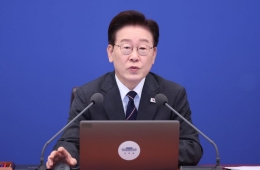
Kim Younghun, Minister of Employment and Labor, is giving a briefing on 'Proposal for Social Dialogue related to the Mega Special Zone Special Act' at the Government Seoul Office in Jongno-gu, Seoul, on the 15th. 2026.9.15 Photo by Jo Yongjun
View original imageMinister Kim commented, "From the labor community's perspective, it might feel like being invited to a feast where there is nothing to eat." He continued, "There are many contentious issues, such as whether to concede on the expansion of dispatch labor or on the 2+2 fixed-term contract system, but despite this, they have participated. I am grateful that both labor and management have responded."
Minister Kim also expressed the intention to continue social dialogue in the process of finding solutions for the Mega Special Zone labor exemptions. He said, "Finding solutions to these issues is not easy," and added, "We must find answers on the ground to our problems." He continued, "Although we have failed in social dialogue several times, we have not given up," and once again underscored, "Dialogue is necessary to resolve this task."
In response to some claims that the KCTU's participation is aimed at undermining the social dialogue, Minister Kim said, "The reason the KCTU is seeking social dialogue is to show young people in South Korea that there is hope," and added, "At the very least, if the established generation—management, labor, and government—discusses with a single goal, there's nothing that cannot be solved."
Regarding the KCTU's statement that a conclusion cannot be predicted even as they participate in the Mega Special Zone labor exemption discussions, Minister Kim concluded that this is influenced by past experiences with social dialogue. "There will be concerns within the labor community about whether now is the time for struggle, not dialogue," he said. "There are concerns that social dialogue has been used as an alibi to enforce government policies."
He particularly mentioned previous instances in which mass layoffs and the dispatch labor system were institutionalized through labor-management-government agreements, and acknowledged labor's cautious stance. "Today, mass layoffs and the dispatch system are the result of the first tripartite agreement, and it would be incorrect to say there is no trauma attached to that," he said.
Hot Picks Today
 "Wasn't It Supposed to Be Gone? Alarming Surge in Cases Leads US to Declare Disaster Emergency"
- [Exclusive] "We Thought Bigger Debts Would Hurt More..." Business Owners With Less Than 100 Million Won Loans Have Higher Delinquency Rates Than Those With Over 500 Million Won
- "Cash Equal to Your Baby's Weight"... Japanese Bank Offers a Surprising Perk for New Parents
- "This Isn't Right, Someone Could Throw Out Their Back"... Triple-Layered Garbage Bags Tightly Bound with Tape
- "Mom, You Didn't Throw Away My Old Clothes, Right?"... 20-Something and 30-Something Women Rediscover 20-Year-Old Fashion Styles
Minister Kim stated that for labor participating in social dialogue, "What they risk losing is social isolation, and what they stand to gain is a social trust asset."
© The Asia Business Daily. All rights reserved. Unauthorized AI training and use prohibited.