[Why&Next] 'Block 7' Dormant for 30 Years... Will Korea and Japan Renew Dialogue Amid Supply Chain Crisis?
South Korea and Japan, Both Dependent on the Middle East, Align Resource Security Interests Amid Supply Chain Risks
As Agreement’s End Approaches, Maritime Boundary Calculations Among South Korea, China, and Japan Grow Complex
![[Why&Next] 'Block 7' Dormant for 30 Years... Will Korea and Japan Renew Dialogue Amid Supply Chain Crisis?](http://www.asiae.co.kr/news/img_view.htm?img=2026100710581052935_1791338290.jpg)
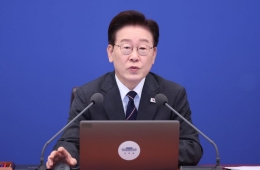
Kim Jeongkwan, Minister of Trade, Industry and Energy, opened the possibility of resuming dialogue with Japan over the Korea-Japan Joint Development Zone (JDZ or Block 7) in the continental shelf, whose development has been essentially suspended for more than 30 years. Amid growing risks to crude oil and liquefied natural gas (LNG) supply chains due to instability in the Middle East, such as around the Strait of Hormuz, he suggested that the issue of joint development could again be discussed between Korea and Japan from the perspective of resource security needed by both countries. As the possible expiration date of the agreement in 2028 approaches, there is growing attention as to whether the stalled negotiations over Block 7 will see a breakthrough.
On October 6, during the National Assembly’s Trade, Industry, Energy, SMEs and Startups Committee audit, Minister Kim stated regarding Korea-Japan continental shelf joint development, “We will consider dialogue from the perspective of the resource security required by both countries.”
The Korea-Japan Joint Development of the Continental Shelf Agreement was signed in 1974 and came into effect in 1978. It designated the waters between the south of Jeju Island and the west of Kyushu, Japan, as a joint development zone and outlined that the two countries would cooperate to explore and develop petroleum and natural gas there. Although joint exploration and drilling took place after the agreement went into effect, commercial viability was not secured, and development has effectively halted since the 1990s. The agreement is set to expire in 2028.
Middle East Supply Chain Crisis... Block 7 Returns to the Forefront of Attention After Being Overshadowed by 'Economic Feasibility'
The renewed attention on Block 7 has been driven by energy security. As instability in the Middle East and geopolitical risks in the Strait of Hormuz mount, both Korea and Japan—highly dependent on imported energy—are again prioritizing the securing of stable oil and gas supply chains.
Until now, the biggest obstacle to joint development of Block 7 has been its economic feasibility. Based on the results of exploration and the limited business potential, Japan has maintained a passive stance regarding additional development. However, as the risks around the Strait of Hormuz have become persistent, it has become difficult to judge the value of these resources purely by development costs and expected returns. The strategic value of securing domestically usable resources for emergencies and diversifying supply chains away from overreliance on the Middle East has increased.
The passage of time is an added burden for Korea, as negotiating conditions may worsen. When Korea and Japan signed the joint development agreement, Korea claimed rights to the area based on the ‘natural prolongation’ theory, asserting that the continental shelf extends from the Korean Peninsula. However, subsequently in international maritime law, the ‘median line principle’—which draws boundaries at an equal distance from the coastlines of both countries—became increasingly recognized.
Accordingly, there is now analysis suggesting that when the current agreement ends, if Korea and Japan establish a new maritime boundary, a significant portion of the JDZ could be recognized as being under Japanese jurisdiction. Currently, both countries jointly develop resources and share profits, but if the agreement’s safeguard disappears, it could become difficult for Korea to claim the same rights as before.
Professor Park Changgun and researcher Byun Woohee, in a 2024 research paper published in the National Security Strategy Institute’s journal "National Security and Strategy," analyzed that Japan is pursuing a ‘delay strategy’ to enhance its bargaining power, anticipating issues of seafloor resource development and continental shelf boundary setting in the JDZ after 2028. As notifications regarding the agreement’s termination can be issued from June 2025, they argue, the longer Japan waits, the stronger its leverage will become in future JDZ allocation negotiations. This background explains why Japan has had little incentive to actively participate in joint development.

2028 as the Turning Point... Can Incentives Be Created to Move Japan?
However, the agreement’s expiration will not necessarily produce only advantageous results for Japan. This is because China is also claiming continental shelf jurisdiction over the waters currently designated as the Korea-Japan Joint Development Zone. If the framework for joint development between Korea and Japan disappears, the Block 7 issue could expand beyond bilateral talks to become a maritime jurisdiction dispute among Korea, China, and Japan.
The "China factor" is also a concern for Japan. China has already been developing resources independently in the East China Sea, causing disputes with Japan. If, after the dissolution of the Korea-Japan joint development framework, China formally asserts its jurisdiction, Japan may also be forced to enter new negotiations. Maintaining or redesigning a regime of joint development with Korea could thus become one of the options available to Japan.
Recent signs of expanded energy cooperation between Korea and Japan could, conversely, provide a catalyst for resuming dialogue. In response to instability in Middle Eastern supply chains, the two countries have strengthened cooperation in energy security by sharing information on oil and LNG supply and storage.
The key is whether these shifting interests can actually lead to discussions on joint development. In 2024, Korea and Japan restarted discussions on the agreement by holding a joint committee for the first time in 39 years, but have not yet progressed to concrete development stages such as joint geophysical surveys or drilling.
Hot Picks Today
 "Wasn't It Supposed to Be Gone? Alarming Surge in Cases Leads US to Declare Disaster Emergency"
- [Exclusive] "We Thought Bigger Debts Would Hurt More..." Business Owners With Less Than 100 Million Won Loans Have Higher Delinquency Rates Than Those With Over 500 Million Won
- "Cash Equal to Your Baby's Weight"... Japanese Bank Offers a Surprising Perk for New Parents
- "This Isn't Right, Someone Could Throw Out Their Back"... Triple-Layered Garbage Bags Tightly Bound with Tape
- "Mom, You Didn't Throw Away My Old Clothes, Right?"... 20-Something and 30-Something Women Rediscover 20-Year-Old Fashion Styles
The government is left with few options. Instead of having to negotiate new maritime boundaries after the agreement’s expiration, it must frame the continued joint development regime as also being in Japan’s interest from the standpoint of resource security. Minister Kim’s mention of "resource security required by both countries" can be interpreted as an attempt to find a new point of compromise in such negotiations.
© The Asia Business Daily. All rights reserved. Unauthorized AI training and use prohibited.