[Exclusive] NFFC Mutual Aid Insurance Employee Cancellation Rate Twice Overall... 36% Canceled Within One Year Last Year
Employee Cancellation Rate Reached 53% in 2021
"Necessary to Investigate Re-contracting After Cancellations"
The cancellation rate of cooperative insurance contracts joined by executives and employees of the National Federation of Fisheries Cooperatives (NFFC) has been more than twice as high as the overall contract cancellation rate for the past five years. Last year, 36% of contracts signed by executives and employees were canceled within just one year of signing.
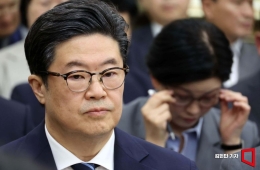
According to Daerim Moon, a lawmaker from the Democratic Party of Korea who serves on the National Assembly's Agriculture, Food, Rural Affairs, Oceans and Fisheries Committee, and based on data titled 'Status of Mutual Aid Business Operations and Contracts for the Past Five Years' submitted by the NFFC's Mutual Insurance Division, the 13th-month cancellation rate for executive and employee mutual aid contracts in 2025 was tallied at 36%. This is 2.4 times the cancellation rate for all contracts, which stood at 15%.
![[Exclusive] NFFC Mutual Aid Insurance Employee Cancellation Rate Twice Overall... 36% Canceled Within One Year Last Year](http://www.asiae.co.kr/news/img_view.htm?img=2026100708471352466_1791330433.png)
The mutual aid business of the NFFC offers coverage similar to insurance to its members and related parties.
This disparity has persisted for the past five years. The 13th-month cancellation rate for all contracts was 22% in 2021, 18% in 2022, 20% in 2023, 20% in 2024, and 15% in 2025. Over the same period, the cancellation rate for executive and employee contracts was 53%, 41%, 46%, 42%, and 36%, respectively, consistently exceeding twice the rate of all contracts every year. Notably, in 2021, more than half of executive and employee contracts were canceled before reaching the 13th month.
Mutual aid contracts joined by executives and employees are reflected in sales performance and performance evaluations. In response to a question from Assemblyman Moon's office about whether sales results for individual executives and local branches, as well as performance evaluations, factor in contracts held by executives and employees, the NFFC replied that they do. In addition, annual sales targets are assigned to member cooperatives. This has led to criticism that so-called "performance stacking" contracts may exist, in which contracts are opened under the names of executives, employees, or their family members to meet sales targets and then subsequently canceled.
There were also thousands of so-called "replacement contracts" each year, in which an old contract was canceled and a new one was signed within a short time frame. The number of new mutual aid contracts signed within six months before or after the expiration of a previous contract increased from 2,875 cases in 2022 to 3,139 in 2023, 4,138 in 2024, and 3,669 in 2025.
Hot Picks Today
 "I Decided to Stop Ordering Delivery and Cook at Home, But Was Shocked by Grocery Prices"
- [Exclusive] "Bought at 7,000 Won, Now at 1,600 Won"...76% Stock Plunge Shatters Big Dreams [KOSDAQ Inflated Listings]②
- Is 'KOGUMA' Coming Too?... "Japan in Serious Trouble" - Archipelago on High Alert Ahead of Holidays
- "Buy Now and Get 17X Returns?"... Cathie Wood Makes Bold 1,665% Bitcoin Forecast by 2030
- "This Isn't Right, Someone Could Throw Out Their Back"... Triple-Layered Garbage Bags Tightly Bound with Tape
Assemblyman Moon commented, "The NFFC needs to investigate whether, in a situation where executive and employee contracts are factored into sales performance and evaluations, contracts are being opened and then canceled under the names of executives, employees, or their families simply to meet sales targets. It is also necessary to review whether the structure allows sales performance to be recognized again through re-contracting after cancellation."

© The Asia Business Daily. All rights reserved. Unauthorized AI training and use prohibited.