"K-batteries Face Bankruptcy Risk from China’s Low-price Offensive... Deficit Companies Need Direct Support"
Six out of Eight Battery Companies in Pre-Tax Deficit
"AMPC Model from the U.S. Should Be Adopted"

While the market share of domestic battery cell companies is continuing to decline due to the low-price offensive of Chinese companies, it has been suggested that in order to provide effective support, direct subsidies should be implemented alongside tax credits.
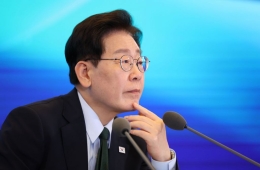
At the parliamentary audit of the Ministry of Trade, Industry and Energy on October 6, Assemblyman Kim Jongmin (Sejong City-Gap, Independent) pointed out, "The tax credit method the government is discussing for next year’s budget is not effective on its own."
The government has announced that, as part of the 2026 tax credit reform plan, it will introduce domestic production tax credits for six items: solar power, wind power, secondary batteries, semiconductors, key materials, and AI robot parts. The application period will run until 2036.
In response, Assemblyman Kim stated, "You need to have enough to pay corporate tax in order to benefit from a tax credit, but the government says companies can receive the tax credit even after 10 years. There is a high possibility that, if they remain in deficit over a decade, companies may go bankrupt. This needs to be changed." According to Assemblyman Kim’s research, six out of eight major domestic battery companies are currently making a pre-tax loss.
Assemblyman Kim emphasized, "The tax credit system is not effective for companies with a pre-tax loss," further stating, "We need to adopt the Advanced Manufacturing Production Credit (AMPC) method that LG Energy Solution has benefited from in the United States."
He added, "Government authorities consider this as duplicated support, but it isn’t a substitute, it’s a complement. When companies turn a profit, they can receive a tax credit, and when they make a loss, they should get direct support." He asked the Minister of Industry to actively coordinate with the relevant authorities on this matter.
Meanwhile, due to aggressive low-price competition from Chinese secondary battery companies, European companies like Northvolt in Sweden, Morrow Batteries in Norway, and VARTA in Germany are going bankrupt one after another. The market share of European companies in the secondary battery sector has surged from 42% in 2023 to an expected 61% in 2025. In contrast, during the same period, the market share of Korean companies dropped from 55% to 35%.

Among the top 10 companies by secondary battery usage for electric vehicles, seven are Chinese companies, accounting for 73.3% of the market. The three Korean battery companies hold a combined market share of only 12.7%.
Hot Picks Today
![Claims That "Daiso Is Being Shut Down to Save AliExpress and Temu" Spread Widely... A Fact-Check [Why&Next]](https://cwcontent.asiae.co.kr/asiaresize/93/2023121315590987574_1702450749.jpg) Claims That "Daiso Is Being Shut Down to Save AliExpress and Temu" Spread Widely... A Fact-Check [Why&Next]
Claims That "Daiso Is Being Shut Down to Save AliExpress and Temu" Spread Widely... A Fact-Check [Why&Next]
- "Three-Star Rooms at 980,000 Won a Night, Five-Star at 2 Million"... Busan Fireworks Festival Seats Cost 100,000 Won, but Hotel Views Bring Another Price-Gouging Row
- "I Thought It Was a Fish": 40-Second Miracle... Fisherman Saves Drowning Puppy With CPR
- "All He Did Was Reheat and Eat Fried Rice Made the Day Before"... Man in His 20s Nearly Needed a Liver Transplant
- "Looks Like They're Having an Affair": What If You Opened a KakaoTalk Chat, Filmed It, and Shared the Video With Coworkers?
Assemblyman Kim commented, "Ironically, our companies are surviving thanks to the support of the United States," explaining, "LG Energy Solution reported a profit of 113.3 billion won in the second quarter of this year, and this is thanks to receiving 240 billion won from the U.S. through the AMPC."
© The Asia Business Daily. All rights reserved. Unauthorized AI training and use prohibited.