[2026 Audit] Minister of SMEs and Startups Soyoung Lee: "Establishing Startup and Venture Regulatory Innovation Committee... Breaking Down Regulatory Barriers"
October 7 Audit of the Ministry of SMEs and Startups by the Industry Committee
Lee: "We Will Establish a Startup and Venture Regulatory Innovation Committee"
Key Issues for Small Business Owners: Delivery Apps and Onnuri Gift Certificates
Focus Also on Technology Theft, LH Projects, and Policy Fund Management
The main issues at this year's National Assembly audit of the Ministry of SMEs and Startups are institutional reform and the effectiveness of support policies. Issues requiring institutional improvement, such as challenges surrounding delivery platforms and technology theft from small and medium-sized enterprises (SMEs), as well as matters needing coordination with other authorities, such as private participation projects with Korea Land & Housing Corporation (LH), are expected to be discussed. Core policies, including Onnuri Gift Certificates, support for businesses impacted by Homeplus, and post-management of policy funds, will be subject to thorough evaluation.
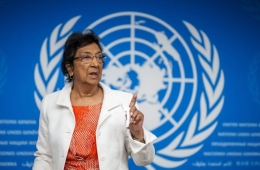
At the National Assembly's Industry, Trade, Resources, SMEs and Startups Committee audit of the Ministry of SMEs and Startups on October 7, Minister Soyoung Lee stated, "We will establish a Startup and Venture Regulatory Innovation Committee," adding, "We will ensure that promising new endeavors are not blocked by regulatory barriers before they even begin." Since her appointment, Minister Lee has emphasized her willingness to serve as a "Minister of Regulatory Reform," indicating that she will actively consult with relevant government agencies about issues that are difficult for the ministry to resolve alone.
The issue of cost burdens on small businesses arising from delivery platforms is also considered a key matter by which the effectiveness of institutional improvement will be assessed. According to a survey released early this year by the ministry and the Korea Commission for Corporate Partnership, only 28.3% of businesses registered on delivery application (app) platforms were satisfied with usage fees. The field of commission adequacy also scored just 38.2 out of 100. Minister Lee said, "We will objectively quantify cost burdens such as rent, labor costs, interest, and platform commissions, which weigh heavily on small business owners, and the government will continuously manage these indicators." She also announced plans to pursue legislation for platform mutual growth and cooperation.
The issue of technology theft from SMEs is also expected to be addressed. The ministry has been strengthening its technology protection framework, including confirming the introduction of a Korea-style discovery process (K-Discovery) early this year. There are expected to be questions at the audit about whether the system delivers practical remedies to victimized companies. Minister Lee has stated, "We will strengthen administrative sanctions for technology theft and introduce substantial penalties such as large-scale fines to provide effective deterrents."

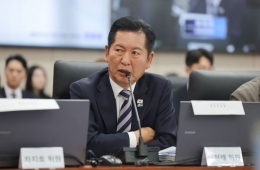
In the area of SMEs, the contracting-type private participation project by LH is cited as a key issue. The core question is whether the direct purchase system for construction materials should also apply to these projects. To address this, the committee has summoned Woo Shin Jeong, Head of LH's Private Partnership Business Division, as a witness. The SME sector is demanding the application of the direct purchase system for SME products, as the project is being conducted by the public institution LH.
The effectiveness of support policies managed by the ministry to date will also be scrutinized. Onnuri Gift Certificates, for example, are expected to be a central issue once again, as they were last year. This year, concerns about limited usage locations and irregular distribution are under the spotlight. According to the office of Assemblyman Chulmin Jang of the Democratic Party of Korea, of the 3.337 trillion won worth of Onnuri Gift Certificate payments made from January to August this year, 2.4592 trillion won, or 73.7%, was concentrated in the top 10% of affiliated merchants. At the top 1% of merchants, 1.2455 trillion won, or 37.3% of the total, was spent. Half of the top 10 merchants in payment volume were pharmaceutical retailers.
The failure to properly reclaim funds in cases of irregular distribution is also highlighted as a problem. In the irregular distribution inspection for Onnuri Gift Certificates in the second half of 2024, a total of 117 violations were detected, and a reclaim of 4.04 billion won was ordered for 11 merchants. However, actual collections only reached 533 million won. As the ministry recently announced a plan to adjust the Onnuri Gift Certificate policy to focus benefits on traditional markets and local commercial districts, questions are expected regarding its effectiveness.
The low execution rate of policy funds for merchants and suppliers affected by the Homeplus situation is another issue. Out of the 140 billion won in support funds prepared by the ministry, only 31.2 billion won was disbursed from October last year through September 20 this year, resulting in an execution rate of just 22%. Since the Ministry has lowered the barrier to support through measures such as direct loans and simplified reviews, questions are expected regarding the reasons for the slow disbursement. However, in this case, Chairman Byungjoo Kim of MBK Partners, who was selected as a witness for the audit by the committee, submitted a statement of absence, citing that he was not involved in management.
Hot Picks Today
 "It Shut Down Just From Showing My Face"... 1,500 iPhone 18 Pros Exchanged; "Cause Is Confidential"
- Condoms Out of Stock... "Please Stop Having Kids": Country to Deliver Contraceptive Pills Door to Door
- "What Becomes of the Geniuses Who Devoted Their Lives?"... 722 Papers Released in Just 3 Hours Spark 'Shock and Awe' [Reading Science]
- JYP Bought a 75.5 Billion Won Site, Only to Face an 18-Story Building Right in Front? ... SH's "Surprise Rezoning" Makes JYP Pull Out
- "I Want to Look Like Glowing Koreans" ... The Trend Is Taking the World by Storm, but Experts Warn Against It
Post-management of policy funds is also likely to come under examination. According to an inspection by the Korea SMEs and Startups Agency, 40 companies were caught renting out business premises acquired with policy funds to other firms for profit. These companies had received a total of 87.25 billion won in policy funds. Outstanding policy fund loan balances to marginal companies had increased to 1.0053 trillion won as of August this year, up 95.3% compared to 514.7 billion won in 2021. On this day, Minister Lee stated, "The structure for policy fund operations will be reorganized to further expand support for vulnerable business operators."
© The Asia Business Daily. All rights reserved. Unauthorized AI training and use prohibited.