Lee Hyungil: Alaska LNG Investment Not Yet Finalized...Apologizes Again for Leveraged ETF Losses (Comprehensive)

On the 6th, Deputy Prime Minister and Minister of Finance and Economy Lee Hyungil once again expressed regret over growing losses among investors in single-stock leveraged exchange-traded funds (ETFs), bowing his head in apology.
Regarding the Alaska liquefied natural gas (LNG) project, one of the U.S.-related investment projects, he stated that the government is just beginning to review the investment and will examine the project's commercial viability.
Deputy Prime Minister Lee made these remarks in response to related questions at the National Assembly audit of the Ministry of Finance and Economy, held by the Planning and Finance Committee on the same day.
Commenting on the introduction of single-stock leveraged ETFs, he said, "I regret not having proactively addressed the substantial losses incurred by individual investors," and bowed his head. The opposition party pointed out problems in the policy decision-making process, noting that Lee and Kwon Daeyoung, the First Vice Minister of Strategy and Finance, attended a closed-door meeting presided over by Kim Yongbeom, then policy chief of the presidential office, in January this year.
Lee continued, "When supplementary measures were announced in July, I expressed my regret at the departmental level, but I would like to reiterate my apology," and apologized again. When asked whether the former policy chief Kim specifically brought up leverage products at the closed-door meeting, Lee replied, "I do not clearly recall if such discussions were held on that day."
Kwon Daeyoung, who was then Vice Chairman of the Financial Services Commission during the introduction of single-stock leveraged ETFs and is now First Vice Minister of Strategy and Finance, also stated, "While we aimed to ease regulatory asymmetry, I am gravely concerned that, contrary to the policy's original intent, it ultimately increased market volatility."
Alaska LNG Investment 'In the Early Stages of Review'
During the audit, the procedures and commercial justification for U.S.-bound investments also became a point of contention. The opposition party focused questions on whether due diligence was thoroughly conducted in the process of executing USD 2.4 billion for the first U.S. investment project in Texas—the Encinal gas combined cycle power plant—and pledging a USD 10 billion advance payment for the nuclear power project.
When asked whether USD 2.4 billion was remitted to the U.S. on the 1st, following the joint announcement of a fact sheet by South Korea and the U.S., Deputy Prime Minister Lee answered, "Yes." This is the government's official confirmation that slightly more than 10% of the total cost of USD 22.3 billion for the first U.S. investment project—the construction and operation of the Encinal Gas Combined Cycle Power Plant in Texas (Project Star)—was sent immediately after the agreement. Deputy Prime Minister Lee further stated that "the project meets commercial viability standards."
Responding to criticism that the decision to pay a USD 10 billion advance for the nuclear power plant project was made without consulting the National Assembly, Lee explained that payment would only be made after all domestic legal procedures, including verification of commercial viability and National Assembly processes, are completed.
On the Alaska LNG project, where the U.S. and Korea differ in their positions, he said, "We are just beginning the review phase," and clarified that the government will decide on investment based on commercial rationale and statutory domestic procedures. He added, "We will work to foster favorable conditions for us and ensure maximum economic efficiency in relation to the offtake agreements."

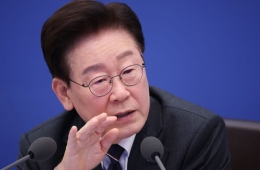
Deputy Prime Minister and Minister of Finance and Economy Lee Hyung-il is answering questions from lawmakers during the National Assembly audit of the Ministry of Finance and Economy held on the 6th. 2026.10.06 Photo by Yoon Dongjoo
View original imageVirtual Asset Taxation: From 'Implementation Next Year' to 'Broadly Gathering Opinions'
With regard to virtual asset taxation, Deputy Prime Minister Lee appeared to step back from the previous stance. When asked by a lawmaker whether the government's basic position is to proceed with implementation as scheduled from next year, he replied, "We will widely collect opinions from various stakeholders, including those raised in the National Assembly, as well as experts and industry participants."
At last month's confirmation hearing, Lee had stated in a written response that "it is desirable to enforce taxation as scheduled from next year, in accordance with the basic principle that where there is income, there should be taxation." Rather than repeating the previous stance of implementing as initially planned, he now emphasized the importance of gathering stakeholders' opinions.
Opposition lawmakers argued that the infrastructure for virtual asset taxation is not yet sufficiently established and claimed that imposing the tax under current circumstances could hinder market activity, citing the outflow of capital from the domestic virtual asset market to overseas markets. If the 2026 tax reform plan—excluding the postponement of virtual asset taxation—passes the National Assembly review and is finalized, capital gains tax on virtual assets will officially take effect from January next year. The first reporting and payment deadline will be May 2028.
The audit also featured additional criticism of the government's real estate policy, citing the long-term rise in Seoul apartment prices and the burden of lump-sum or monthly rental payments. Responding to concerns that Seoul apartment prices have risen for 86 consecutive weeks due to stricter regulations on multiple homeownership and a housing policy focused on residence, Deputy Prime Minister Lee said, "I fully recognize the gravity of rising property prices," but added, "The pace of the recent increases has somewhat slowed."
He noted that construction permits and groundbreakings in the Seoul area jumped 40% year-on-year during January–August, reaffirming his commitment to expanding housing supply.
Hot Picks Today
![[Exclusive] "Forecasts of Over 10 Billion, but Only 100 Million Earned"... 95% Followed This Pattern: Why Are KOSDAQ Special Exception IPOs Inflated? [KOSDAQ Inflated IPOs]①](https://cwcontent.asiae.co.kr/asiaresize/93/2026100609060151026_1791245160.jpg) [Exclusive] "Forecasts of Over 10 Billion, but Only 100 Million Earned"... 95% Followed This Pattern: Why Are KOSDAQ Special Exception IPOs Inflated? [KOSDAQ Inflated IPOs]①
[Exclusive] "Forecasts of Over 10 Billion, but Only 100 Million Earned"... 95% Followed This Pattern: Why Are KOSDAQ Special Exception IPOs Inflated? [KOSDAQ Inflated IPOs]①
- Democratic Party Urges End to "Anachronistic Political Censorship" over "Assassins" Film Controversy
- "My Debt Is 73 Million Won"... Sharing Every Repayment Led to an Unexpected Turn
- "Drinking This in the Morning Is Like Drinking Alcohol"..."Doctors Warn: Never Consume It"
- Is 'KOGUMA' Coming Too?... "Japan in Serious Trouble" - Archipelago on High Alert Ahead of Holidays
In his opening statement at the audit earlier that day, Lee declared, "We will make every effort to stabilize the people's economy and mitigate polarization," identifying price stability, housing, jobs, finance for low-income households, increasing growth potential, and reform of fiscal and tax systems as five key policy priorities. Lee added, "We will manage prices—the foundation of the people's economy—in a stable manner, closely monitor underperforming sectors such as manufacturing and construction, and prepare tailored policy responses for each sector."
© The Asia Business Daily. All rights reserved. Unauthorized AI training and use prohibited.