Songdo or the U.S.? Samsung Biologics' New Calculations After Receiving the Tariff List [Click e-Stock]
Production Possible in Both Korea and the U.S.
Customized Proposals for Clients
Maximizing Profitability Is Key
Portfolio Expansion on the Horizon
![Songdo or the U.S.? Samsung Biologics' New Calculations After Receiving the Tariff List [Click e-Stock]](http://www.asiae.co.kr/news/img_view.htm?img=2026090816463820586_1788853599.png)
As the criteria for U.S. pharmaceutical tariffs have become more concrete, Samsung Biologics has been facing deeper concerns. Even if manufacturing costs are lower, the imposition of tariffs when importing into the U.S. can affect the final expense. Attempting to avoid tariffs by manufacturing in the U.S. may, in some cases, result in even higher production costs. Industry analysts note that it has become crucial to determine which client's drug should be produced where to maximize benefits.
On October 7, Samsung Securities stated that the reduction of tariff-related uncertainties could prompt Samsung Biologics' clients to reconsider their order decisions. Projects that had been postponed due to difficulties in assessing tariff rates and exemption conditions may now be reopened for contract discussions as clients compare costs by production site.
Since September 29, when the scope of U.S. pharmaceutical tariffs was expanded, a 15% tariff has, in principle, been applied to patented pharmaceuticals made in Korea. However, pharmaceutical companies that have signed agreements with the U.S. government regarding drug pricing and local manufacturing and meet the necessary requirements can receive a 0% tariff until January 20, 2029. Additionally, biosimilars remain excluded from current tariff regulations. This means a uniform tariff is not applied to all clients simply because products are manufactured in Korea.
These differences are linked to the competitiveness of the Songdo plant. For clients eligible for tariff exemptions, it becomes much easier for Samsung Biologics to maintain cost competitiveness in Korea. Even for products subject to the 15% tariff, if the total cost including tariffs is still below that of U.S.-based production, manufacturing in Korea remains a viable choice. Keunhee Seo, a researcher at Samsung Securities, explained, "Instead of focusing solely on the tariff rate, it is essential to consider exemption eligibility by client, cost of production by product, and overall profitability."
The Rockville plant in the U.S. is another option. For projects where local production is economically advantageous, this facility can be utilized. In other words, clients can be offered separate production proposals—one in Songdo and another in the U.S. However, having a facility does not guarantee immediate orders. Seo noted, "Previously, the difficulty in confirming tariff rates and exemption criteria delayed order decisions for some new projects. Now, with the criteria specified for each client, the environment has been created for renewed site selection and contract negotiations."
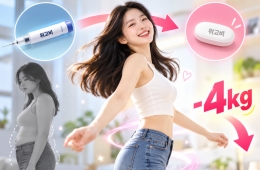
In the mid to long term, the range of drugs to be manufactured will also broaden. Samsung Biologics has indicated its intention to acquire PolyPeptide, a specialized firm in the peptide field that is drawing attention as a treatment for obesity and diabetes. As artificial intelligence (AI) expands the scope of new drug design, manufacturing capabilities that can turn these designs into actual drugs are expected to become increasingly significant. There are also expectations that the company will be able to extend peptide development and production services to its existing antibody drug clients. Seo emphasized, "The PolyPeptide acquisition is better viewed as a portfolio expansion to preempt clients' evolving pipelines, rather than just an increase in production capacity. Leveraging the global pharmaceutical network built through existing contract development and manufacturing services (CDMO), Samsung Biologics will be able to develop and produce not only antibodies but also peptides."
Hot Picks Today
 "Drinking This in the Morning Is Like Drinking Alcohol"..."Doctors Warn: Never Consume It"
- [Exclusive] "Forecasts of Over 10 Billion, but Only 100 Million Earned"... 95% Followed This Pattern: Why Are KOSDAQ Special Exception IPOs Inflated? [KOSDAQ Inflated IPOs]①
- Information of Even the Deceased Stolen...Denmark Hit by Data Breach Affecting 8.8 Million Despite a Population of 6 Million
- "My Debt Is 73 Million Won"... Sharing Every Repayment Led to an Unexpected Turn
- Is 'KOGUMA' Coming Too?... "Japan in Serious Trouble" - Archipelago on High Alert Ahead of Holidays
Against this backdrop, Samsung Securities has maintained its target price for Samsung Biologics at 1.8 million won. The previous day's closing price was 1.31 million won. Its 'buy' investment recommendation also remains unchanged. Seo forecasted, "Third-quarter earnings this year are likely to slacken slightly due to some production disruptions caused by strikes and a decline in the won-dollar exchange rate," and added, "Attention should be paid to the normalization of order intake, as the company can present optimal production plans for each client between Korea and the U.S."
© The Asia Business Daily. All rights reserved. Unauthorized AI training and use prohibited.