World Bank Raises Asia-Pacific Growth Forecast to 4.5%... "In Korea, Semiconductors Account for 43% of KOSPI"
Growth Outlook Raised by 0.3 Percentage Points for 2024
Korea Stands Out for Active AI Patents and Semiconductor Concentration
Downside Risks: Slowing AI Investment, High Oil Prices, and El Nino
The World Bank has raised its growth forecast for the East Asia and Pacific region this year to 4.5%, reflecting robust exports related to artificial intelligence (AI). In Korea, the World Bank noted that the semiconductor sector has particularly benefited from rising AI demand. However, it pointed out the concentration risk, as the two leading semiconductor companies now account for 43% of the KOSPI’s total market capitalization.

According to Bloomberg and CNBC, the World Bank released its “October East Asia and Pacific Economic Update” report on the 6th, presenting the region’s growth outlook for this year at 4.5%, which is 0.3 percentage points higher than its previous projection in April. The bank forecasted growth to slow to 4.4% in 2027 and to 4.3% in 2028. Among major countries, Vietnam received the largest upward adjustment, with the 2024 forecast raised by 1.1 percentage points to 7.4%. Not all countries had separate growth forecasts specified.
Growth in the region was primarily supported by AI-related investments and exports. The World Bank highlighted that, excluding AI-linked products, trade growth was "weak or negative." In most countries within the region, AI-related goods made up more than half of the overall export increase; in Malaysia, the Philippines, Thailand, and Vietnam, this share exceeded 70%.
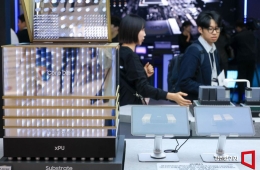
Korea was cited as a notable case of heavy concentration in AI and semiconductor companies within East Asia's financial markets. As of the end of April, the World Bank found that the two leading Korean semiconductor firms accounted for 43% of the total market cap on the KOSPI. In China, the so-called “Terrific 10” technology companies have increased their share of global equity market capitalization to about 2%. This group, dubbed China’s version of the U.S. “Magnificent 7 (M7),” collectively represents ten major tech stocks, including BYD and Alibaba.
The World Bank listed Korea, alongside China and Japan, as one of the world’s key nations for AI patent creation. It also noted that the center of AI patent activity in East Asia is shifting from Japan to Korea and China. Notably, despite having a relatively mid-sized workforce in STEM (science, technology, engineering, and mathematics), Korea was recognized as a country with active AI patent filings. Examples included Meister high schools, university-industry partnerships with Samsung Electronics and Hyundai Motor Company, the “AX-Sprint” program for rapid commercialization of AI application products, and the introduction of predictive AI in water treatment facilities. These were cited as examples of AI workforce training, policy-driven finance, and public service utilization.

However, the World Bank highlighted three major risk factors as potential threats to regional growth. The first is the possibility of waning global enthusiasm for AI investments. The bank noted that U.S. AI-related capital expenditures have increased to roughly 6% of GDP—a level similar to the 2000 IT investment peak—and that the current AI investment cycle is expanding more rapidly than previous ones.
In particular, it is projected that USD 800 billion of the total USD 2.9 trillion in planned AI capital expenditures between 2025 and 2028 will be raised via private lending. The World Bank pointed out that the private debt market is relatively lacking in transparency and has never been tested through a severe economic downturn.
The second risk is persistent high oil prices. The World Bank explained that, following the U.S.–Iran war, East Asian countries have been more proactive than other regions in suppressing fuel prices and relying on subsidies to cushion the shock. However, it warned that such policies may not be sustainable over the long term.
The World Bank expects Middle Eastern oil exports to return to pre-war levels by mid-2027. Indonesia, Thailand, and Vietnam saw their foreign exchange reserves shrink by 15% to 40% this year as they attempted to restrain retail gasoline prices. The report warned, “If energy prices rise again, the impact on economic activity could be even greater than previously expected,” and added, “The pressure from rising inflation and tighter financial conditions could further amplify the damage.”
The third downside risk stems from the El Nino phenomenon. In the East Asia and Pacific region, food consumption accounts for over 30% of household spending, and about one-fourth of the employed population works in agriculture. The World Bank pointed out that "the likelihood of a very strong El Nino this year exceeds 90%," noting that "the impact of El Nino goes beyond agriculture. Abnormal weather events like flooding could paralyze manufacturing bases and transportation infrastructure."
Hot Picks Today
 "Let's Hit It Big in Korea"... Foreigners Flock to 'This Place' [Weekend Money]
- "A Real Estate Market Unlike Any We've Seen Is Coming"; Non-Homeowners Could Be Blindsided
- “What Now for Samsung and SK hynix?” ... Could News from China Rattle the KOSPI? Shareholders Anxious
- "I Had Just Lain Down to Sleep..." Woman in Her 30s Sets Fire to Songpa Villa Parking Lot, Destroying 3 Cars
- "Jealous of Koreans" - Now a Must-Do on Every Trip... The Place Where Foreigners Spent KRW 229.8 Billion
© The Asia Business Daily. All rights reserved. Unauthorized AI training and use prohibited.