Shin Jung-hoon: "Honam's Energy and Water Resources Must Be Linked to the Semiconductor Industry"
Jeollanam-do's Energy Self-sufficiency Rate Reaches 213.4%
Renewable Energy Surplus Ratio at 53.1%
Four Semiconductor Fabs Planned in the Southwest with an 800 Trillion Won Investment
Aiming to Become South Korea's Second Semiconductor Production Hub
During a government audit, an argument was made that the southwestern region of South Korea should be developed into the nation's second-largest semiconductor production base, following the capital region, by harnessing Honam's abundant energy and water resources.
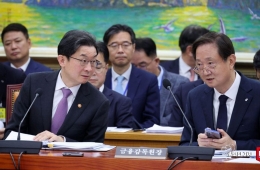
Shin Jung-hoon, a Democratic Party lawmaker from Naju and Hwasun who serves on the National Assembly's Climate, Energy, Environment, and Labor Committee, stated during the October 6 audit of the Ministry of Climate, Energy and Environment that the Honam Semiconductor Cluster should be defined as a national industrial strategy for establishing a new semiconductor production hub. He stressed that the region's energy and water resources must be linked directly to industry and jobs.

Assemblyman Shin clarified, "The Honam Semiconductor Cluster is not simply about increasing the region's share or forcibly relocating companies, but about establishing a second production base, following the capital region, as a national strategy to strengthen South Korea's semiconductor competitiveness."
The government has announced a plan to create a second semiconductor hub, after the capital region, by building four semiconductor fabrication plants in the southwestern region, along with a supporting ecosystem of partner companies and workforce, with a total investment of 800 trillion won.
Assemblyman Shin identified industrial water usage as a key indicator exposing Honam's weak industrial foundations.
In 2023, the Yeongsan River basin accounted for only 1.7% of total industrial water usage nationwide. In comparison, the Han River basin and the Nakdong River basin accounted for 31.1% and 33.7% respectively, which are approximately 18 and 20 times higher than the Yeongsan River basin.
Assemblyman Shin pointed out, "It is not that there was a lack of water in Honam, but rather that there had been no industries requiring large-scale industrial water use. This disparity highlights just how underdeveloped Honam's industrial base has been—virtually at a cottage-industry level during the country's industrialization process."
On the other hand, he presented Honam's abundant energy conditions as a foundation for supporting the semiconductor cluster. With 2024 data based on power generation and electricity sales, Jeollanam-do's energy self-sufficiency rate reached 213.4%.
According to an analysis by the Bank of Korea’s Gwangju-Jeonnam branch, the surplus ratio of renewable energy stood at 53.1%. Additionally, the number of days when solar output was restricted increased from two in 2023 to 26 in 2024.

Assemblyman Shin emphasized, "What was lacking in Honam was not resources, but the infrastructure to connect them to industry and jobs. True balanced development means enabling the region's rich energy and water resources to be utilized directly for advanced industries like semiconductors and expanding that into even more industry and investment."
He also called on the government to enhance national infrastructure to secure the water resources required for semiconductor production.
The government plans to secure a daily water supply of 1.06 million tons by utilizing Dongbok Dam, Boseong River Dam, Juam Dam, Naju Dam, Jangheung Dam, and recycled wastewater, thereby accommodating the daily demand of 650,000 tons for the southwestern semiconductor complex, as well as allowing for future demand increases and droughts.
Assemblyman Shin said, "Rather than judging feasibility based merely on current water capacity, infrastructure such as water sources, pipelines, and reuse facilities should be expanded in a timely manner to align with industrial demand."
He further urged that efforts for regional coexistence are needed, such as modernizing agricultural water facilities; implementing water quality and environmental management; providing compensation to residents for raising Dongbok Dam; attracting material, component, and equipment companies; and holding consultations with farmers regarding the use of water from the Yeongsan River estuary dam.
Hot Picks Today
![[Exclusive] "Forecasts of Over 10 Billion, but Only 100 Million Earned"... 95% Followed This Pattern: Why Are KOSDAQ Special Exception IPOs Inflated? [KOSDAQ Inflated IPOs]①](https://cwcontent.asiae.co.kr/asiaresize/93/2026100609060151026_1791245160.jpg) [Exclusive] "Forecasts of Over 10 Billion, but Only 100 Million Earned"... 95% Followed This Pattern: Why Are KOSDAQ Special Exception IPOs Inflated? [KOSDAQ Inflated IPOs]①
[Exclusive] "Forecasts of Over 10 Billion, but Only 100 Million Earned"... 95% Followed This Pattern: Why Are KOSDAQ Special Exception IPOs Inflated? [KOSDAQ Inflated IPOs]①
- "Breakfast Now" Hits 1.41 Million Views... Burger King Expands Morning Menu Nationwide After 8x Sales Surge
- Seoul Police Chief: "Minimizing On-Site Confusion as Revised Criminal Procedure Act Takes Effect"
- "Drinking This in the Morning Is Like Drinking Alcohol"..."Doctors Warn: Never Consume It"
- Is 'KOGUMA' Coming Too?... "Japan in Serious Trouble" - Archipelago on High Alert Ahead of Holidays
Assemblyman Shin concluded, "The Honam Semiconductor Cluster is not just about adding an industry to Honam. This is a national leap-forward project that redraws South Korea’s semiconductor production map. We must turn Honam into the nation's second semiconductor hub by connecting its abundant energy and water resources to advanced industries and jobs, and so that both farmers and residents can grow together."
© The Asia Business Daily. All rights reserved. Unauthorized AI training and use prohibited.