[2026 Audit] Kim Jeonggwan: "Stronger Resource Security"... 50% Non-Middle Eastern Crude Oil, 365-Day Stockpile of Critical Minerals
Review of Mining Corporation’s Overseas Investment Capabilities
Establishment of Resource Security Fund
Digitization of 200 Types of Tacit Manufacturing Knowledge
Data Collection for 300 Manufacturing Processes
CPTPP Membership Under Social Discussion
"Removing Barriers to 1,600 Trillion Won Investment in Three Mega-Projects"

The Ministry of Trade, Industry and Energy is accelerating efforts to strengthen industrial and resource security by raising the share of non-Middle Eastern crude oil to 50% by 2035 and expanding stockpiles of critical minerals to a maximum of 365 days of supply. In addition, the government will promote the construction of 500 AI factories by 2030 to accelerate the artificial intelligence (AI) transformation of the manufacturing sector, and will seek to foster public debate about joining the Comprehensive and Progressive Agreement for Trans-Pacific Partnership (CPTPP) in response to ongoing external trade uncertainties.
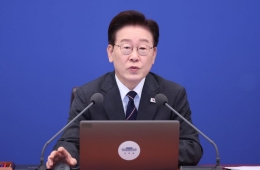
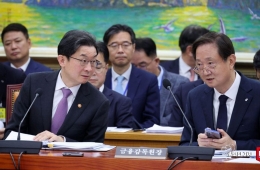
On October 6, Minister of Industry Kim Jeonggwan stated at the National Assembly’s parliamentary audit by the Trade, Industry, Energy, SMEs and Startups Committee, "We will further strengthen our industrial and resource security capabilities," adding, "We aim to diversify oil and gas import sources and build stable stockpile capacities to reduce dependency on specific regions by 2035."
The Ministry plans to increase the proportion of non-Middle Eastern crude oil to 50% by 2035 and lower the nation's gas dependence on specific countries to below 30%. The government will enhance incentives for diversification of import sources, expand long-term contracts for liquefied natural gas (LNG), and upgrade domestic refining and blending technologies and production facilities to handle a wider variety of crude oil and naphtha. They also plan to expand crude oil stockpile facilities and promote international joint stockpiling with partners like Saudi Arabia and the United Arab Emirates (UAE).
For critical minerals, the number of stockpiled items will be increased from 24 to 29, and the maximum stockpile period will be extended from 180 days to 365 days. Based on self-help measures by the Korea Mine Rehabilitation and Mineral Resources Corporation, restoration of overseas investment functions is being considered. The government will also support the acquisition of strategic minerals abroad through official development assistance (ODA) for rare earth element development, intergovernmental cooperation, and policy financing for mineral refining facilities used in semiconductors. The domestic resource recycling market will be fostered through the collection of used permanent magnets, establishment of necessary facilities, and large-scale production verification.
Minister Kim further stated, "We are reviewing the restoration of the Corporation’s overseas investment capability to strengthen the critical minerals supply chain, and, from a long-term perspective, will establish a 'Resource Security Fund' to ensure stable financing for resource security." The government submitted a draft amendment to the Special Act on National Resource Security last month, providing legal grounds for the establishment of this fund.
The government’s push to strengthen resource security has been prompted by this year's Middle Eastern energy crisis, which highlighted the need for stable procurement of critical energy and raw materials such as crude oil and naphtha. In response, the Ministry secured alternative sources for crude oil and naphtha, utilized stockpile swaps, imposed export restrictions, and issued crisis warnings to absorb supply shocks at the time.
The government is also speeding up the AI transformation of the manufacturing sector. Minister Kim commented, "AI transformation is no longer a technology of the future but an essential, ongoing technology that will determine the survival of the manufacturing industry. By 2030, we will build 500 AI Factories, and starting next year, we will focus on developing and demonstrating core technologies to realize full-stack AI factories operating entirely with AI."
The Ministry will digitize 200 types of 'tacit knowledge'—the unwritten expertise and skills of experienced workers—for use in developing manufacturing AI solutions. From next year, the 'National Manufacturing Data Library' will be established, and datasets for 10 industries and 300 processes, necessary for training humanoid and other robots, will be secured.
Support will also be provided for the execution of large-scale regional investments. The government will address obstacles related to site selection, power, water supply, transportation, and manpower to ensure seamless investment of approximately 1,600 trillion won in three major mega-projects: semiconductors, physical AI, and AI data centers. Minister Kim stated, "We will scrutinize the implementation process to ensure these mega-projects proceed without disruption, while swiftly removing barriers to corporate investment."
In the area of trade, the Ministry will review and initiate public discussions regarding CPTPP membership. The Ministry judged that the CPTPP is increasingly important for supply chain stability and economic security enhancement, expansion of K-content and consumer goods exports, and improved access to the Mexican and ASEAN markets as the international trade order is reorganized. However, taking into account the concerns of the agricultural and fisheries sectors, the government will first conduct social dialogue and collect public opinion before comprehensively reviewing whether to join the CPTPP with national interests as the primary focus.
Follow-up procedures for strategic investment in the United States will also continue. Minister Kim said, "The Korea–U.S. investment project, jointly announced by the two countries on October 1, will be followed up on without delay in accordance with our national interest, expanding the entry of Korean companies into the U.S. market and creating a springboard for global market expansion."
Hot Picks Today
![[Exclusive] "Forecasts of Over 10 Billion, but Only 100 Million Earned"... 95% Followed This Pattern: Why Are KOSDAQ Special Exception IPOs Inflated? [KOSDAQ Inflated IPOs]①](https://cwcontent.asiae.co.kr/asiaresize/93/2026100609060151026_1791245160.jpg) [Exclusive] "Forecasts of Over 10 Billion, but Only 100 Million Earned"... 95% Followed This Pattern: Why Are KOSDAQ Special Exception IPOs Inflated? [KOSDAQ Inflated IPOs]①
[Exclusive] "Forecasts of Over 10 Billion, but Only 100 Million Earned"... 95% Followed This Pattern: Why Are KOSDAQ Special Exception IPOs Inflated? [KOSDAQ Inflated IPOs]①
- “I Don’t Want to See Mom or Dad”... Family Estrangement Spreading Like a Trend Among Millennials and Gen Z
- "My Debt Is 73 Million Won"... Sharing Every Repayment Led to an Unexpected Turn
- "Drinking This in the Morning Is Like Drinking Alcohol"..."Doctors Warn: Never Consume It"
- "This Is How You Give a Winner’s Interview": Choi Siwon Recalls Son Heungmin... Lee Kangin’s Remarks Spotlighted Again
The Ministry plans to support the domestic entry into the U.S. AI and energy infrastructure market, focusing on equipment supply, engineering, construction, and maintenance, through the Texas Encinal gas-fired power plant project, and will also push for the U.S. entry of the Korea-designed APR1400 nuclear reactor model, based on the Korea-U.S. nuclear power framework.
© The Asia Business Daily. All rights reserved. Unauthorized AI training and use prohibited.



![[Exclusive] "Forecasts of Over 10 Billion, but Only 100 Million Earned"... 95% Followed This Pattern: Why Are KOSDAQ Special Exception IPOs Inflated?](https://cwcontent.asiae.co.kr/asiaresize/307/2026100608321391599A.jpg)