Kim Jihyung: "Key Solutions to Job Issues from Population Decline Are Mediating Generational Conflicts and Transferring Skills"
Interim Report from the Public Jobs Committee
Need for Intergenerational Communication and Local Employment and Industry Development
Redesigning the Job Ecosystem to Reflect Demographic Changes
In response to job challenges caused by population decline, a public deliberation process involving citizens identified adjusting intergenerational conflict, passing down skills, and expanding quality employment within local regions as core priorities.
Kim Jihyung, Chair of the Special Committee on Public Deliberation for Population Structure Change and Employment at the Economic, Social and Labor Council (ESLC), stated on October 6, 2026, "It is difficult to resolve employment issues resulting from demographic changes solely through individual policies such as extending the retirement age or expanding youth employment." He added, "It is necessary to redesign the overall job ecosystem to fit the shifting population structure."

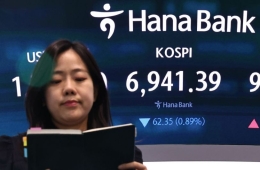
Kim Jihyung, Chair of the Economic, Social and Labor Council (ESLC), is giving a briefing on the launch of the first ESLC under the new government on the 18th at the ESLC main conference room in Jung-gu, Seoul. Photo by Yonhap News
View original imagePreviously, in July, the special committee was established to respond to the crisis of a shrinking working-age population due to demographic changes such as low birth rates and an aging society. On this day, the committee, along with the Citizen Participation Group, announced the results of the first phase of public deliberation, conducted over the past two months. Through thorough discussions, citizens identified ten key issues across the fields of mutually beneficial jobs and lifelong employment.
In the area of mutually beneficial jobs, participants proposed a restructuring of job roles, working hours, and compensation systems; increased transmission of skills and technologies between generations and the expansion of collaborative roles; strengthening youth capabilities and providing employment support; assistance for retirement transitions and reemployment; and intergenerational communication and organizational culture, as well as social consensus and conflict resolution. For lifelong employment, priorities included flexible working and life-cycle-specific work environments, lifelong and vocational education, employment security systems, fostering local jobs and industries, and diversifying employment formats.
Kim stated, "Among the six core tasks selected again by citizens, generational and regional challenges stood out." He explained, "In mutually beneficial jobs, intergenerational communication, organizational culture, and social agreement/conflict adjustment received the highest support at 66.2%, followed by skill transfer, mentorship, and expansion of collaborative roles at 65.4%, and job role, working hour, and compensation system redesign at 64.7%."
He continued, "For lifelong employment, the creation of quality local jobs and the fostering of regional industries received the strongest backing at 74.3%. The expansion of parental leave, flexible working arrangements, and the creation of life-cycle-specific work environments followed at 65.8%, with strengthening lifelong and vocational education for each life stage at 61.4%." This indicates that, among the six key issues, regional employment was the top priority.
Kim commented, "These results reflect the public's view that the response to demographic change cannot be limited to increasing jobs for a particular generation." He added, "Intergenerational relationships, organizational culture, job structure and compensation, education and training, care work, and local employment issues are seen as being closely intertwined."
Going forward, the special committee will seek concrete execution plans for the six major tasks. On October 24–25, 100 citizen representatives will gather at Korea University of Technology and Education for an overnight meeting, discussing improvement measures for each issue. Rather than stopping at selecting priorities, the discussions will examine whether these solutions can be practically applied in the field and be supported by labor and management. Afterwards, on November 14, 30 citizen representatives will organize the improvement measures into a formal citizens’ proposal at the ESLC. In December, a final citizens’ meeting with 100 to 300 participants will be held at Sejong University to finalize the proposal. The final citizens’ proposal is scheduled to be submitted to the special committee on public deliberation.
Hot Picks Today
![[Exclusive] "Forecasts of Over 10 Billion, but Only 100 Million Earned"... 95% Followed This Pattern: Why Are KOSDAQ Special Exception IPOs Inflated? [KOSDAQ Inflated IPOs]①](https://cwcontent.asiae.co.kr/asiaresize/93/2026100609060151026_1791245160.jpg) [Exclusive] "Forecasts of Over 10 Billion, but Only 100 Million Earned"... 95% Followed This Pattern: Why Are KOSDAQ Special Exception IPOs Inflated? [KOSDAQ Inflated IPOs]①
[Exclusive] "Forecasts of Over 10 Billion, but Only 100 Million Earned"... 95% Followed This Pattern: Why Are KOSDAQ Special Exception IPOs Inflated? [KOSDAQ Inflated IPOs]①
- "If You Wear Heavy Makeup, You Look Unsophisticated"... North Korean Teens in Love with 'Korean-Style No-Makeup Makeup'
- "My Debt Is 73 Million Won"... Sharing Every Repayment Led to an Unexpected Turn
- "Drinking This in the Morning Is Like Drinking Alcohol"..."Doctors Warn: Never Consume It"
- Is 'KOGUMA' Coming Too?... "Japan in Serious Trouble" - Archipelago on High Alert Ahead of Holidays
Kim emphasized, "What deserves more weight in social dialogue is not quickly arriving at answers, but asking the right questions and finding answers only after sufficient deliberation."
© The Asia Business Daily. All rights reserved. Unauthorized AI training and use prohibited.