[2026 Audit] Which Committee Will Be the Hottest Topic This Year?
Legislation and Judiciary Committee in the Spotlight
Political Affairs Committee Heats Up Over AI-driven Hacking
Clashes Expected in National Defense Committee After DMZ Landmine Explosion
The National Assembly audit for this year officially began on the 6th. As this is practically the first audit of state affairs under the Lee Jaemyung administration, the ruling party is fully mobilized to highlight the achievements of reform, while the opposition party is preparing to launch an all-out campaign to expose problems in governance. Which session will become the hottest topic of this year’s audit?

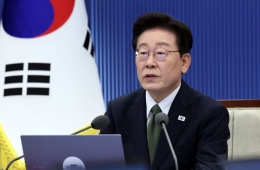
Kim Minseok, leader of the Democratic Party of Korea, is giving a greeting at the "2026 National Audit Comprehensive Situation Room Plaque Ceremony" held at the National Assembly on the 6th. 2026.10.06 Photo by Dongju Yoon
View original imageThe Legislation and Judiciary Committee audit, which has always drawn significant attention, is expected to be a focal point again this year. For the second consecutive year, debates over Supreme Court Chief Justice Cho Hui-dae are unavoidable. This year, the main point of contention will be the renewed recommendation of Supreme Court Justice candidates. The Democratic Party and others have argued for summoning Chief Justice Cho as a general witness in the audit and plan to interrogate him, but Chief Justice Cho has submitted a statement of non-attendance. The issue of his attendance as a witness is expected to become a major point of dispute, as it is intertwined with conflicts over the respective recommendation authorities of the president and the Chief Justice, as well as ongoing discussions on judicial reform. Han Byungdo, Floor Leader of the Democratic Party, urged, “Chief Justice Cho should attend the National Assembly as a witness and explain fully to the public regarding the vacancy crisis among Supreme Court justices.”
In addition, the Legislation and Judiciary Committee is expected to see contentious debate over issues such as the Public Prosecution Service and the Serious Crime Investigation Agency, both of which were established following the abolition of the Prosecutors’ Office, as well as over the protection of crime victims following the abolition of supplementary investigation authority.
The National Defense Committee is also expected to be a major focus of attention this year. After a landmine explosion in the Demilitarized Zone (DMZ), public debate exploded over how the military responded, which has in turn become entangled in controversies over the current administration’s North Korea policy. The opposition party is expected to attack what it sees as an overly conciliatory North Korea policy. Lawmaker Kim Byungjoo of the Democratic Party commented on BBS Buddhist Broadcasting radio, responding to calls for a tougher stance, “Since the spring of 2024, we have been fortifying the border, planting landmines, installing barriers, and setting up barbed wire, but we should have acted more decisively from the very beginning. Had we responded appropriately then, these unfortunate incidents could have been avoided.” In contrast, Sung Iljong of the People Power Party stated on MBC radio, “There has been no real progress in our government’s response. We pressed about ‘appropriate countermeasures’ in the standing committee, but the Ministry of National Defense says it cannot comment. As long as we continue to adopt an unilaterally submissive posture, the problem will not be resolved.”

Jeong Jeongsik, Floor Leader of the People Power Party, is giving the opening remarks at the National Assembly Audit Countermeasure Meeting held at the National Assembly on the 6th. 2026.10.06 Photo by Yoon Dongju
View original imageThe transfer of wartime operational control, military structural reform, and the potential integration of military academies are also projected to become sources of controversy. In addition, the revision of military service exemptions after the Asian Games, which became an issue after the closing of the event, is also likely to become a key topic. North Korea policy is expected to be a hotly debated issue in the Foreign Affairs and Unification Committee as well.
With the recent hacking incidents suspected to be driven by artificial intelligence (AI) leading to the leakage of personal credit information, this issue is now anticipated to be a major subject in the Political Affairs Committee audit. Initially, the committee had expected attention to focus primarily on single-stock leverage exchange-traded funds (ETFs), but with the escalation of security breaches, the security issue has moved to the center of attention. Since these cases involve AI-driven hacking, the issue is also expected to become a prominent topic in the Science, ICT, Broadcasting, and Communications Committee.
The main point of contention in the Public Administration and Security Committee is expected to be whether the newly created Serious Crime Investigation Agency will be able to gain a firm footing. From follow-up measures after the abolition of the Prosecutors’ Office to confirmation hearings for the agency head outside the framework of the audit, the committee will be managing a packed schedule.
Additionally, the debate over the decline in local allocation grants is expected to be a point of contention in the Public Administration and Security Committee audit. Issues concerning the use of large excess tax revenues, brought in by the semiconductor boom, and the establishment of a future response fund are also anticipated to be addressed in several standing committees this year. Everything from local allocation grants, which are distributed to local governments, to local education financial grants is likely to become an issue. Regarding the future response fund itself, there are claims within political circles that parliamentary oversight is being weakened and government discretion is increasing.
Other topics of interest include negotiations regarding investment in the United States. U.S. President Donald Trump has made remarks treating Korean participation in the Alaska liquefied natural gas (LNG) project as a given; as a result, the terms of bilateral agreements on Korean investment in the U.S. and the commercial rationality of each project are expected to come under scrutiny.
Hot Picks Today
![[Exclusive] "Forecasts of Over 10 Billion, but Only 100 Million Earned"... 95% Followed This Pattern: Why Are KOSDAQ Special Exception IPOs Inflated? [KOSDAQ Inflated IPOs]①](https://cwcontent.asiae.co.kr/asiaresize/93/2026100609060151026_1791245160.jpg) [Exclusive] "Forecasts of Over 10 Billion, but Only 100 Million Earned"... 95% Followed This Pattern: Why Are KOSDAQ Special Exception IPOs Inflated? [KOSDAQ Inflated IPOs]①
[Exclusive] "Forecasts of Over 10 Billion, but Only 100 Million Earned"... 95% Followed This Pattern: Why Are KOSDAQ Special Exception IPOs Inflated? [KOSDAQ Inflated IPOs]①
- [Breaking] President Lee: "Over 1 Trillion Won to Be Raised by Investing Another 500 Billion Won in Rural and Fishing Villages Win-Win Fund"
- "My Debt Is 73 Million Won"... Sharing Every Repayment Led to an Unexpected Turn
- "Drinking This in the Morning Is Like Drinking Alcohol"..."Doctors Warn: Never Consume It"
- "This Is How You Give a Winner’s Interview": Choi Siwon Recalls Son Heungmin... Lee Kangin’s Remarks Spotlighted Again
Moreover, topics such as housing prices in the greater Seoul area and the government’s housing supply measures are likely to emerge as major issues in the Land, Infrastructure and Transport Committee and other related committees.
© The Asia Business Daily. All rights reserved. Unauthorized AI training and use prohibited.




![[Exclusive] "Forecasts of Over 10 Billion, but Only 100 Million Earned"... 95% Followed This Pattern: Why Are KOSDAQ Special Exception IPOs Inflated?](https://cwcontent.asiae.co.kr/asiaresize/307/2026100608321391599A.jpg)